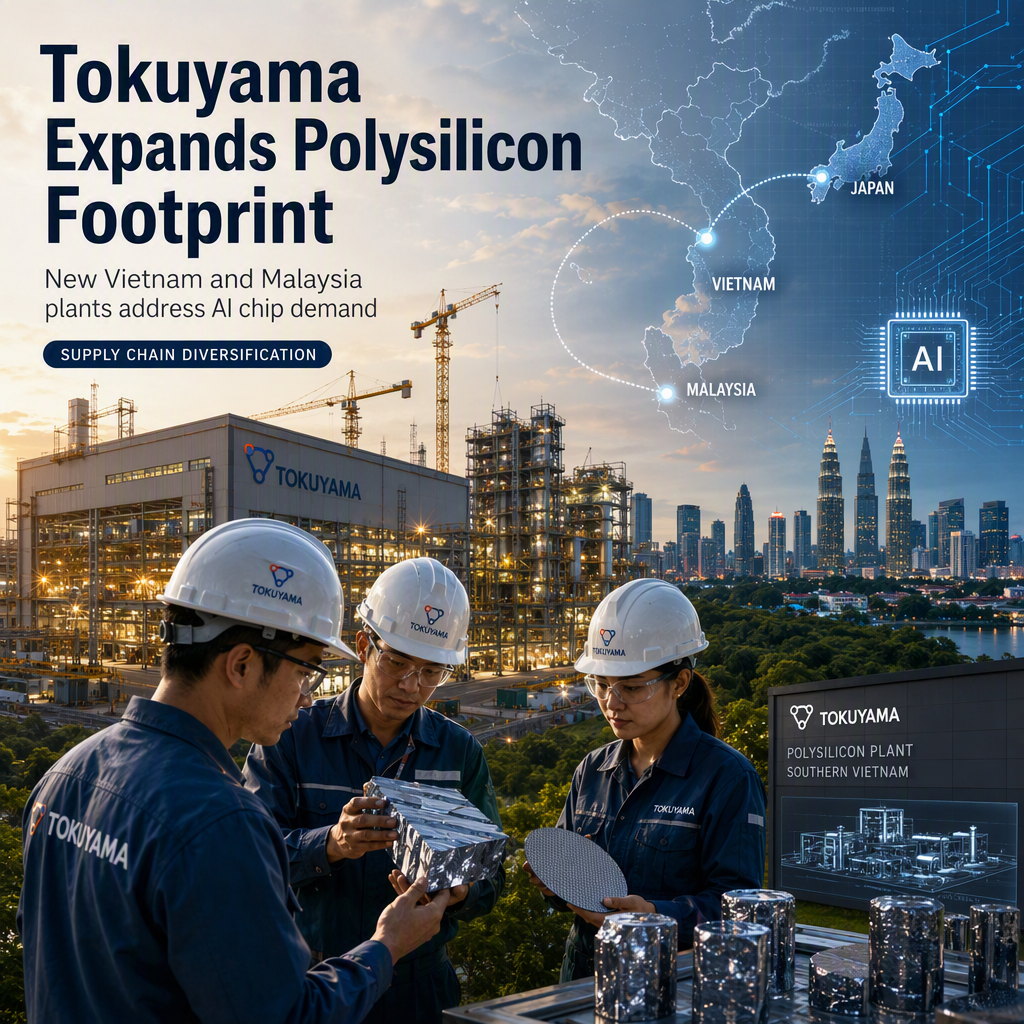
Japanese silicon manufacturer Tokuyama is set to establish new plants in Vietnam and Malaysia to produce a key chip material, polysilicon, as part of a strategic move to diversify its supply chain away from concentrated production in Japan [1]. The new facility in southern Vietnam will not only increase Tokuyama's manufacturing capacity but also expand its production footprint beyond its existing Japanese factory [1]. This initiative is driven by the need to minimize risks associated with supply disruptions and to support the growing global demand for semiconductors, particularly as artificial intelligence applications continue to fuel market expansion [1]. By spreading out its manufacturing operations, Tokuyama aims to ensure a stable supply of polysilicon, which is essential for semiconductor manufacturing [1]. The article does not provide specific financial figures, price levels, or trading advice related to this development [1].
CONCLUSION
Tokuyama's decision to expand polysilicon production into Vietnam and Malaysia reflects a proactive approach to supply chain risk management and addresses the increasing demand for semiconductors driven by AI applications. While no financial data or market reactions are mentioned, the move is likely to enhance supply stability and support the global chip industry. The market impact is assessed as medium, given the strategic importance of polysilicon in semiconductor manufacturing.