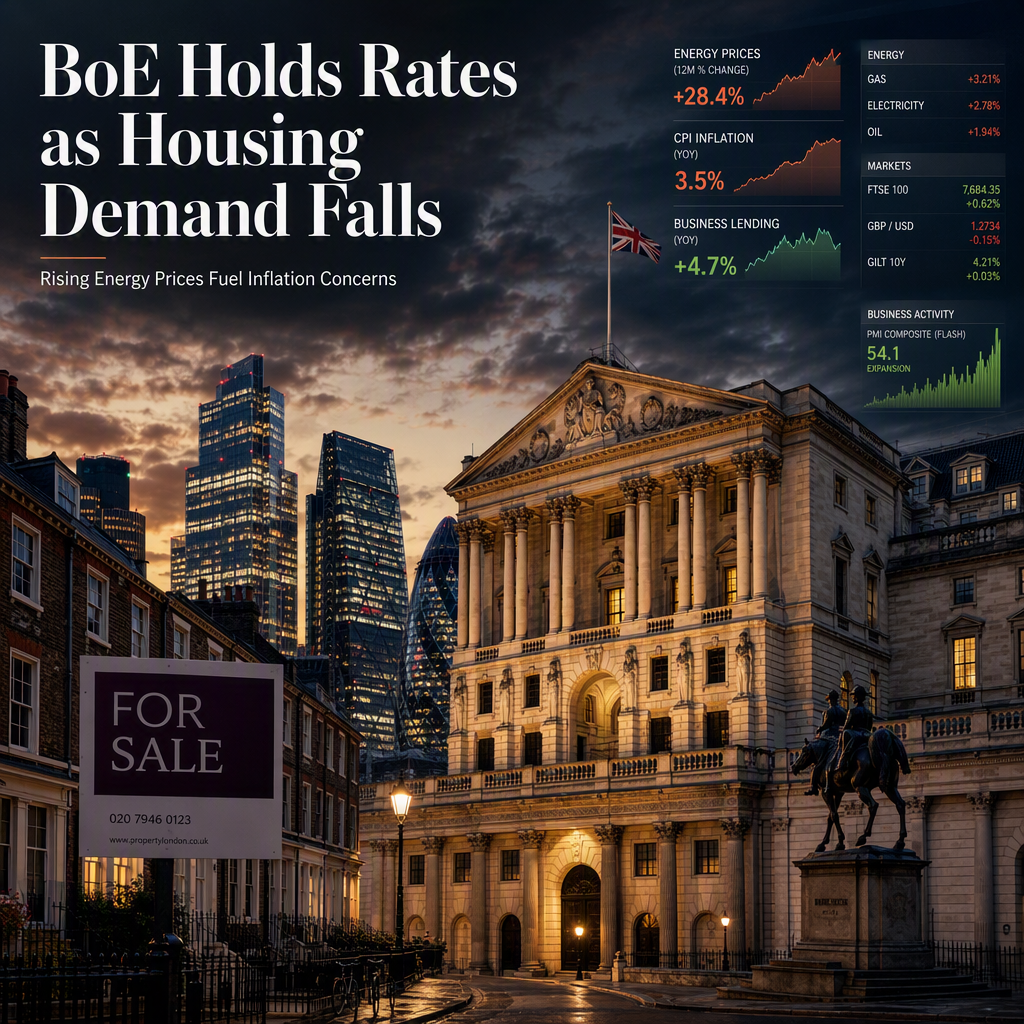
The Bank of England (BoE) has opted to maintain its current interest rates, as highlighted by Societe Generale’s UK team, citing weakening housing demand evidenced by mortgage approvals falling to their lowest levels since late 2023. This decline is attributed to higher mortgage rates, a trend expected to persist in the near term [1]. Despite the slowdown in the housing sector, business lending remains robust, indicating that the recent increase in business investment may continue into the second half of 2026 [1].
Societe Generale notes that wage expectations show limited second-round effects, suggesting that inflationary pressures from wages are not significant at this time. However, the team points out that the recent rise in energy prices is likely to drive headline inflation higher, which could influence the BoE’s policy decisions. The Monetary Policy Committee (MPC) is expected to maintain a wait-and-see approach, reiterating this stance at the upcoming Treasury Committee hearing, while potentially commenting on the impact of energy price increases [1].
Central banks, including the BoE, face two main options in response to rising inflation: either implement a 25 basis point rate hike or keep rates elevated for an extended period. Societe Generale currently projects that the first rate cut may be delayed until the first quarter of 2027, as the higher-for-longer rate stance comes under scrutiny due to inflation risks [1].
CONCLUSION
The BoE’s decision to hold rates reflects concerns over weakening housing demand and rising energy-driven inflation. While business lending remains strong, the prospect of delayed rate cuts signals ongoing caution in monetary policy. Market participants should prepare for sustained higher rates and closely monitor inflation developments.