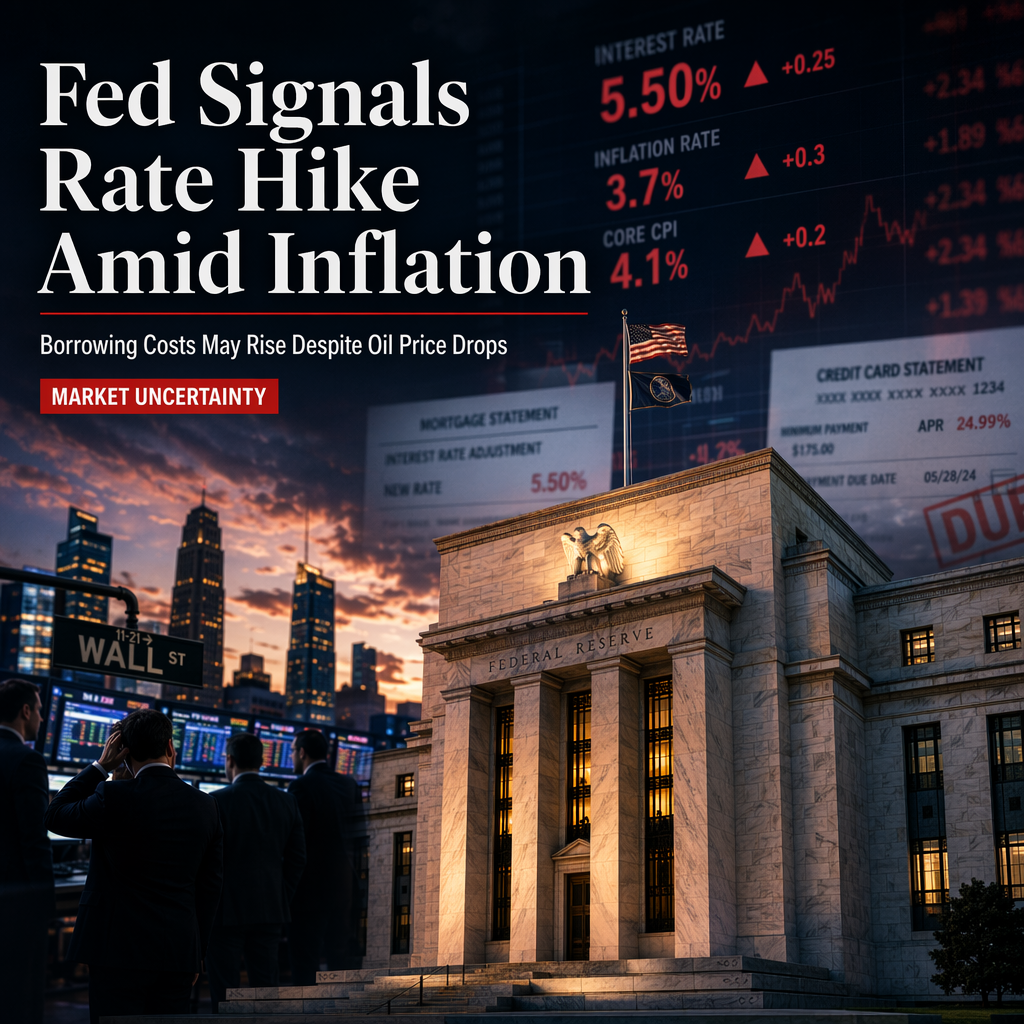
The Federal Reserve's rate-setting committee has indicated that elevated inflation is expected to persist in the short run, leading to projections that the central bank's key interest rate could increase by the end of this summer [1]. This key rate, known as the Fed funds rate, directly influences borrowing costs across the economy, including for credit cards, auto loans, and mortgages [1].
New Fed Chairman Kevin Warsh acknowledged that higher rates are currently weighing on the real estate and housing markets, describing the impact of monetary policy as 'uneven' [1]. However, with oil prices now falling as the war with Iran deescalates, Warsh may be able to avoid a rate hike this year and potentially fulfill President Donald Trump’s goal of lower interest rates, provided inflation data improves [1]. Logan Mohtashami, lead analyst at HousingWire, noted that if inflation data gets better, the Fed might be able to lower rates and be less restrictive [1].
Recent market movements reflect this uncertainty: borrowing costs for short-term U.S. Treasuries have surged in the past 24 hours, while costs on longer-dated Treasuries are falling, suggesting that any increase in borrowing costs could be short-lived [1]. The last Fed rate hike occurred in July 2023, after which rates gradually declined. The average 30-year mortgage rate fell from a high of 7.8% in fall 2023 to 5.98% at the end of February, but has since risen to 6.47% as of Thursday, following energy price surges linked to the Iran conflict and a stabilizing U.S. economy [1].
Auto loan rates peaked at about 8.6% in August 2024 before dropping to 7.4% in February, with no further declines since then. Credit card interest rates have remained above 20% for three years, standing at 21% in February, according to the latest Federal Reserve data [1]. Krishna Guha, head of economics at Evercore ISI, stated that inflation still needs to show more decisive evidence of slowing, as tariffs and AI-related spending continue to push price growth higher, despite falling oil prices [1].
CONCLUSION
The Federal Reserve is signaling caution on lowering interest rates due to persistent inflation, despite some market hopes for cheaper borrowing as oil prices fall. While a rate hike remains possible by the end of summer, future moves will depend on clearer signs of easing inflation. Market participants should expect continued uncertainty in borrowing costs in the near term.