
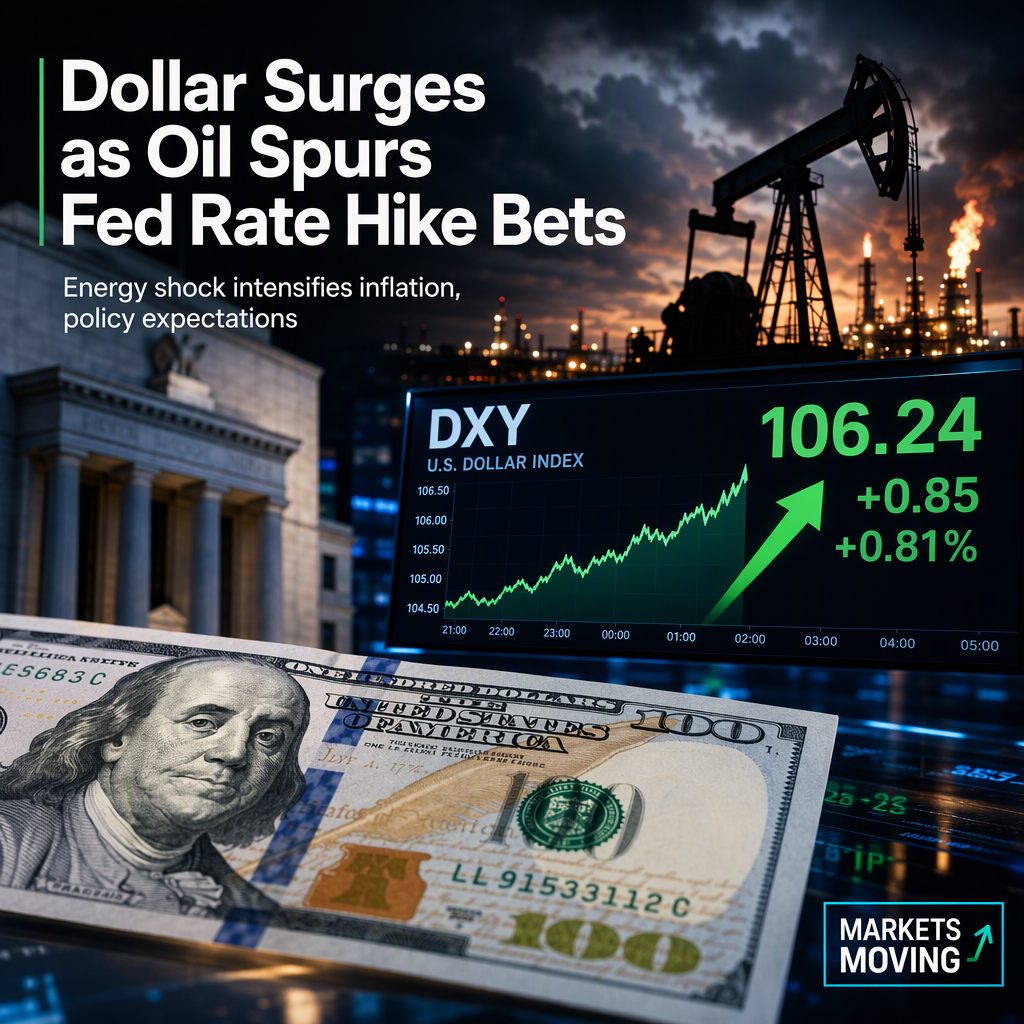
The US Dollar Index (DXY), which tracks the value of the US Dollar against six major currencies, extended its gains for a second consecutive day, trading around 101.20 during Asian hours on Tuesday [1]. The Greenback's strength was attributed to elevated oil prices, driven by ongoing uncertainty in US-Iran negotiations. Iranian officials expressed doubt about reaching an agreement before the US midterm elections in November, following US President Donald Trump’s rejection of Tehran’s latest proposal, which has kept energy costs high [1].
This surge in oil prices has intensified inflation concerns and increased expectations that the Federal Reserve may need to tighten monetary policy further. As a result, Treasury yields reached fresh multi-year highs, with both the 10- and 30-year yields climbing above 5% [1]. The CME FedWatch Tool indicated that money markets are currently pricing in roughly a 70% probability of another Federal Reserve rate increase in October, following the central bank’s initial rate hike in three years earlier this month [1].
Analysts at Rabobank noted that speculative positioning in the Dollar remains broadly balanced, with both long and short positions increasing by 2,000 positions, resulting in little net change in USD net longs [1]. This suggests that market participants are maintaining a cautious stance as they reassess the Fed policy outlook. Market attention is now turning to upcoming US economic indicators, including Wednesday’s US Personal Consumption Expenditures (PCE) inflation report and Friday’s Nonfarm Payrolls report, for further signals regarding future monetary policy direction [1].
CONCLUSION
The US Dollar Index's recent gains reflect heightened expectations for further Federal Reserve rate hikes amid persistent inflation concerns and elevated oil prices. Market participants are maintaining balanced positions as they await key US economic data later in the week, which could provide additional clarity on the Fed's policy trajectory.