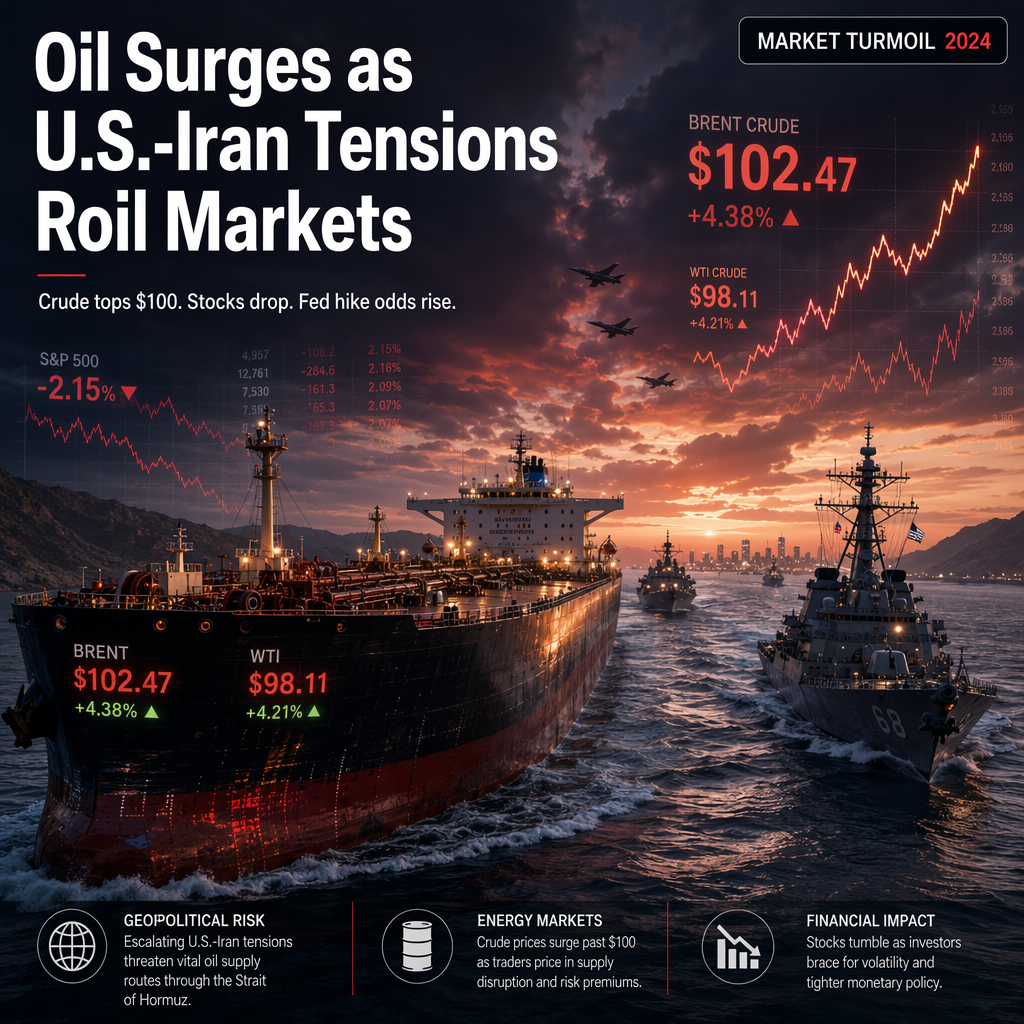
Crude oil prices surged sharply on Thursday as fighting between the United States and Iran intensified, with WTI crude climbing approximately 3.7% to settle near $90.50 per barrel and reaching an intraday peak above $92. Brent crude topped $100 a barrel as the conflict entered its twelfth consecutive night, raising concerns about threats to shipping through the Strait of Hormuz and the Red Sea [1].
The spike in oil prices contributed to a rise in U.S. Treasury yields, with the 10-year yield increasing to roughly 4.70%, marking its highest level of the year. This move reflected renewed inflation worries stemming from higher energy costs. Rate expectations shifted notably, as traders now price around a 35% chance of a Federal Reserve rate hike at next week’s meeting, up from about 10% a week ago, with an increase fully priced by September, according to Bloomberg [1].
Equity markets reacted negatively to these developments. The S&P 500 fell about 1% to close near 7,412, after hitting an intraday low around 7,375 before partially recovering late in the session. The selloff was particularly pronounced in megacap technology stocks, as skepticism grew regarding the returns on heavy artificial intelligence investments. Alphabet's shares declined after the company raised its capital-spending forecast, and Tesla also fell [1].
Meanwhile, the U.S. dollar strengthened as investors sought safe-haven assets amid the geopolitical uncertainty. Gold prices, in contrast, came under pressure. The European Central Bank held its deposit facility rate at 2.25% as expected, with President Christine Lagarde emphasizing a meeting-by-meeting approach and no pre-commitment to a specific rate path [1].
CONCLUSION
The escalation of the U.S.-Iran conflict has had a significant impact on global markets, driving oil prices higher, pushing Treasury yields to new highs, and fueling expectations of a Federal Reserve rate hike. Equity markets, especially technology stocks, faced renewed pressure amid these developments. Investors are closely watching for further geopolitical and monetary policy signals.