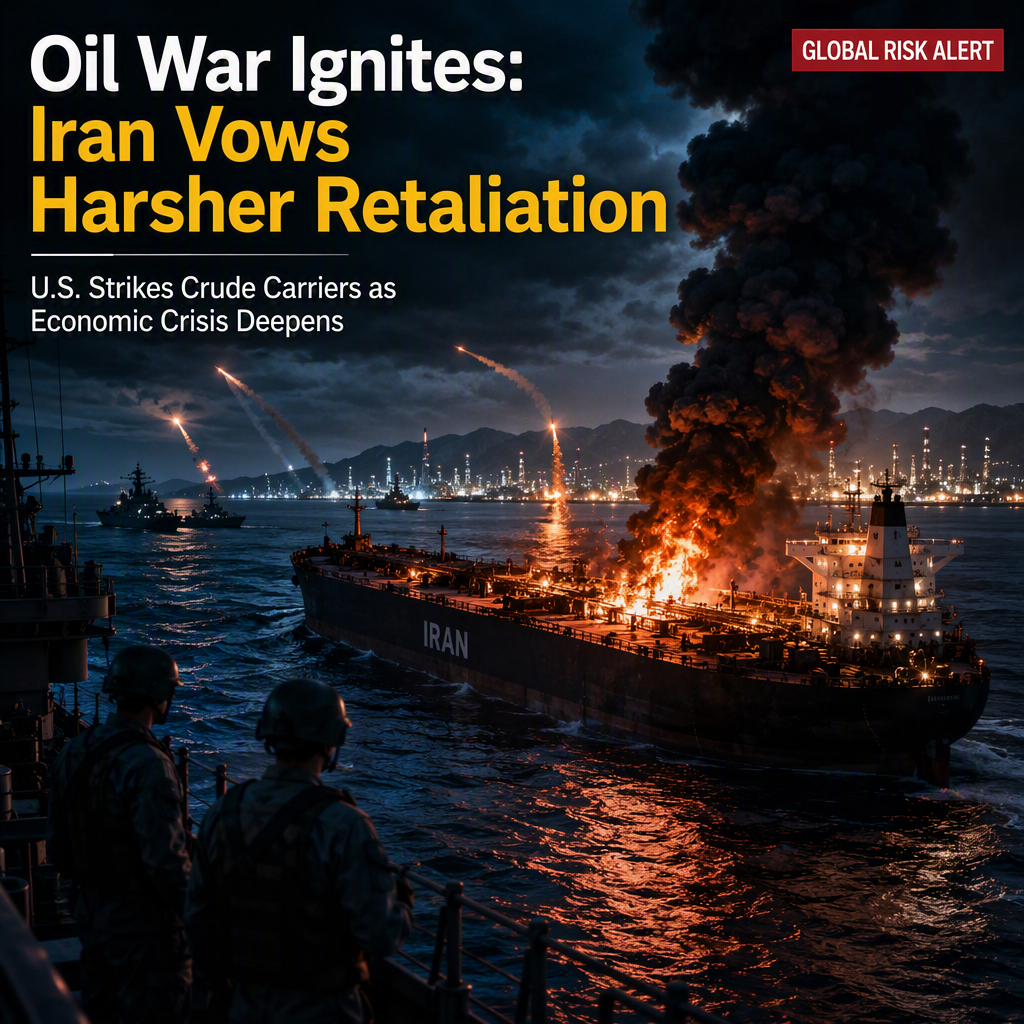
On September 6, Iranian parliament speaker Mohammad Bagher Ghalibaf issued a stern warning that any future attacks on Iran would be met with a 'faster, heavier, and more painful' response, signaling a shift in Iran's retaliatory posture following recent U.S. military actions [1]. The warning came after U.S. Central Command (CENTCOM) confirmed that American forces struck three Iranian crude oil carriers in retaliation for ballistic missiles launched by Iran's Revolutionary Guard toward two U.S. Navy warships [1]. According to CENTCOM, one carrier was permanently disabled off the coast of Kharg Island, another near Jask, and a third was attacked in the Gulf of Oman. U.S. Navy vessels successfully evaded the missile attacks, and no American personnel were harmed [1].
Admiral Brad Cooper, CENTCOM commander, emphasized the U.S. commitment to defending its forces, stating, 'If you shoot at two of our ships, we will impose an even higher economic cost — taking out three of yours,' and warned that the U.S. would not hesitate to destroy Iran's 'limited and exposed oil fleet' [1]. Defense Secretary Pete Hegseth reinforced this stance, declaring on X that any Iranian attack on U.S. ships would result in the destruction of Iranian oil tankers [1].
The military conflict has exacerbated Iran's economic challenges, with Ghalibaf acknowledging 'severe fluctuations in the exchange rate, inflation, unemployment, and market management' as fundamental issues impacting Iranian livelihoods [1]. He stressed the need for increased reliance on domestic production and technology to devise both short-term and permanent solutions [1]. Iran, previously the third-largest producer in OPEC, exported 90% of its crude via Kharg Island before the war, but U.S. sanctions and a blockade initiated in mid-April have severely disrupted these flows [1].
The ongoing conflict has effectively shut the Strait of Hormuz, a critical waterway for global oil supply, since hostilities began on February 28, further intensifying economic and geopolitical pressures [1].
CONCLUSION
The U.S. strikes on Iranian oil carriers and Iran's vow of harsher retaliation mark a significant escalation in military and economic tensions. Disruption of oil exports and closure of the Strait of Hormuz pose substantial risks to global energy markets, with Iran facing mounting internal economic challenges. Market participants should expect continued volatility and heightened geopolitical risk in the region.