
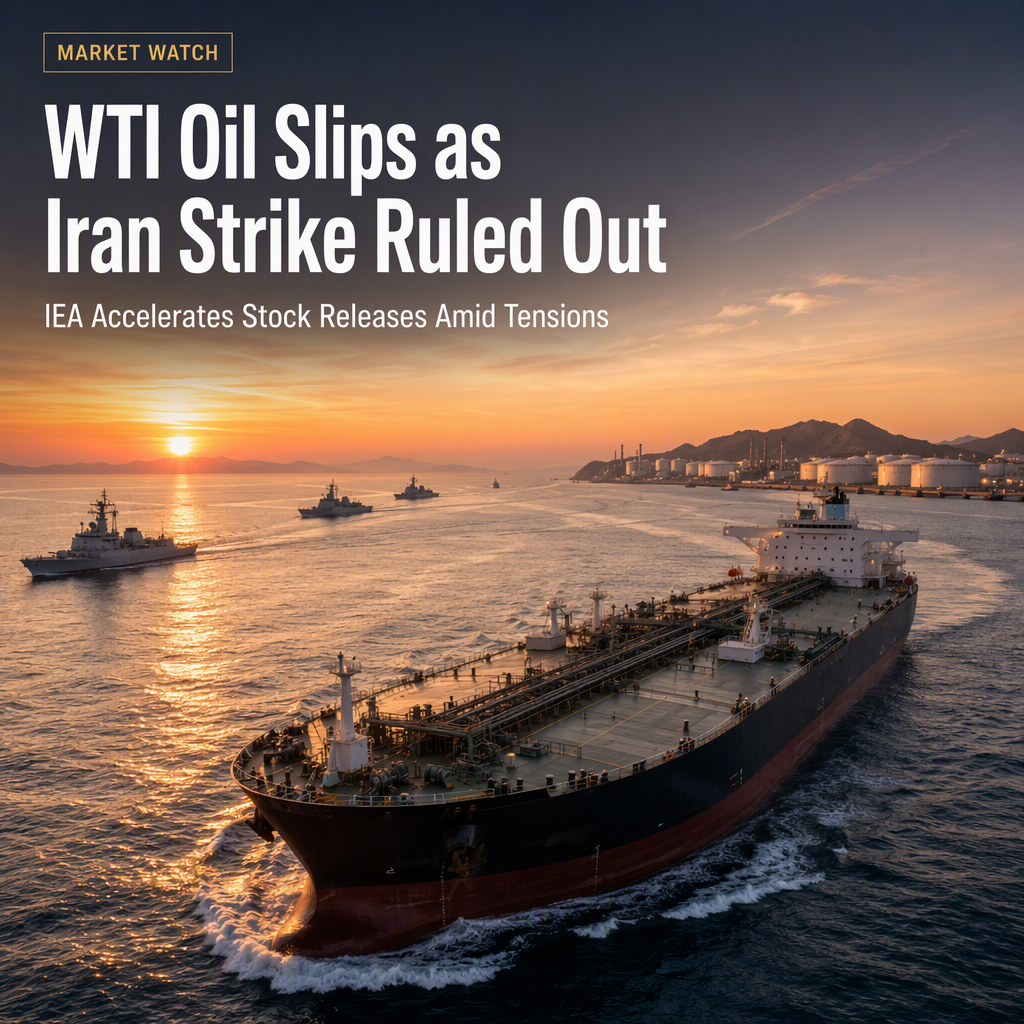
West Texas Intermediate (WTI) crude oil prices declined to around $89.65 during early European trading hours on Friday, following US President Donald Trump's statement that Washington would not attack Iran before the November midterm elections [1]. Trump emphasized ongoing 'productive discussions' with Tehran and noted that crude was flowing through the Strait of Hormuz in 'record numbers,' a development seen as potentially weighing on WTI prices in the near term [1].
In response to record fuel prices and supply disruptions related to ongoing conflicts, the International Energy Agency (IEA) agreed to accelerate the release of oil stocks and prioritize diesel supplies [1]. This move follows a recent agreement by G7 countries to release 100 million barrels of crude and diesel, raising expectations for further releases from strategic reserves [1].
Despite these measures, US crude oil inventories unexpectedly declined last week. The Energy Information Administration (EIA) reported a drop of 3.186 million barrels in the week ending October 2, reversing the previous week's increase of 922,000 barrels and defying market expectations for a rise of 1.9 million barrels [1].
Analysts at ABN Amro highlighted that Middle East tensions continue to keep the WTI risk premium elevated heading into the US midterms. They noted that while flows from the region have largely normalized, the need for US navy escorts, increased costs, logistical frictions, and the persistent risk of attacks raise questions about the long-term feasibility of these flows. As a result, a 'sticky risk premium' remains in oil pricing, with CTAs reportedly buying WTI crude and both WTI and Brent crude maintaining long positions across all momentum signals [1].
From a technical perspective, WTI maintains a mildly bullish tone in the near term, holding above the 100-day simple moving average and the lower Bollinger Band. However, the price remains below the Bollinger middle band, and the Relative Strength Index (14) near 49 suggests a neutral, range-bound market rather than strong directional pressure [1].
CONCLUSION
WTI crude prices have softened following President Trump's assurance of no imminent US-Iran conflict and the IEA's accelerated oil stock releases. However, ongoing Middle East tensions and unexpected US inventory declines are keeping a risk premium in oil markets. Technical indicators point to a mildly bullish but range-bound outlook for WTI in the near term.