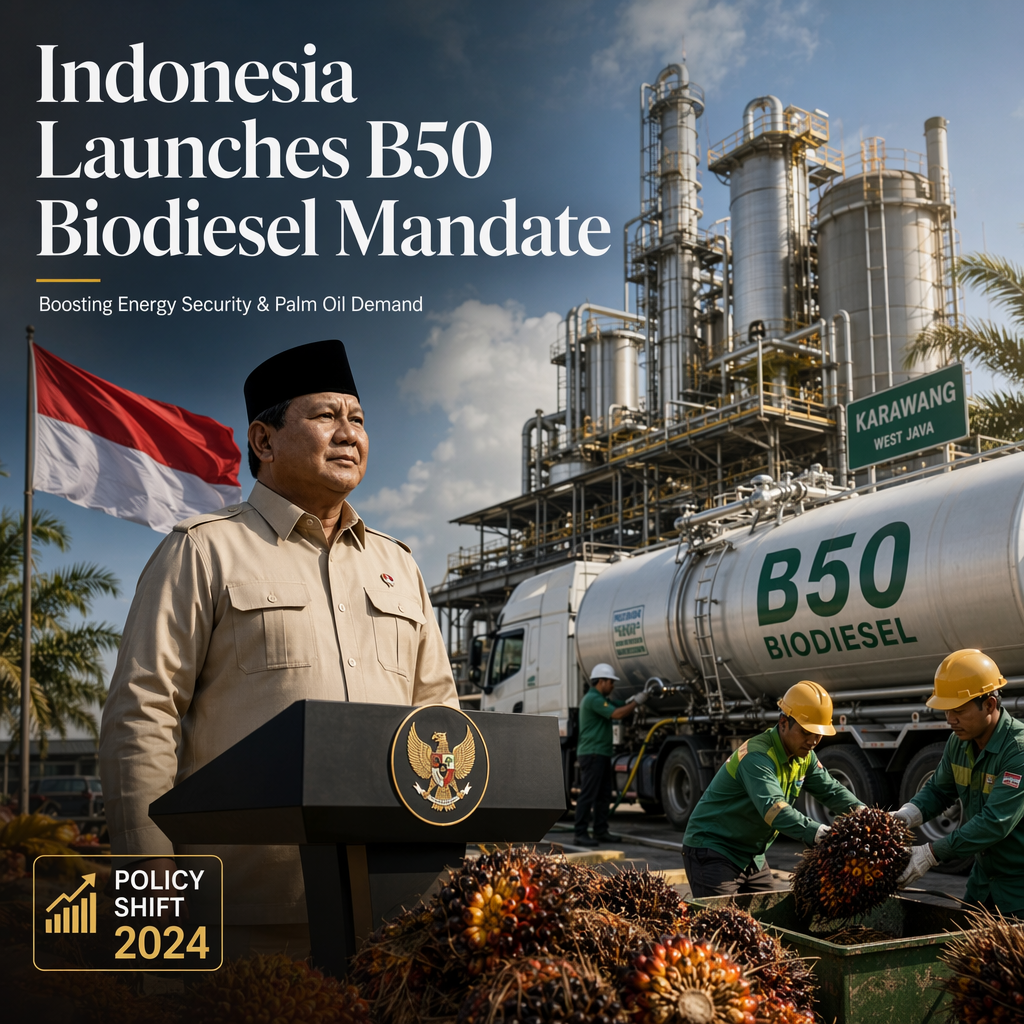
Indonesia has officially launched its B50 biodiesel mandate, increasing the required palm oil content in all domestically sold diesel from 40% to 50% in an effort to curb fuel imports and enhance energy security [1]. The launch event was officiated by Indonesian President Prabowo Subianto in Karawang, West Java, marking a significant policy shift for the country's energy and agricultural sectors [1].
The new mandate is expected to substantially boost domestic demand for palm oil, which analysts predict will lead to a reduction in palm oil exports [1]. This tightening of exportable supply could support international palm oil prices and alter global trade flows, according to market analysts cited in the article [1]. The government has framed the B50 policy as a dual strategy to reduce reliance on imported fuel and to stabilize local palm oil prices, thereby supporting rural incomes and the broader palm oil industry [1].
Despite the anticipated benefits, some exporters and commodity buyers have expressed concerns about the potential decrease in exportable palm oil surplus [1]. No specific trading advice, price levels, or technical indicators were provided in the article [1].
CONCLUSION
Indonesia's B50 biodiesel mandate is poised to significantly impact both domestic and international palm oil markets by increasing local demand and potentially reducing exports. The policy is expected to support energy security and rural incomes, but raises concerns among exporters about tighter export supplies.