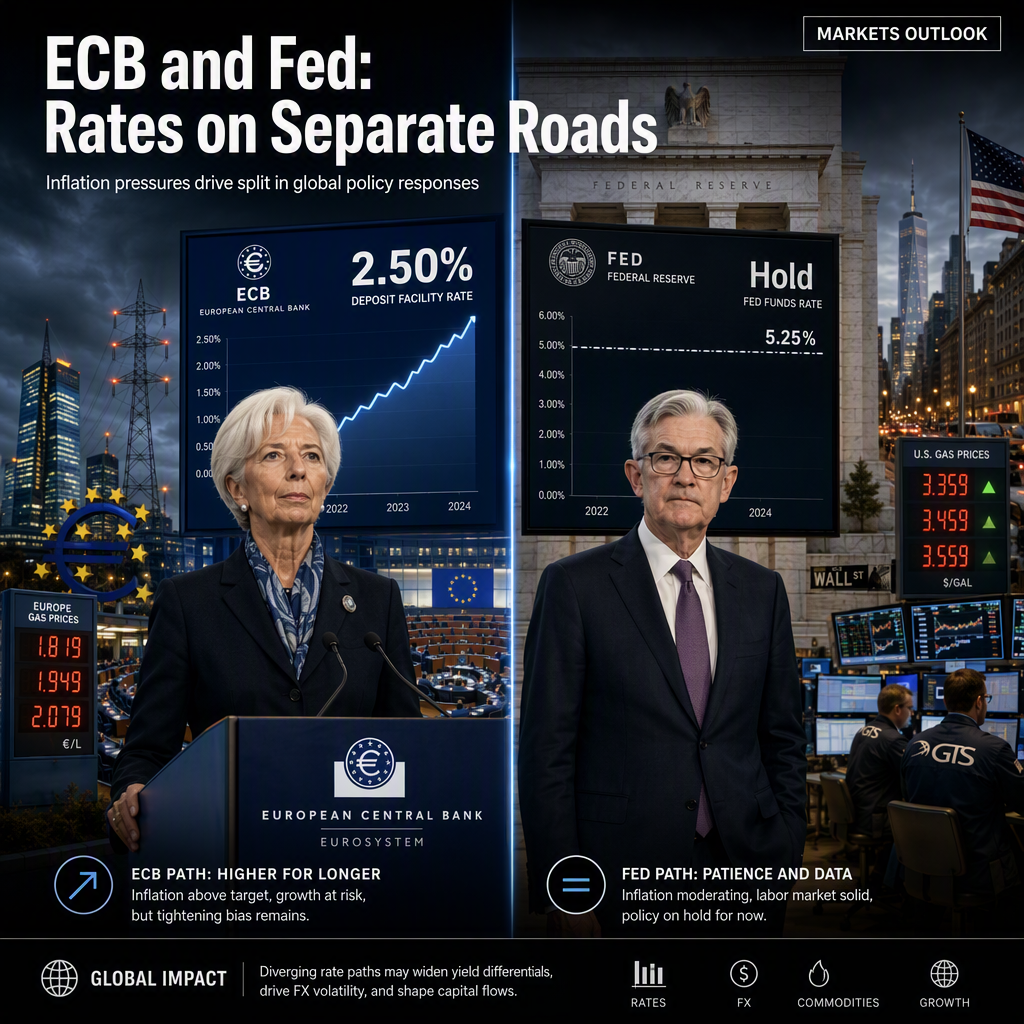
DBS Group Research anticipates that the European Central Bank (ECB) will raise its deposit facility rate by 25 basis points to 2.50%, citing a resilient inflation-growth mix in the Eurozone and headline inflation rising to 3.3% year-over-year in August from 2.9% the previous month. This increase was primarily driven by a 14.3% surge in the energy component. While core inflation pressures remain contained for now, analysts warn of risks that inflation could broaden into wages and services, prompting the ECB to act pre-emptively. The report also notes that European bond yields have climbed, reflecting investor concerns over wide deficits, geopolitical tensions, and higher defense spending [1].
In contrast, Commerzbank’s Dr. Christoph Balz expects the Federal Reserve to keep rates unchanged, though he acknowledges a significant risk of a 25 basis point hike. The decision hinges on upcoming jobs and Consumer Price Index (CPI) data, with headline CPI expected to rise 0.4% from July, mainly due to a 4% increase in gasoline prices following renewed tensions in the Persian Gulf. Despite the headline increase, core inflation remains moderate. Several Fed officials have expressed concerns that persistently high inflation could influence wage and price negotiations, but the prevailing expectation is for rates to remain steady unless core inflation data surprises to the upside [2].
Both central banks are navigating complex inflation dynamics, with the ECB leaning toward further tightening due to rising headline inflation and the Fed adopting a more cautious stance, awaiting additional economic data before making a decision. Market participants are closely watching bond yields and inflation data, as these will likely influence the next policy moves [1][2].
CONCLUSION
The ECB is expected to proceed with a rate hike in response to rising inflation, while the Federal Reserve is likely to hold rates steady but remains vigilant for upside surprises in inflation data. Both central banks are responding to persistent inflation pressures, but their policy paths may diverge in the near term depending on forthcoming economic indicators.