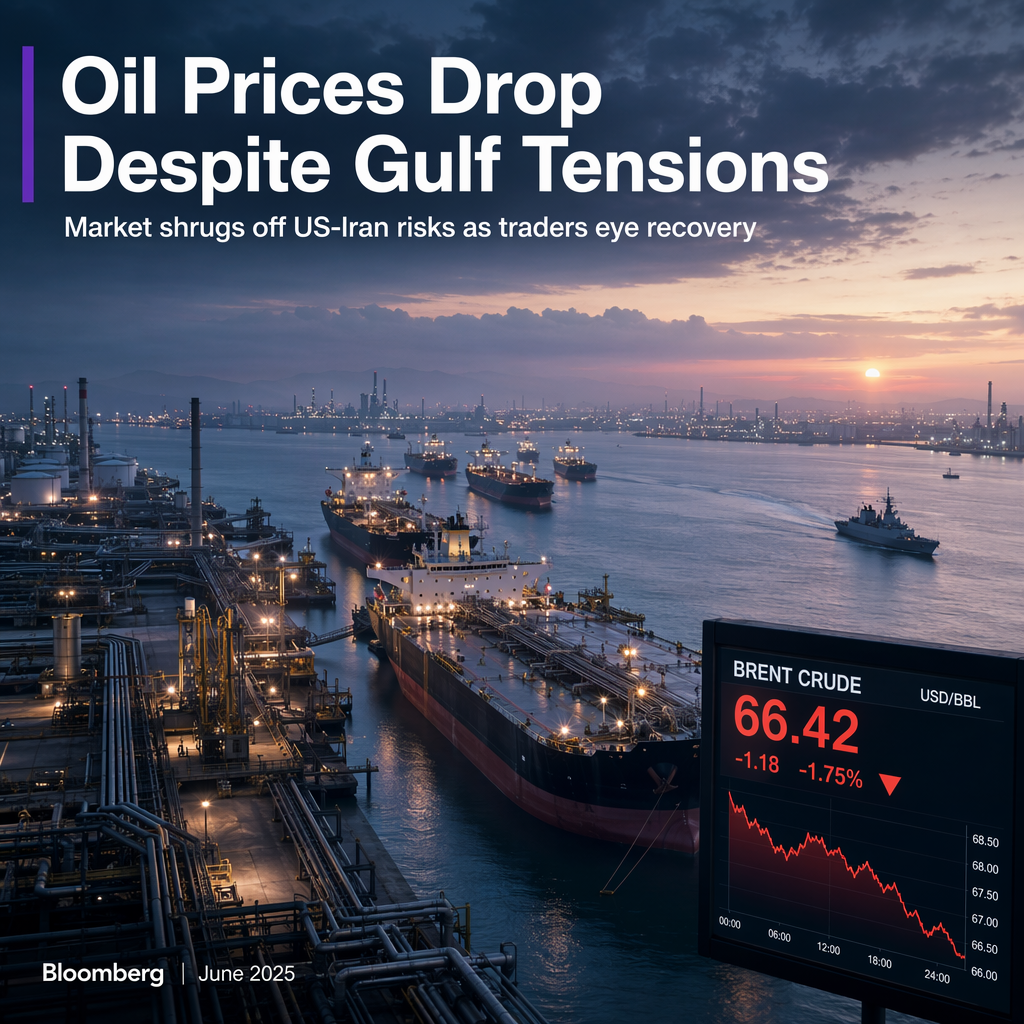
Oil prices have experienced downward momentum despite renewed tensions between the US and Iran and heightened risks in the Strait of Hormuz over the weekend [1][2]. ING analysts Warren Patterson and Ewa Manthey observed that the oil market has posted only modest gains, with participants appearing complacent about the risks to Persian Gulf supply recovery [1][2]. Speculative net long positions in ICE Brent were reduced by 23,790 lots over the last reporting week, leaving a net long of 90,338 lots as of last Tuesday, the smallest since mid-December 2025 [1].
West Texas Intermediate (WTI) crude oil fell below $70.00, trading around $69.80 during early European hours on Monday, as uncertainty surrounded US-Iran ceasefire talks [2]. Axios reported that the US and Iran agreed to halt attacks and plan to meet in Doha, Qatar, on Tuesday to resolve their dispute over the Strait of Hormuz, following renewed military strikes between Washington and Tehran [2]. Iran’s neighbors, Kuwait and Bahrain, reported incoming missiles and drones overnight [2]. A US official stated that “both sides will stand down for now, and vessels can move freely” [2].
Despite these developments, ING strategists noted that traders are focusing on the potential for a continued recovery in oil flows, which they argue is overly optimistic given the ongoing risks [1][2]. The oil market remains technically in oversold territory, but downside momentum persists [1]. The gasoil crack continues to find support amid speculation that Russia may temporarily ban diesel exports due to a domestic fuel shortage following Ukrainian attacks on Russian energy infrastructure. Russia exports around 900,000 barrels per day of diesel [1].
Traders are also awaiting the American Petroleum Institute (API) weekly crude oil report, due later on Tuesday. The report's outcome could influence WTI prices, with a larger-than-expected inventory draw potentially lifting prices, while a bigger build could signal weaker demand or excess supply, further pressuring prices [2].
CONCLUSION
Despite renewed geopolitical risks and supply concerns, oil prices remain under pressure as market participants focus on a potential recovery in Persian Gulf oil flows. Speculators have reduced their exposure, and the market appears complacent about ongoing risks. Upcoming inventory data may provide further direction for oil prices.