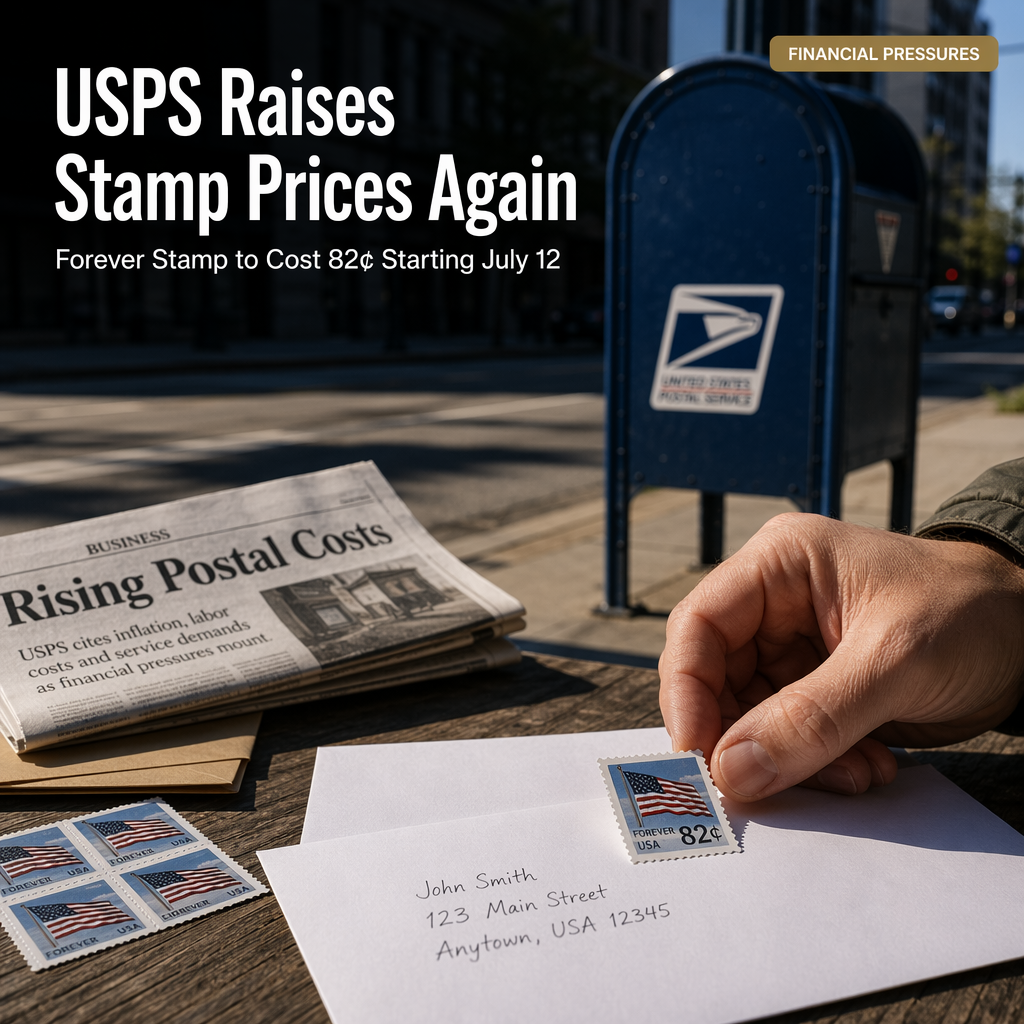
The U.S. Postal Service (USPS) will implement another round of price increases for mailing services this summer after receiving approval from the Postal Regulatory Commission. Effective July 12, the price of a First-Class Mail Forever stamp will rise from 78 cents to 82 cents, marking a 4-cent increase. Overall, mailing service prices will increase by approximately 4.8% according to the Postal Service [1]. Additional price changes include domestic postcards rising from 61 cents to 65 cents, metered 1-ounce letters from 74 cents to 78 cents, and both international postcards and 1-ounce letters from $1.70 to $1.75. The additional-ounce charge for single-piece letters will remain unchanged at 29 cents [1].
USPS stated that the latest price hike is necessary to address rising operating costs and ongoing financial challenges. The Postal Service emphasized its reliance on revenue from postage, products, and services, as it generally receives no taxpayer funding for operating expenses. In its April proposal, USPS cited the need to use all available tools to continue fulfilling its universal service obligation amid a severe financial crisis and increasing operational costs [1].
The Postal Regulatory Commission, while approving the rate changes, expressed concern about USPS's long-term outlook. The commission highlighted significant challenges such as declining mail volume, service performance issues, and a deteriorating financial condition. It noted that USPS had used nearly all its pricing authority for First-Class Mail under current regulations and questioned whether the existing ratemaking system is meeting Congressional objectives. The commission also reiterated that Forever stamps purchased before the increase will remain valid for mailing a standard one-ounce letter regardless of when they are used [1].
CONCLUSION
The USPS's decision to raise stamp prices reflects ongoing financial pressures and operational cost increases. While the rate hike may help address immediate revenue needs, the Postal Regulatory Commission's concerns about declining mail volume and service issues underscore persistent long-term challenges for the Postal Service.