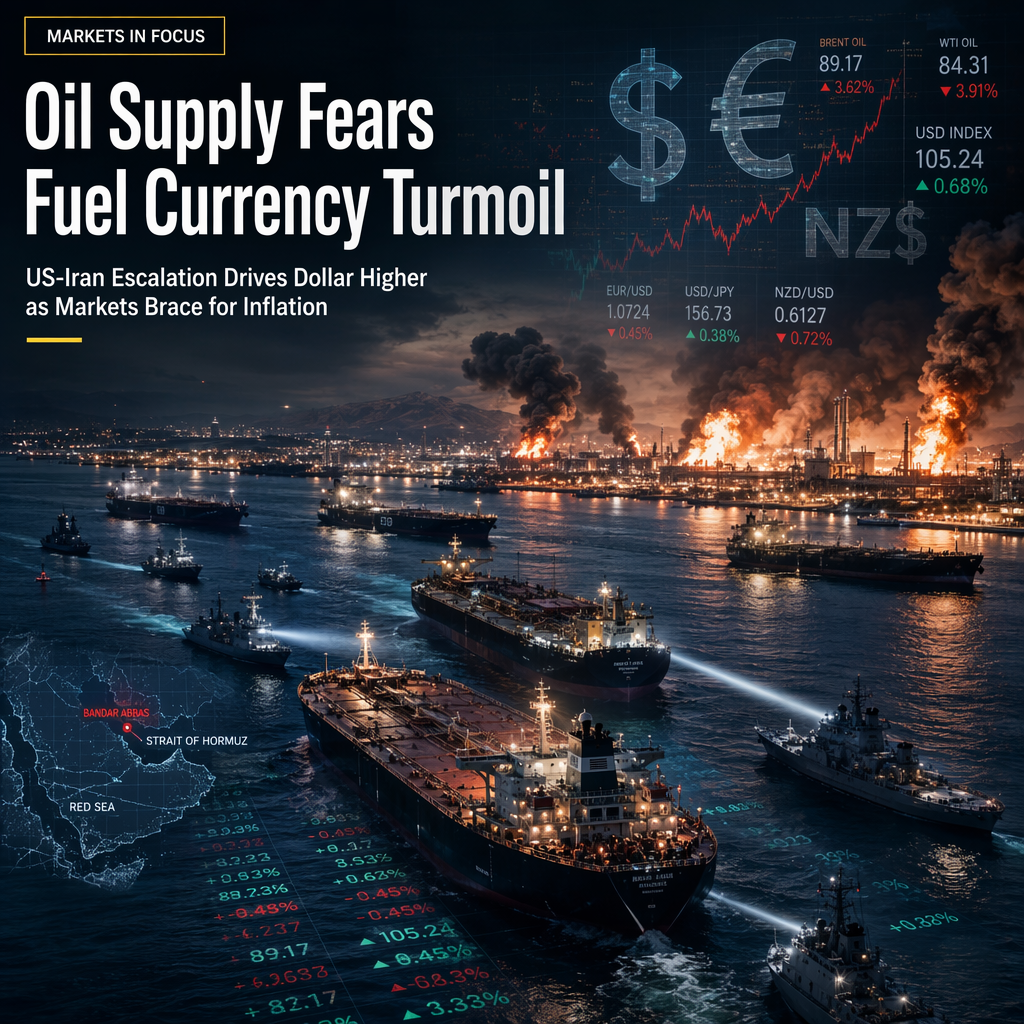
Currency markets are reacting to a confluence of sticky inflation concerns and intensifying geopolitical tensions in the Middle East, particularly between the United States and Iran. The New Zealand Dollar (NZD/USD) traded around 0.5840 during Asian hours on Friday, rebounding after minor losses, supported by persistently high oil prices and expectations of further interest rate hikes. New Zealand’s food prices rose 0.6% month-over-month in June 2026, cooling from a 1.0% increase in May, while annual food inflation slowed to 2.5% in June from 3.2% in May, marking the softest year-over-year increase since February 2025. Reserve Bank of New Zealand Chief Economist Paul Conway warned that sticky inflation could prompt additional rate hikes, reinforcing the currency's resilience despite cooling food inflation data [1].
Meanwhile, the US Dollar Index (DXY) consolidated above 100.50 as traders awaited US President Donald Trump's speech. The US Dollar remains supported by revived Federal Reserve rate-hike bets and heightened geopolitical risk premiums. The US intensified strikes on Iran, targeting civilian infrastructure in Bandar Abbas, including power facilities and a train station, and fired upon a ship accused of breaking a naval blockade. Iran retaliated with missile and drone attacks on US allies and threatened to escalate by targeting regional energy supply routes. Reuters reported Iran has instructed Yemen’s Houthi militia to prepare to close the Red Sea oil route if the US strikes Iranian power infrastructure, posing a significant threat to global energy supplies and keeping crude oil prices elevated. Dallas Fed President Lorie Logan called for modestly higher interest rates, citing insufficient improvement in consumer and wholesale prices, further supporting the DXY [2].
The Euro (EUR/USD) held steady around 1.1445 as traders digested Middle East developments. Explosions were reported in Bandar Abbas, Qeshm, and Ahvaz, with loud explosions heard in Kuwait and Basra. US President Trump threatened to strike Iran's bridges and power plants next week if Iran does not return to negotiations. These escalating tensions are expected to boost safe-haven currencies like the US Dollar, creating headwinds for the Euro and NZD/USD in the near term. The European Central Bank (ECB) is expected to hold rates next Thursday but may hike again in September due to renewed energy price surges and inflation risks. Fed Governor Cook delivered a mildly hawkish tone, emphasizing that one month of softer CPI and PPI does not constitute a trend and signaling a patient but vigilant stance. The FXS Fed Sentiment Index rose by 0.20 points to 126.33, indicating deeper hawkish rhetoric and supporting the Dollar against the Euro and Yen [3].
Across all sources, the threat to global oil supply from potential closure of the Red Sea route and ongoing hostilities is a central market-moving factor, fueling inflation fears and underpinning expectations for sustained policy firmness from central banks. The combination of geopolitical risks and hawkish central bank rhetoric is keeping the US Dollar supported, while the Euro and New Zealand Dollar face headwinds from both inflation and energy supply concerns.
CONCLUSION
Escalating US-Iran tensions and threats to global oil supply are driving currency market volatility, with the US Dollar benefiting from safe-haven flows and hawkish Fed rhetoric. The New Zealand Dollar and Euro face headwinds from inflation concerns and geopolitical risks. Central banks are signaling continued vigilance, with rate hikes remaining a possibility amid persistent inflation and energy price pressures.