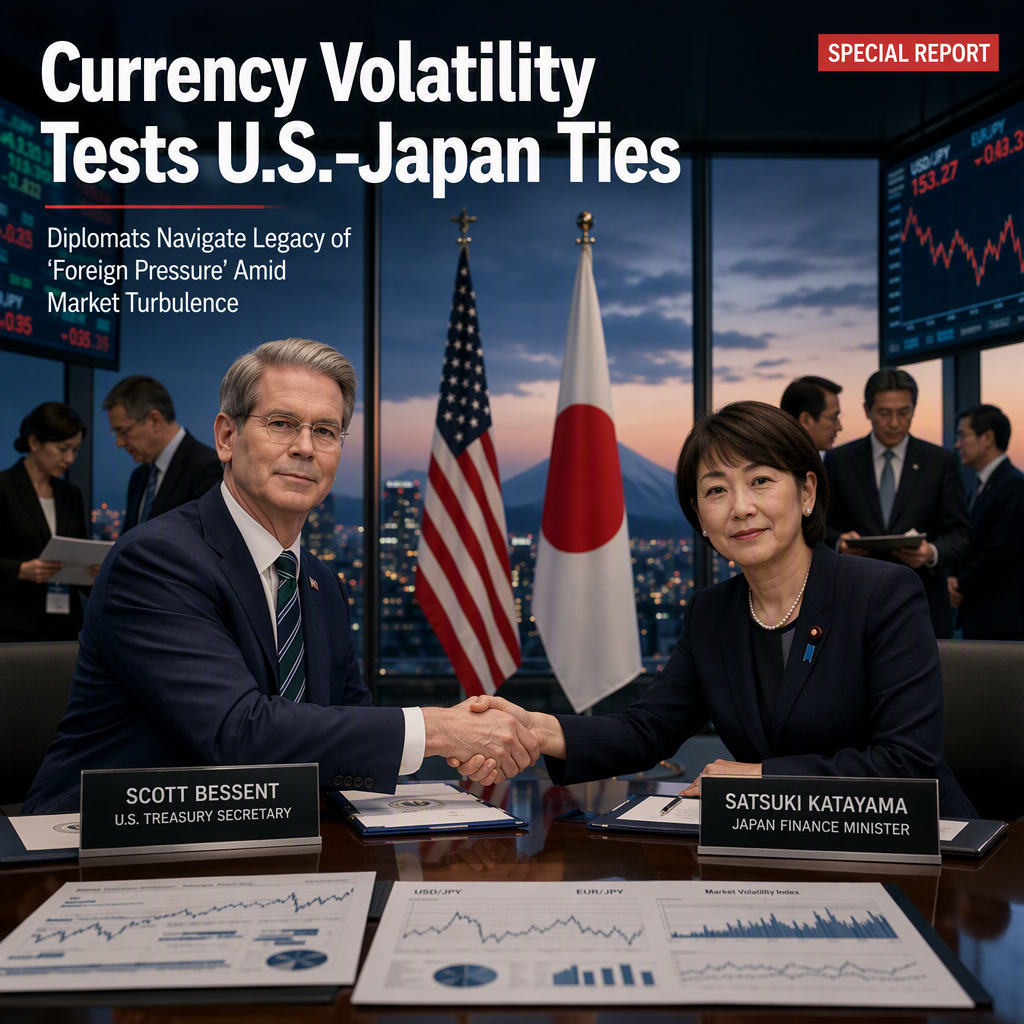
U.S. Treasury Secretary Scott Bessent and Japanese Finance Minister Satsuki Katayama met for the first time following a coordinated intervention, marking a significant moment in ongoing U.S.-Japan economic relations [1]. The meeting comes amid heightened currency volatility and continued discussions regarding fiscal discipline and monetary policy, echoing the historical context of 'gaiatsu'—the Japanese term for 'foreign pressure'—which was prominent during the economic frictions of the 1980s and 1990s [1]. Bessent has actively sought to influence Tokyo's fiscal and monetary policies, reflecting a persistent pattern in the bilateral relationship [1]. The legacy of foreign pressure continues to shape diplomatic and financial negotiations, with both countries striving to balance external demands and domestic priorities [1]. The article emphasizes that Japan's response to foreign pressure should ultimately benefit both nations, advocating for effective cooperation, mutual understanding, and policies that foster economic stability and growth across the Pacific [1].
CONCLUSION
The meeting between U.S. and Japanese officials highlights ongoing concerns about currency volatility and the influence of foreign pressure on economic policy. While the legacy of 'gaiatsu' persists, both sides are urged to pursue cooperative strategies that support mutual economic stability and growth. Market participants may view the renewed dialogue as a sign of medium impact, with potential implications for fiscal and monetary policy decisions.