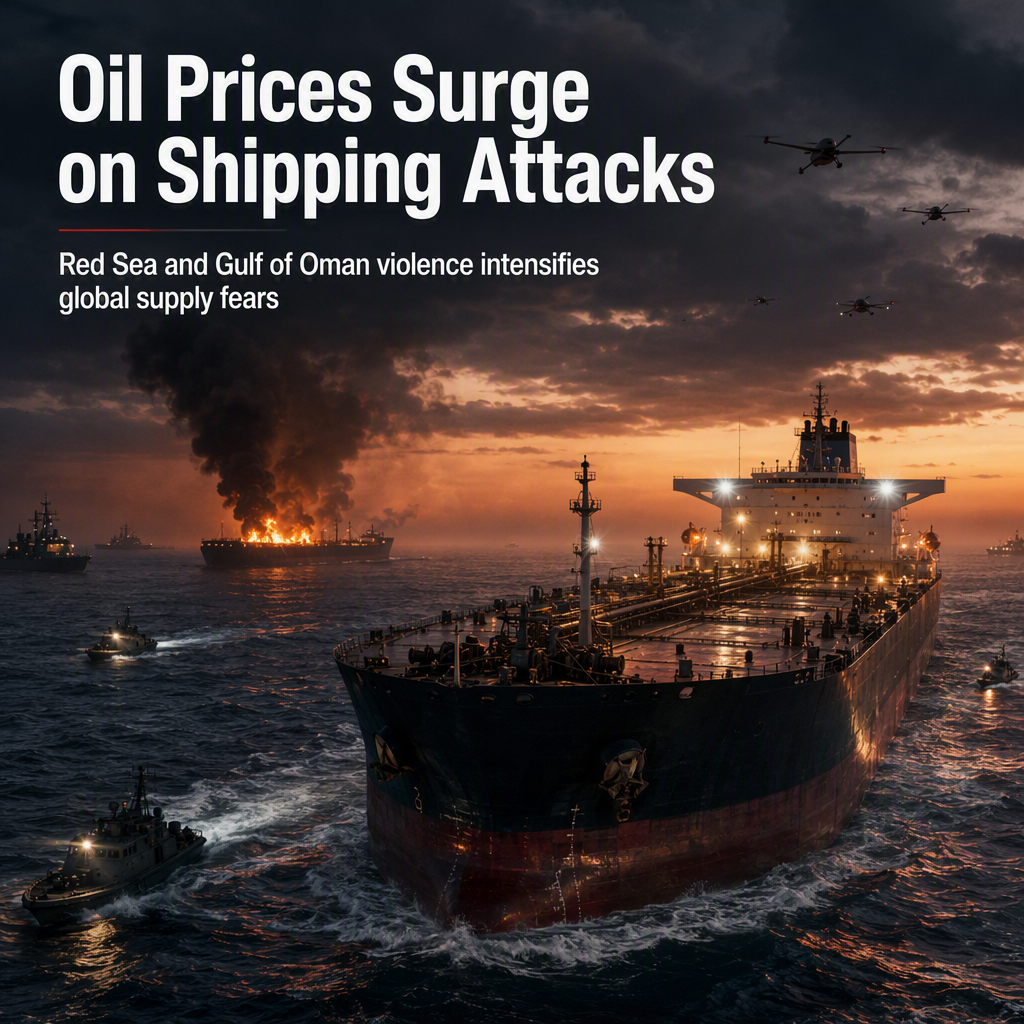
Oil prices increased on Wednesday following deadly attacks on vessels in the Red Sea and Gulf of Oman, which have amplified concerns about the security of global shipping routes and the stability of oil supplies. Brent crude futures, the international benchmark, rose by approximately 1.24% to $90 per barrel, while U.S. West Texas Intermediate crude futures advanced 1.3% to $84.3 per barrel [1].
The escalation in tensions was marked by an attack from Iran-backed Houthi rebels, who killed six people on a cargo ship in the Bab el-Mandeb Strait on Tuesday. This incident represents the first reported fatalities from attacks on Red Sea shipping in over a year [1]. In a related development, U.S. forces reported firing missiles at a container ship in the Gulf of Oman that allegedly attempted to breach Washington's blockade of Iranian ports [1].
These incidents highlight the growing impact of the nearly six-month-old conflict on two critical global shipping lanes, even as diplomatic efforts to reopen the Strait of Hormuz show some signs of progress. Diplomats have indicated movement toward an agreement, with Pakistan expressing optimism about a potential accord between Washington and Tehran. However, Interactive Brokers Senior Economist José Torres noted that markets are still awaiting concrete progress before seeing significant changes in yields or a further rally in stocks [1].
Torres emphasized that investors have been anticipating a deal for several weeks, but tangible developments are necessary to alleviate market concerns. The modest rise in oil prices is seen as evidence that supply risks related to the ongoing conflict have not yet been resolved [1].
CONCLUSION
The recent attacks in the Red Sea and Gulf of Oman have heightened oil supply concerns, driving up prices and underscoring the vulnerability of key shipping routes. While diplomatic efforts to reopen the Strait of Hormuz are ongoing, markets remain cautious, awaiting concrete progress before sentiment improves.