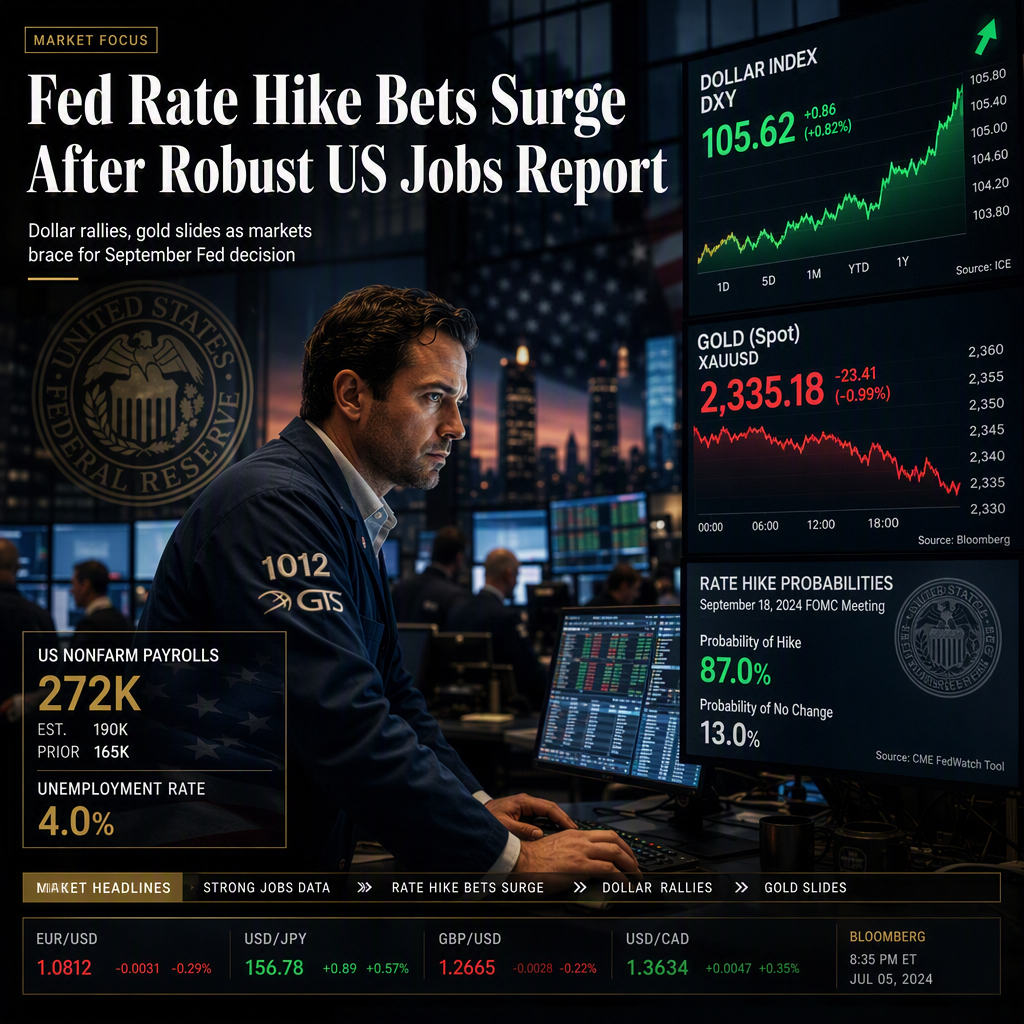
The US Nonfarm Payrolls (NFP) report for August showed a significant increase of 162K jobs, far surpassing market expectations of a 56K gain. July’s figure was revised upward from a previously reported 23K decline to a 21K increase, while the Unemployment Rate remained steady at 4.1% [2][3]. This robust jobs data fueled speculation that the Federal Reserve (Fed) may raise interest rates at its September 15-16 meeting, with money markets pricing in a 61% chance of a hike, up from 54% a day earlier according to Prime Terminal [3], and CME FedWatch Tool showing a 60% probability, up from 50% before the NFP release [2].
Cleveland Fed President Beth Hammack stated that current monetary policy is not restrictive enough, emphasizing that inflation remains above 3 percent and urging action to control inflation. She noted, "inflation is too high—and the longer it stays above our objective, the harder it will be to bring it back down," and that "now is the time for the Fed to hike to control inflation" [1][2]. Fed Chairman Kevin Warsh and Governor Christopher Waller also expressed hawkish views, with Warsh highlighting the jobs market's consistency with full employment and Waller suggesting a rate hike is likely if inflation data next week is strong [3].
The US Dollar initially surged following the NFP release, with the Dollar Index (DXY) climbing to 99.36 before settling around 99.10 [2]. The DXY was up 0.13% at 99.13 later in the day [3]. Against major currencies, the US Dollar was strongest versus the Swiss Franc, up 0.31% [1]. However, the Dollar quickly lost momentum, allowing the Australian Dollar (AUD/USD) to resume its advance, trading around 0.7206, near levels last seen on May 15 [2]. The AUD remains supported by the Reserve Bank of Australia’s hawkish stance, with traders anticipating another rate increase as inflation stays above the RBA’s 2%-3% target band [2].
Gold (XAU/USD) retreated by about 0.80% on Friday, following losses of over 2% after the jobs report. At the time of writing, XAU/USD trades at $4,437 [3]. Technical analysis suggests Gold is consolidating between its 100-day SMA at $4,354 and 200-day SMA at $4,534, with the RSI trending downward toward the 50-neutral level, indicating sellers are gaining momentum [3].
Looking ahead, the outcome of the Fed’s September meeting is expected to hinge on upcoming US Consumer Price Index (CPI) and Producer Price Index (PPI) reports. If both show persistent disinflation, a rate hike might not be necessary [2][3]. The US economic docket next week includes PPI, CPI, jobless claims, the Monthly Budget Statement, and University of Michigan Consumer Sentiment for September [3].
CONCLUSION
Strong US jobs data has increased market expectations for a Fed rate hike in September, with the US Dollar initially strengthening but losing momentum later in the day. Gold prices fell as traders priced in more hawkish Fed bets, while the Australian Dollar advanced on RBA optimism. The final direction of Fed policy will depend on next week’s inflation data, which remains a key focus for markets.