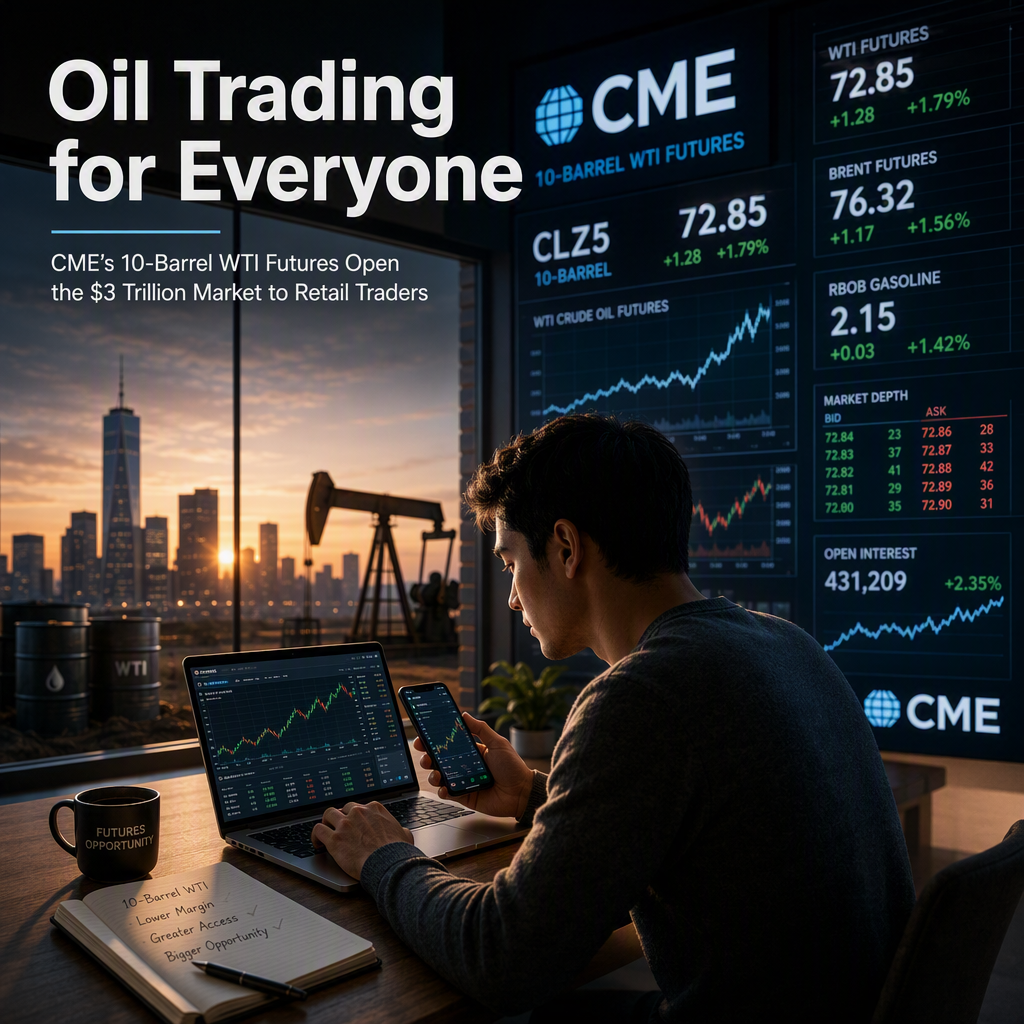
CME Group has introduced a new futures contract for West Texas Intermediate (WTI) crude oil, representing just 10 barrels, significantly lowering the entry barrier for individual traders. At current prices, a trader would pay approximately $860 for this contract, compared to the 100-barrel Micro WTI contract and the 1,000-barrel standard contract previously available [1]. This move is seen as a major step in the ongoing 'democratization' of oil trading, which has been facilitated by the rise of online brokerage platforms, exchange-traded funds (ETFs), and smaller futures contracts [1].
Industry veterans note that retail oil trading activity is surging, particularly during periods of market stress. For example, eToro reported that the number of oil trades it handled was nearly 16 times greater in the three months following the start of the war on Feb. 28 compared to a year earlier [1]. CME's Micro WTI futures averaged 272,000 contracts a day in May, marking a 317% year-over-year increase [1].
Market analysts such as Zavier Wong from eToro Singapore and Carley Garner from DeCarley Trading highlight that oil trading was once dominated by institutional players due to the large contract sizes, but the new CME offering allows traders with much smaller capital to participate. Garner notes that commodity ETFs like the United States Oil Fund (USO) have already enabled speculation for traders at various levels of experience and funding [1].
While the increased accessibility is expected to add liquidity and help producers and consumers hedge their exposure more efficiently, there are concerns that greater retail participation could amplify emotionally driven price swings that are disconnected from fundamental realities [1]. Oil prices edged lower on Monday following OPEC+'s decision to further increase output targets from August and recovering exports from key producers via the Strait of Hormuz, potentially adding to global supplies [1].
CONCLUSION
The launch of CME's 10-barrel WTI futures contract marks a significant shift toward democratizing oil trading, enabling broader retail participation. While this increased access is likely to boost liquidity and hedging efficiency, it may also introduce greater price volatility driven by emotional trading. The market is responding to both structural changes and supply-side developments, with oil prices trending lower amid rising output and exports.