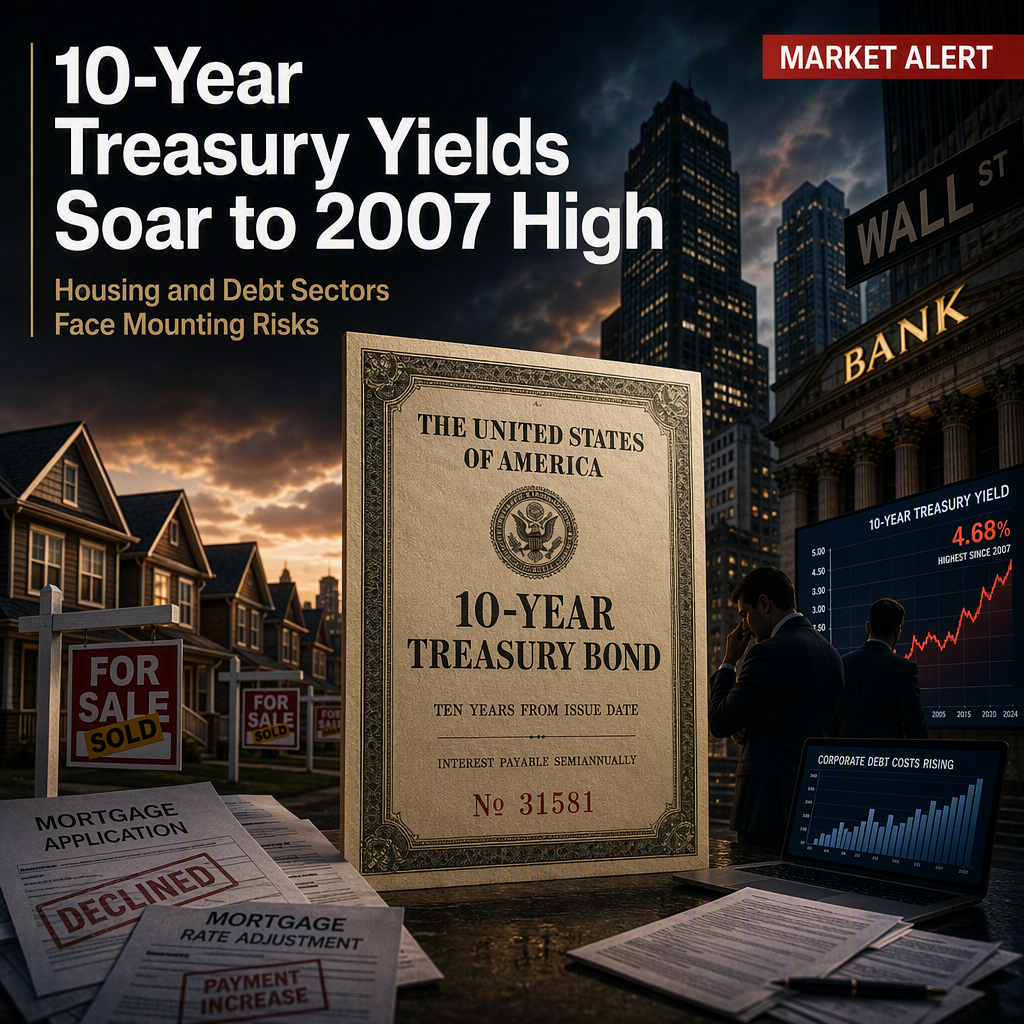
The 10-year Treasury yield reached its highest level since 2007 on Tuesday, surpassing 5% and intensifying concerns about the impact of sustained high borrowing costs on vulnerable sectors of the economy [1]. Market experts noted that while a 5%-plus yield may not cause immediate disruptions, the real risk emerges if rates remain elevated for an extended period, particularly as companies and property owners face refinancing at much higher rates than those secured during the previous low-rate era [1].
Jack Ablin, chief investment officer at Cresset Capital, emphasized that the danger is not the arrival of the 5% yield itself, but the strain that could build over twelve to eighteen months as refinancing at higher rates becomes necessary [1]. Molly Brooks, a U.S. rates strategist at TD Securities, and other industry veterans highlighted the housing sector as especially vulnerable, with mortgage rates potentially nearing 8%. This could lead to a significant freeze in housing transactions, as homeowners with existing mortgages around 3% are unlikely to sell, impacting homebuilders, mortgage originators, title insurers, brokerages, and home-improvement retailers [1].
Banks may experience pressure later if prolonged high borrowing costs lead to deterioration among property or corporate borrowers. However, in the short term, a steeper yield curve could initially support lenders' margins, as banks typically fund themselves at shorter-term rates and lend at higher rates further out the curve [1]. The overarching concern is that debt raised at 2%-3% will soon need to be refinanced at rates closer to 6%-8%, which could expose significant vulnerabilities in the financial system if high yields persist [1].
CONCLUSION
The surge in 10-year Treasury yields to levels not seen since 2007 is raising alarms about the long-term health of housing, commercial real estate, and heavily indebted companies. While immediate market disruption is not expected, the risk of credit stress and transaction freezes grows the longer yields remain elevated, making the duration of high rates a critical factor for investors and policymakers.