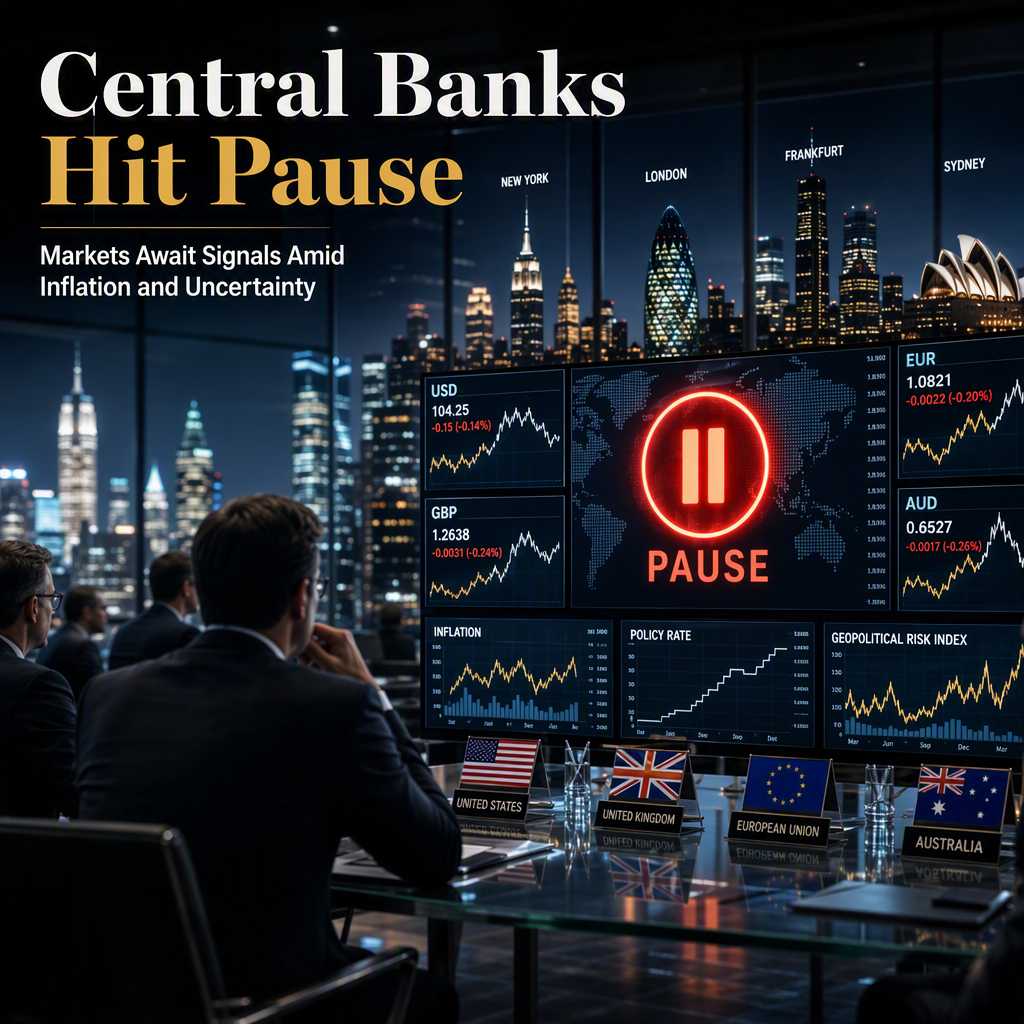
The Federal Reserve is widely expected to keep the Federal Funds Target Rate unchanged at 3.50%-3.75% at its upcoming July FOMC meeting, with UOB Global Economics & Markets Research projecting an extended pause through 2026 and potential easing only in 2Q and 4Q 2027 as transitory inflation pressures subside [1]. However, UOB notes that the risk of further rate hikes has increased due to upcoming inflation data and geopolitical developments, with OIS swaps pricing in roughly a one-third probability of a 25bp rate hike at the July 29 FOMC meeting [1]. Rates on contracts expiring next year declined by approximately 5bps, reflecting reduced expectations for more than two rate hikes over that period [1].
Ahead of the Fed's policy announcement, the US Dollar Index (DXY) trades marginally lower near 101.30, and the GBP/USD pair is slightly higher at around 1.3300, though technical analysis from Scotiabank and others suggests a near-term bearish bias for GBP/USD, with the pair trading below key resistance levels and momentum indicators deteriorating [2]. The CME FedWatch tool shows a 69.5% probability that the Fed will leave rates unchanged, and the last four policy meetings saw no adjustments [2]. Market participants are closely watching the Fed's statement and Chair Kevin Warsh's press conference for cues on inflation and the economic outlook, especially amid ongoing military aggression in the Middle East [2].
In Australia, softer-than-expected inflation data has sharply reduced market-implied odds of an August RBA rate hike, with the probability dropping from over 20% to just 4% after June prices fell by 0.1% month-over-month, against expectations for a 0.2% increase, bringing the year-over-year rate to 3.8%, the lowest in four months [3]. Commerzbank expects the RBA to keep rates unchanged in August and sees no further hikes this year, suggesting continued pressure on the Australian Dollar, especially as oil price volatility complicates the outlook [3].
In the Eurozone, ECB policymaker Christodoulos Patsalides warned that persistent higher oil prices could accelerate inflationary pressures, though he expressed uncertainty about the monetary policy outlook, stating, “We don't know how September data will be” [4]. Patsalides' remarks had no immediate impact on the Euro, with EUR/USD trading marginally higher at around 1.1395 [4].
Looking ahead, the Bank of England is expected to keep interest rates steady at 3.75% with a 7-2 majority, and analysts at Rabobank anticipate steady policy through the end of the year, despite ongoing debate about potential tightening due to soft activity indicators and uncertainty about the autumn budget [2].
CONCLUSION
Central banks in the US, UK, Australia, and the Eurozone are signaling extended pauses in monetary policy amid persistent inflation concerns and geopolitical risks. Market expectations for further rate hikes have diminished, and currencies such as the AUD and GBP remain under pressure. Investors are closely monitoring upcoming policy statements and economic data for further guidance.