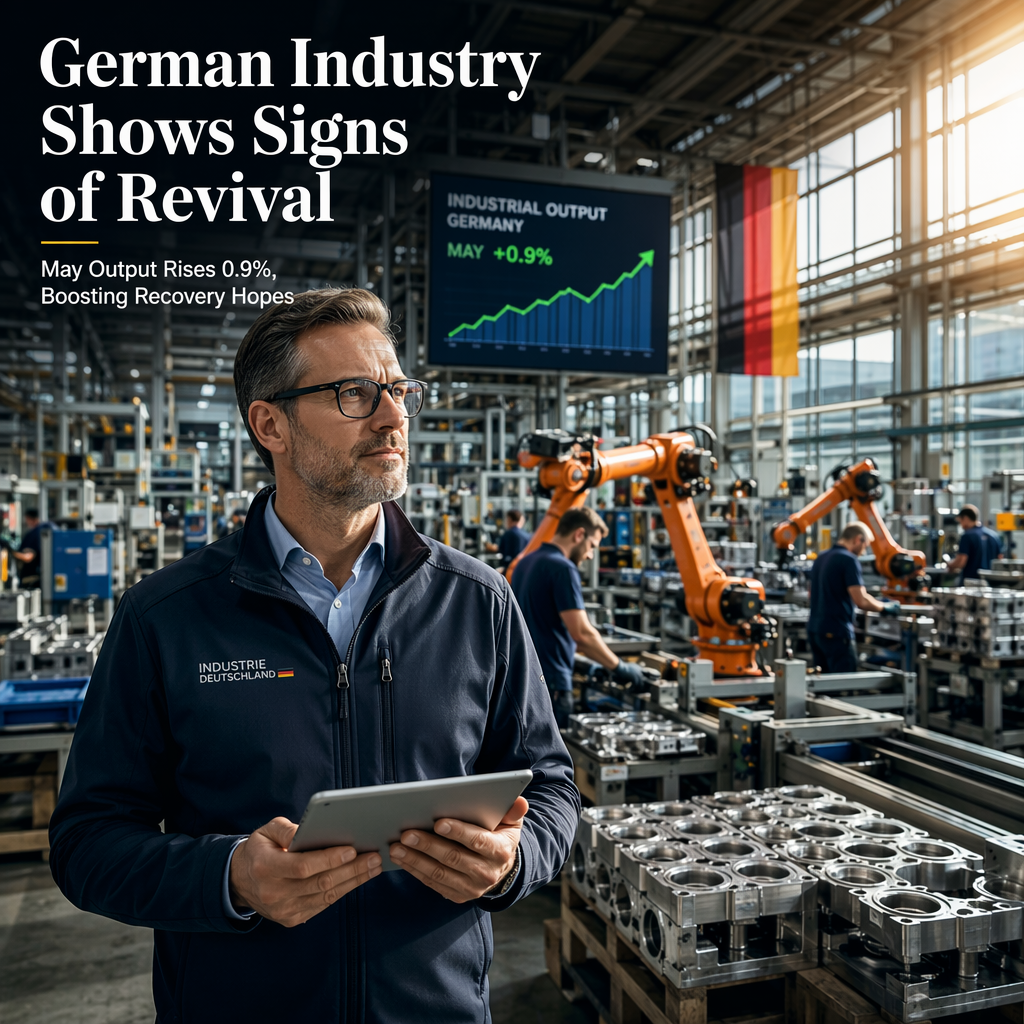
German industrial output increased by 0.9% in May compared to the previous month, according to Commerzbank’s Dr. Ralph Solveen. This uptick means that output in April and May was slightly above the average for the first quarter, with sales performing even better than output during this period [1]. Dr. Solveen notes that these figures suggest a growing likelihood that the German economy avoided contraction in the spring, despite a significant but temporary spike in energy prices [1].
The report highlights that the improvement in industrial output follows a significant increase in industrial orders reported the previous day. However, the 0.9% rise in output was somewhat smaller than the increase in orders, indicating that while the data is encouraging, it is not yet sufficient to declare an end to the sideways trend in production [1]. On average, production in April and May was 0.5% higher than in the first quarter, with manufacturing output (excluding construction and energy production) performing particularly well [1].
Dr. Solveen emphasizes that the available data offers hope that the German economy did not contract in the second quarter, despite the challenges posed by a temporary surge in energy prices linked to the war in Iran and increased uncertainty [1]. Looking ahead, he suggests that the German economy is likely to resume its recovery in the second half of the year, supported by a recent sharp drop in oil prices [1].
CONCLUSION
Recent data indicates tentative improvement in German industrial output, with a 0.9% rise in May and manufacturing sales outperforming output. While not yet signaling a full recovery, these figures suggest the German economy may have avoided contraction and could resume growth later in the year if oil prices remain low.