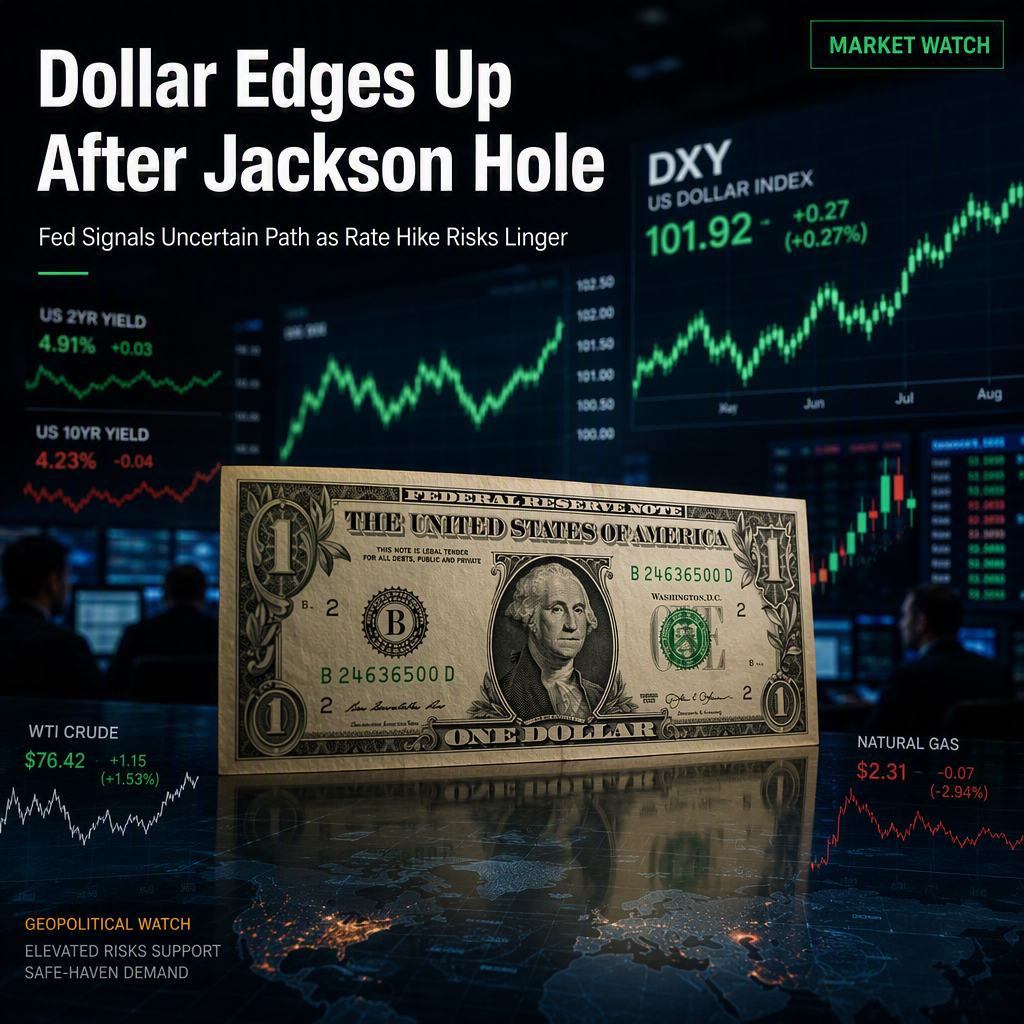
Following Fed Chair Warsh's speech at Jackson Hole, the US Dollar Index (DXY) advanced 0.5% on Friday but retraced some gains, resulting in a more modest 0.3% increase since Friday's open. This movement was accompanied by sharply higher 2-year Treasury yields and a rise in front-end yields across G10 currencies, partly due to renewed escalation in hostilities between the US and Iran and an increase in energy prices [1].
Warsh emphasized that inflation is not falling at a sufficient speed, suggesting that the risk of a rate hike remains alive. However, the FOMC has not raised rates at the previous two meetings under Warsh's leadership, and the Board of Governors is noted for a more dovish stance compared to regional Presidents [1].
Market participants are cautious, as upcoming NFP and CPI data could justify holding rates, limiting aggressive dollar buying. The busy month of central bank meetings globally, with some G10 banks expected to hike and others to hold, adds to the uncertainty. Elevated energy prices may keep central bankers' rhetoric hawkish, but this has also curtailed appetite for US dollar purchases at this stage [1].
MUFG's Derek Halpenny notes that the modest US dollar reaction is logical given the data-dependent risks and the global context of rising yields and central bank activity. The decision on further rate hikes remains a close call, with market participants awaiting key economic data before making significant moves [1].
CONCLUSION
The US Dollar saw a modest gain following Fed Chair Warsh's Jackson Hole speech, reflecting persistent but uncertain rate hike risks. Market sentiment remains cautious, with upcoming economic data and global central bank meetings likely to influence future moves. Elevated energy prices and geopolitical tensions add complexity, curtailing aggressive dollar buying for now.