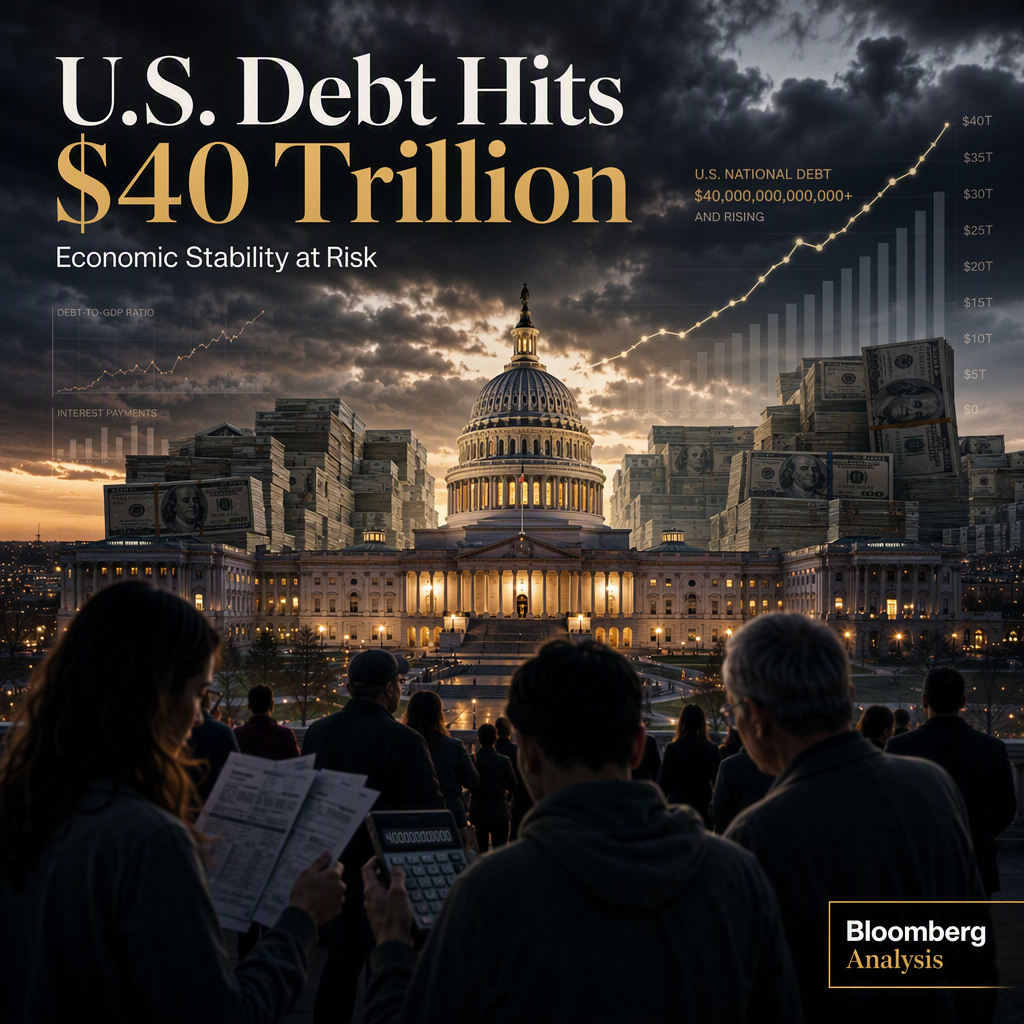
The United States' total public debt outstanding has exceeded $40 trillion for the first time in history, which equates to nearly $300,000 per household, according to the article [1]. This milestone is described as alarming, with the debt-to-GDP ratio now surpassing 124%. Only a few countries, including Sudan, Venezuela, Japan, Greece, and Italy, have worse debt-to-GDP ratios [1]. Debt held by the public is reported to be over $32 trillion, nearing 100% of GDP, and the Congressional Budget Office projects this figure will reach 120% by 2036 [1].
The article outlines several market implications of the rising national debt. A higher debt-to-GDP ratio signals a reduced capacity for the U.S. to service its obligations without increased borrowing, which can slow economic growth, put upward pressure on inflation and interest rates, reduce investor confidence, and diminish the U.S. dollar's standing as the global reserve currency [1]. The 'crowding-out effect' is highlighted, where government borrowing to finance deficits reduces the supply of available funds in the market, leading to higher interest rates and less capital for private investment. This makes it more difficult for businesses to borrow and invest in job creation, innovation, and expansion, and for individuals to take out loans [1].
Concrete data from the Congressional Budget Office is cited: for every dollar the deficit increases, private investment falls by 33 cents, and an additional $1 trillion in debt reduces the long-run U.S. capital stock of productive assets by 0.7-0.8% [1]. The article warns that these effects, while gradual, are damaging and could ultimately result in less money in the pockets of Americans [1].
The article also notes that some policymakers advocate for Modern Monetary Theory (MMT), which argues that a country issuing its own fiat currency can spend without limit. However, the article frames this as a denial of the dangers posed by the national debt [1].
CONCLUSION
The U.S. crossing the $40 trillion debt threshold is seen as a significant risk to economic stability, with potential negative impacts on growth, investment, and the dollar's global standing. Market sentiment is negative, and the article underscores the urgency for policymakers to address the growing debt burden.