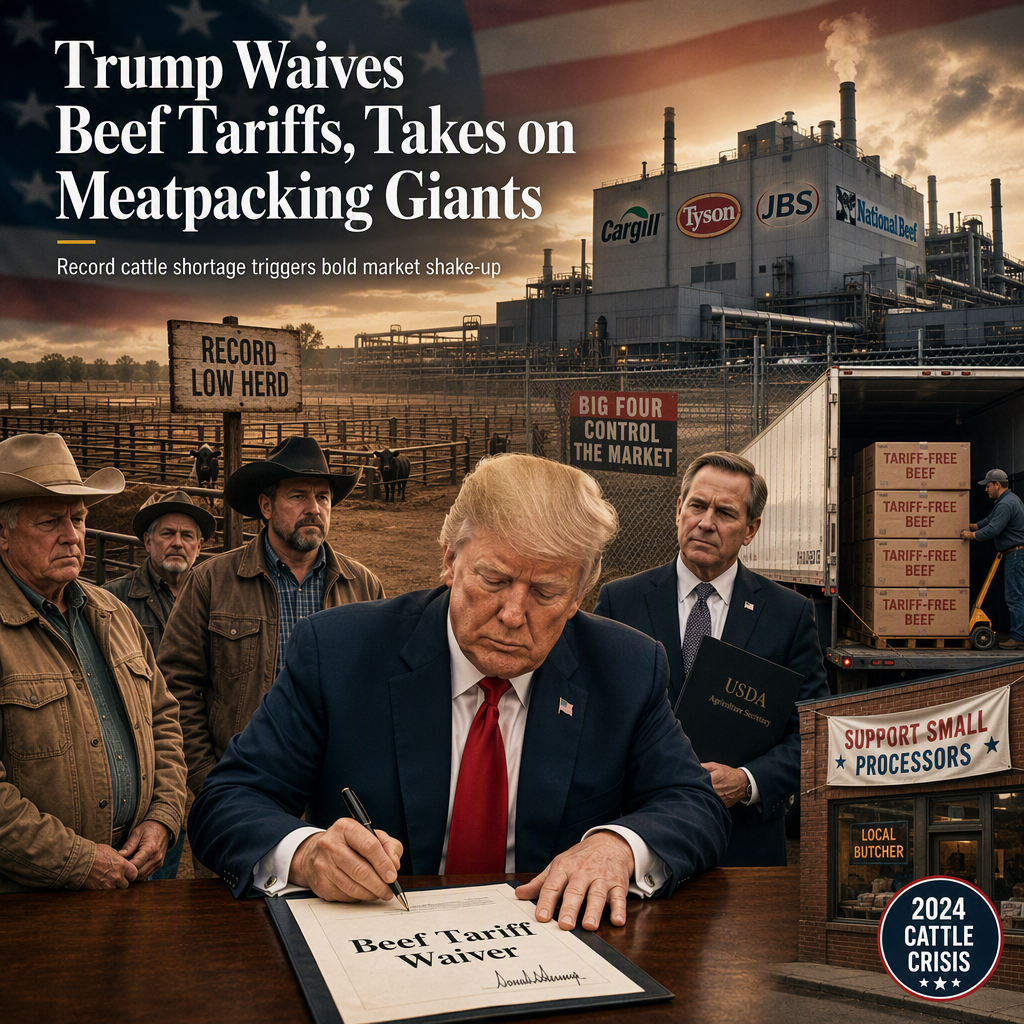
President Donald Trump announced on Friday that he would waive tariffs on imported ground beef for 90 days, allowing up to 300,000 metric tons of foreign beef to enter the U.S. market tariff-free in an effort to bring down high beef prices and help rebuild the nation's cattle herd, which is currently at its smallest size in 75 years [1]. This move comes as American consumers continue to face elevated beef prices due to a domestic cattle shortage, while ranchers struggle with the slow and costly process of rebuilding herds after years of drought, high costs, and herd liquidation [1].
The decision to allow more foreign beef imports has faced backlash from cattle producers and some Republicans, who argue that the core issue is not just imports but the concentration of power among four major meatpacking companies—Cargill, Tyson Foods, JBS USA, and National Beef Packing Co.—which control roughly 85% of the U.S. meat-processing capacity [1]. Ranchers claim this concentration limits their options for selling cattle and forces smaller producers to rely on distant, federally inspected slaughter facilities [1].
In response to these concerns, Trump stated he would authorize legal documents to give farmers and ranchers "the right to process their own food," aiming to break what he described as a "nasty monopoly" in the meat industry [1]. While the legal details of this proposal have not yet been released, Agriculture Secretary Brooke Rollins indicated that the administration would begin unveiling beef-processing actions on Monday, including steps to reduce regulatory barriers, support smaller processors, and expand ranchers’ ability to sell meat across state lines [1].
The market implications are significant, as the combination of tariff waivers and potential regulatory changes could impact both domestic beef prices and the market share of the dominant meatpacking companies. However, the supply crunch is expected to persist due to the lengthy process required to rebuild cattle herds, suggesting that high beef prices may not abate quickly [1].
CONCLUSION
President Trump's actions aim to address high beef prices and ranchers' concerns over industry concentration by waiving tariffs and proposing regulatory changes. While these measures could shift market dynamics and challenge the dominance of major meatpackers, the ongoing cattle shortage means price relief for consumers may take time.