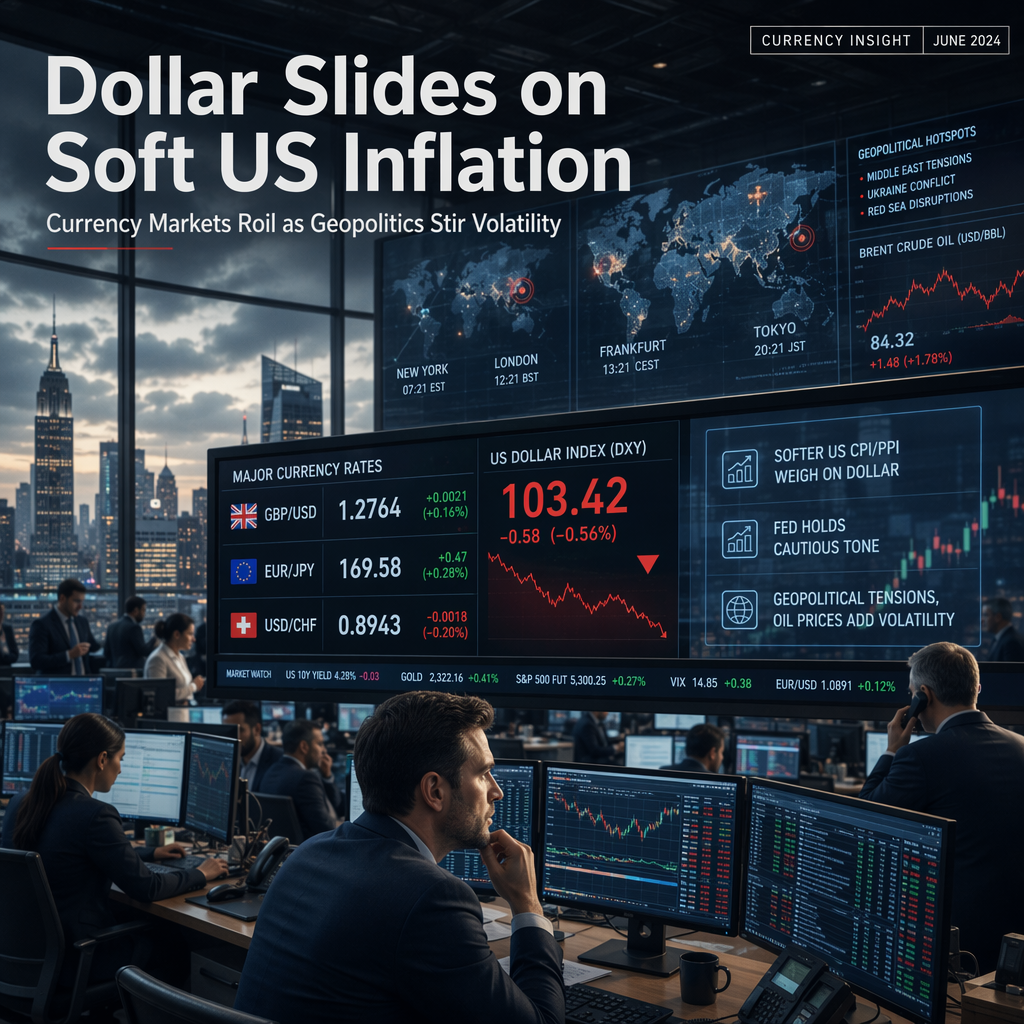
This week, softer US Consumer Price Index (CPI) and Producer Price Index (PPI) reports have weighed on the US Dollar, with the US Dollar Index (DXY) moving back towards the 100.00 level, signaling reduced pressure on the Federal Reserve to tighten policy further [3][4]. MUFG’s Lee Hardman notes that the CPI and PPI readings suggest the Fed’s preferred measure of underlying inflation, the core PCE deflator, is likely to increase by around 0.2% in June, lowering the annual rate to 3.3% [3]. Fed Chair Kevin Warsh downplayed lasting inflationary impacts from AI investment, while Governor Lisa Cook maintained a cautious stance, stating she is prepared to act if disinflation fails to resume but is not in a rush to raise rates [3].
The GBP/USD pair experienced modest intraday losses around the 1.3525 zone after reaching an over two-month high near 1.3555-1.3560, as elevated crude oil prices and escalating US-Iran tensions supported the safe-haven US Dollar and exerted pressure on the pair [1]. However, easing UK political uncertainty and optimism over the UK's fiscal outlook, with incoming Prime Minister Andy Burnham pledging fiscal discipline, helped limit the downside for GBP/USD [1]. Technical analysis indicates a constructive outlook for GBP/USD, with resistance at 1.3547 and 1.3657, and support at 1.3461 and 1.3401 [1]. The British Pound was the strongest against the Japanese Yen this week, with a 0.23% gain [1].
In the Eurozone, the Euro held gains at one-month highs near 186.00 against the Japanese Yen, consolidating a 0.8% rally for the week despite the Yen's strength [2]. Hawkish comments from ECB officials, including Austrian Central Bank Governor Marin Kocher and Bundesbank President Joachim Nagel, have fueled hopes for further ECB rate hikes, supporting the Euro [2]. However, Eurozone industrial production contracted in May, and a 15% rally in oil prices poses risks to both the Eurozone and Japanese economies [2]. The Japanese Yen remained vulnerable after reports that Tokyo lacks a specific plan to repatriate pension fund investments, leading traders to resume JPY-selling positions [2].
The USD/CHF pair traded around 0.8060, just above the weekly low, as soft US inflation figures led traders to pare bets for an immediate Fed rate hike [4]. Despite this, energy-driven inflation fears and US-Iran tensions lent some support to the USD, limiting downside for USD/CHF [4]. Technical analysis shows the pair holding above key support at 0.8000 and the 200-day SMA at 0.7919, with resistance at 0.8100 and potential for further gains if sustained above this level [4]. Momentum indicators suggest a neutral-to-constructive backdrop, though upside progress remains gradual [4].
CONCLUSION
Softer US inflation data has eased expectations for further Fed rate hikes, weakening the US Dollar and impacting major currency pairs. While geopolitical tensions and rising oil prices provide some support to the USD, market sentiment remains cautiously optimistic for GBP and EUR, buoyed by constructive technical setups and hawkish central bank commentary. Overall, the currency markets are experiencing moderate volatility as traders digest mixed signals from economic data and central bank officials.