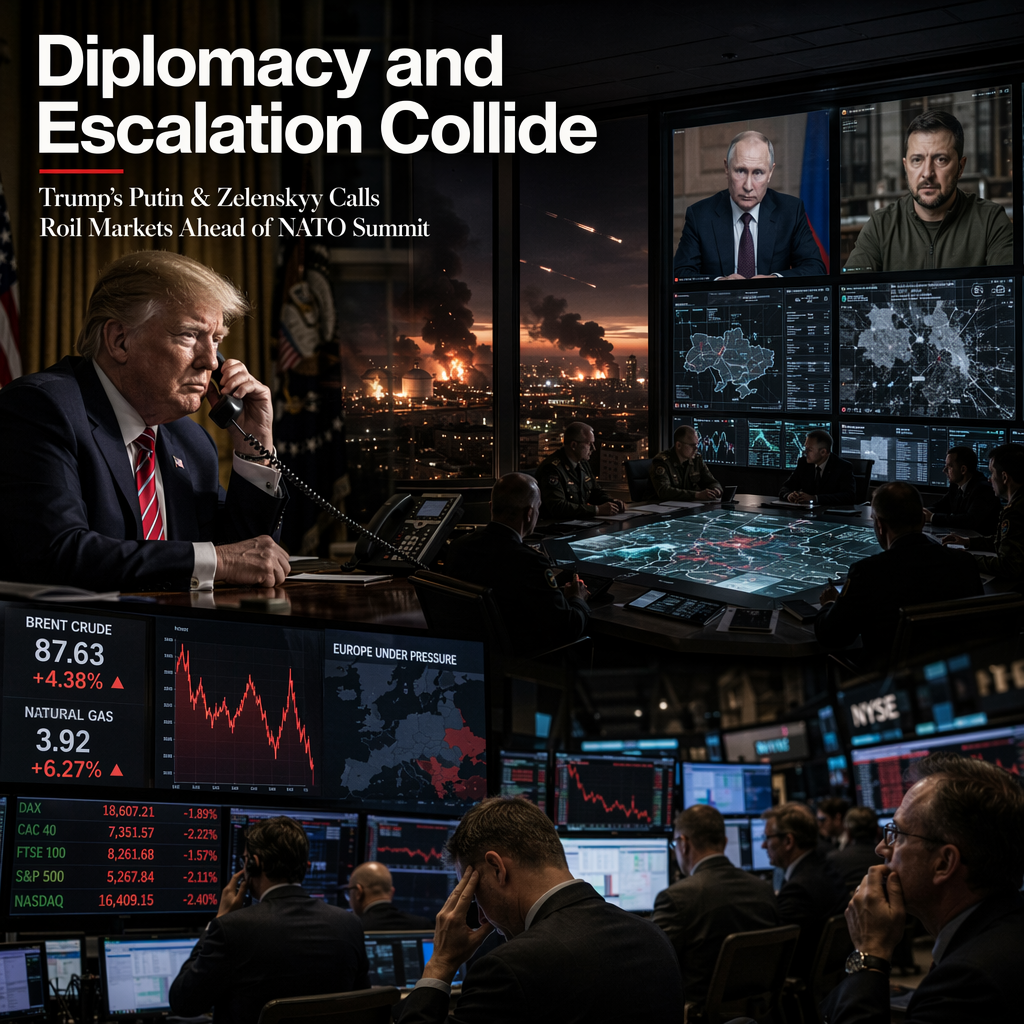
The Russia-Ukraine conflict has entered a new and volatile phase following a series of significant developments over the weekend, just days before a crucial NATO summit in Ankara. U.S. President Donald Trump reportedly held separate calls with Russian President Vladimir Putin and Ukrainian President Volodymyr Zelenskyy, signaling the possibility of renewed diplomatic efforts to resolve the ongoing war. According to the Kremlin, Trump and Putin spoke for 90 minutes, with Trump offering to help find a solution to the conflict. Kremlin aide Yury Ushakov described the conversation as 'businesslike and very constructive,' emphasizing Trump's view that ending the Ukrainian conflict is necessary for mutually beneficial cooperation between the U.S. and Russia [1].
Meanwhile, Ukraine intensified its military campaign by launching drone strikes on an oil terminal and port in St. Petersburg and the surrounding area. In response, Russia conducted its second large-scale attack on Kyiv in less than a week. Ukrainian President Zelenskyy stated that he discussed the latest frontline developments with Trump and agreed to continue talks at the upcoming NATO summit, which will host heads of state from 32 countries in Ankara starting Tuesday [1].
The dual prospect of renewed diplomacy and the risk of further escalation has put investors on alert, as markets attempt to price in heightened geopolitical risk, energy security concerns, and the implications for Europe's defense spending commitments. Analysts cited in the article suggest that Ukraine's recent deep-strike successes, coupled with Putin's acknowledgment of the impact on Russian fuel production, may indicate a shift in momentum toward Kyiv [1].
Trump's history of claiming he could end the Russia-Ukraine war swiftly, along with the recent signing of an interim peace deal with Iran, has fueled speculation about potential changes in U.S. support for Ukraine. However, a White House spokesperson did not provide immediate comment on the situation when contacted [1].
CONCLUSION
The combination of high-level diplomatic engagement and escalating military actions has significantly increased market uncertainty ahead of the NATO summit. Investors are closely monitoring developments for signals of either de-escalation or further conflict, with energy security and geopolitical risk remaining at the forefront of market concerns.