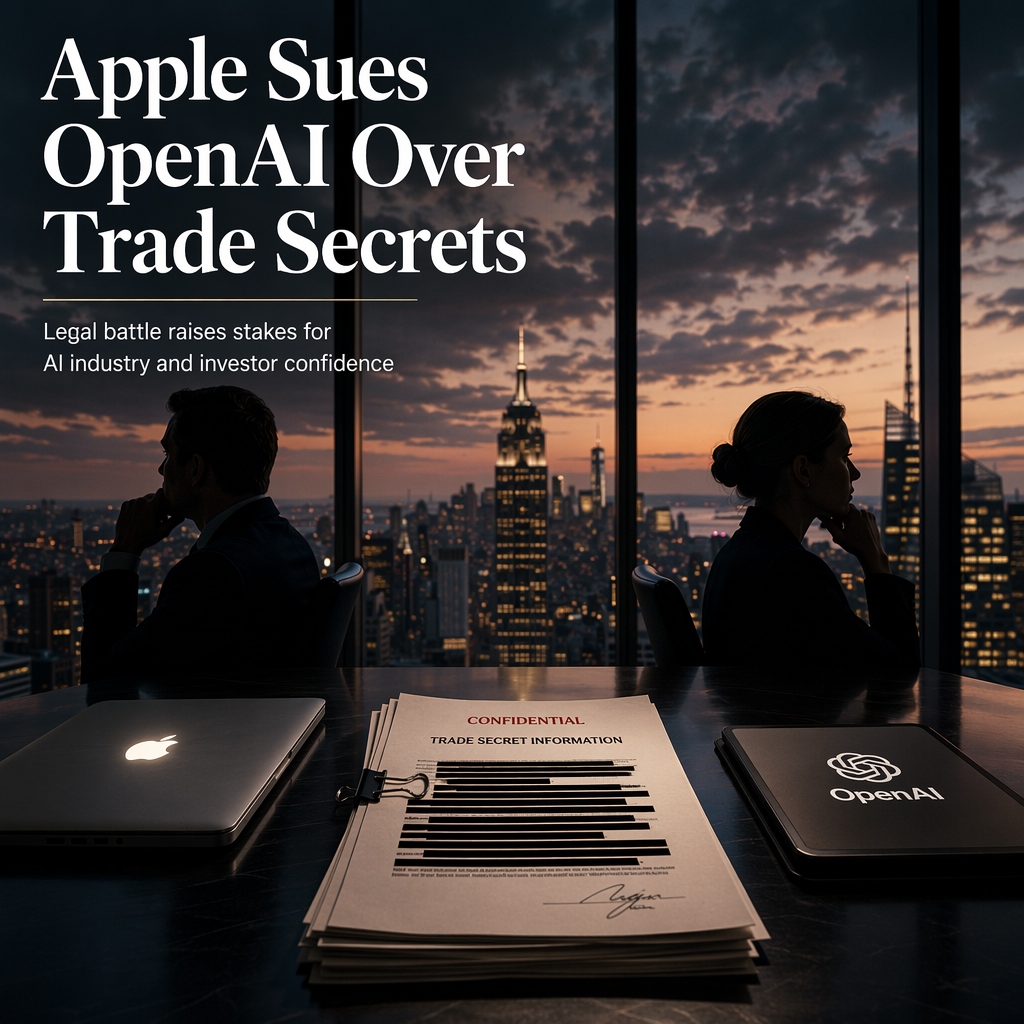
On July 10, 2026, Apple initiated legal action against two of its former employees and OpenAI, alleging the theft of trade secrets that include product designs, manufacturing processes, and supply chain strategies [1]. The lawsuit claims that proprietary information vital to Apple's competitive advantage was misappropriated and shared with OpenAI, raising concerns about the potential impact on Apple's future market position [1].
Although the lawsuit does not specify monetary damages, it underscores Apple's aggressive approach to safeguarding its intellectual property in the highly competitive technology sector [1]. Financial analysts have commented that the outcome of this legal dispute could have significant implications for both Apple and OpenAI, with the potential to affect stock prices and investor sentiment across the technology industry [1].
Industry observers are monitoring the situation closely, particularly for any disclosures that could influence future product launches or manufacturing partnerships [1]. The case brings attention to ongoing issues surrounding data security, trade secrets, and the risks associated with talent migration between leading companies in the artificial intelligence space [1].
CONCLUSION
Apple's lawsuit against OpenAI and two former employees for alleged trade secret theft is seen as a major development with potential market-wide implications. The outcome could influence investor sentiment and stock prices in the technology sector, while also highlighting broader concerns about intellectual property protection and talent mobility in AI.