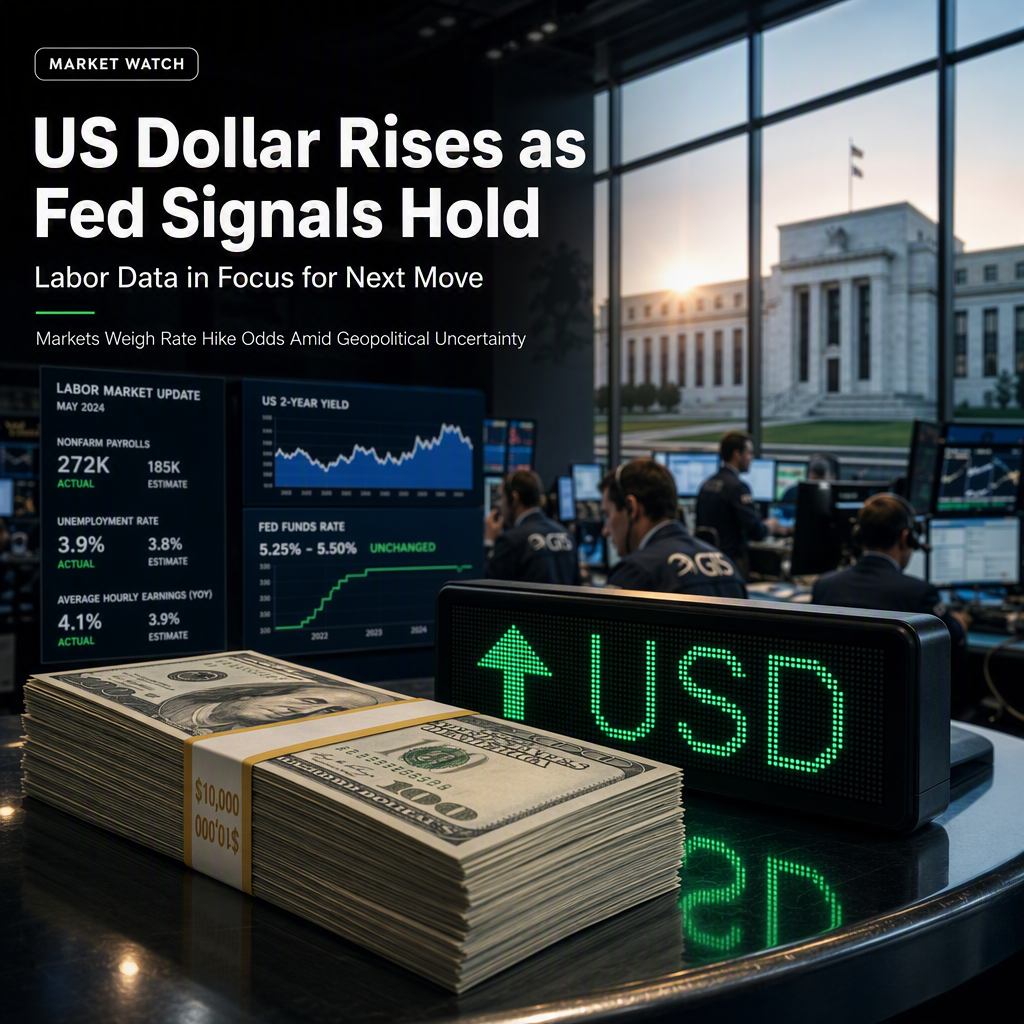
The US Dollar regained ground at the start of the week, buoyed by expectations surrounding upcoming US labor market data and the Federal Reserve's (Fed) policy outlook. Deutsche Bank strategists highlighted that the Fed recently held rates steady, with three officials dissenting in favor of a hike, reflecting persistent inflation concerns. They anticipate two additional 25 basis point increases this year, contingent on forthcoming labor and activity data, including the JOLTS report, ADP employment survey, and the July payrolls report. For July, economists expect payroll growth of +65k, slightly above June's +57k, with the unemployment rate forecast to remain at 4.2%, though there is a risk it could round up to 4.3% if labor force participation rebounds. Average hourly earnings are projected to rise by +0.3% month-on-month, and average hours worked are expected to hold at 34.3 hours. These outcomes would leave nominal income growth unchanged at 4.4% year-on-year [1].
HSBC strategists echoed the data-dependent stance of the Fed, noting that markets now assign a two-thirds probability to a rate hike in September. They emphasized that any further cooling in the labor market or subdued core CPI readings could prompt investors to reassess the timing of the next rate increase. The decision on a September hike is expected to be influenced by macroeconomic releases and inflation prints arriving shortly before the meeting. HSBC also noted that unpredictable geopolitical developments, particularly in the Middle East, could affect the Fed's outlook [3].
On the currency front, the US Dollar's rebound weighed on the Australian Dollar (AUD), with AUD/USD falling to around 0.7000, down 0.30% on the day. This move came despite supportive Chinese economic data and expectations of a restrictive stance from the Reserve Bank of Australia. The market's cautious sentiment was further heightened by conflicting statements from US and Iranian officials regarding military tensions and the reopening of the Strait of Hormuz, as well as OPEC+'s decision to increase oil production in September, which contributed to lower oil prices and reduced expectations of additional Fed tightening [2].
Market participants are closely monitoring the ISM Manufacturing PMI and the upcoming US Nonfarm Payrolls (NFP) report for further guidance on the Fed's policy trajectory. The ISM manufacturing index is expected to improve to 54.1 from 53.3, while the ISM services index is forecast at 54.3, little changed from June. Productivity data for Q2 is forecast to show nonfarm productivity growth of +3.0% and unit labor costs rising by +0.5% [1][2].
CONCLUSION
The US Dollar's recent strength is underpinned by expectations of further Fed rate hikes, with upcoming labor market and inflation data set to play a pivotal role in shaping policy decisions. Market sentiment remains cautious amid geopolitical uncertainties and mixed economic signals. Investors are likely to remain focused on key US macro releases in the coming days, which could drive further volatility and influence the Fed's next moves.