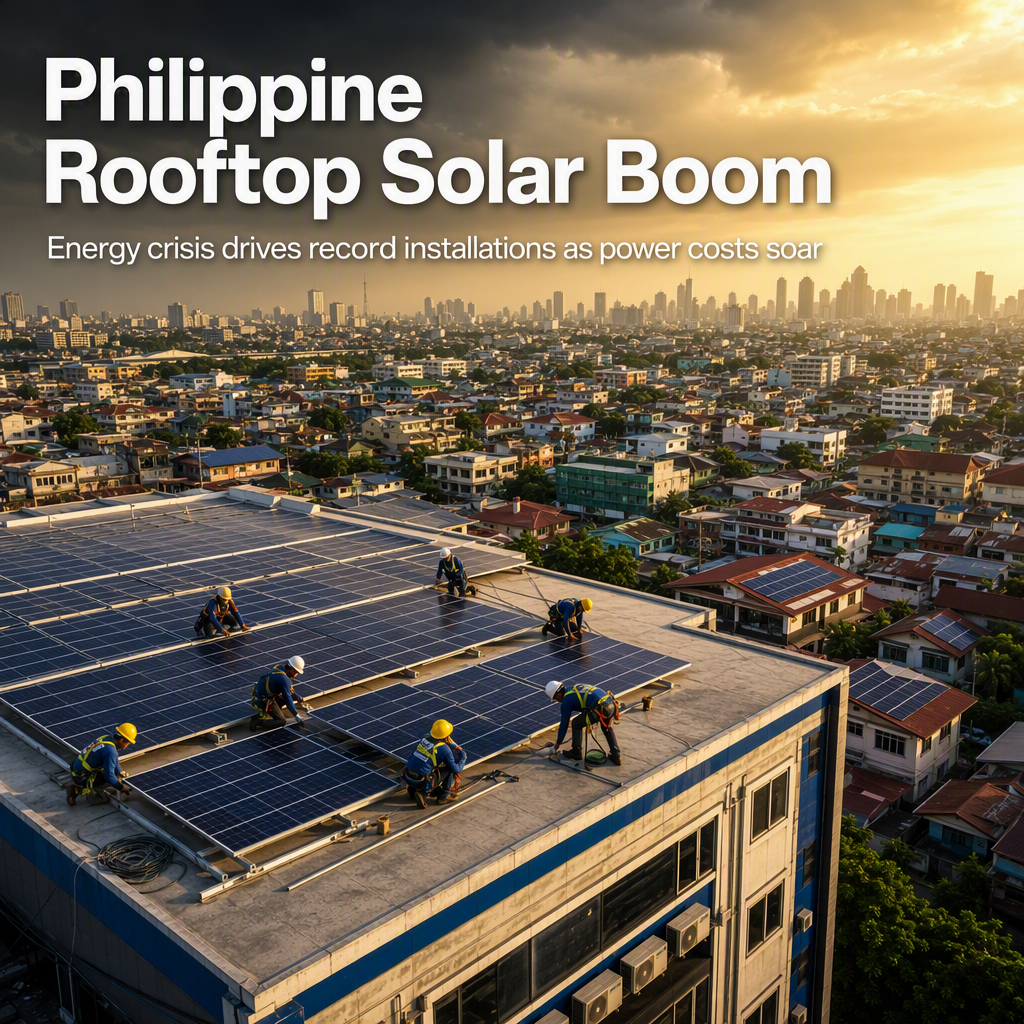
The Philippines is witnessing a dramatic increase in rooftop solar installations as both residential and commercial customers seek to protect themselves from soaring electricity costs, a direct result of the ongoing Iran war energy crisis [1]. Over the past six months, businesses have reported installation growth of several hundred percent, with demand surging in response to volatile global energy markets and spiking Philippine electricity rates [1]. A spokesperson for Solva Energy confirmed a significant uptick in inquiries and orders from homeowners and businesses, attributing this trend to the desire to hedge against unpredictable price hikes [1].
Financial data from local solar suppliers corroborates this surge, showing a several hundred percent increase in installation orders compared to the same period last year [1]. Commercial facilities are investing in large-scale rooftop arrays to offset operational costs and secure stable energy prices, while rural areas are also experiencing increased adoption due to rising power costs and concerns over supply security [1]. The Philippine government has declared an energy emergency in response to the crisis, further highlighting the severity of the situation [1].
Industry reports indicate that, despite global fluctuations, solar panel prices in the Philippines have remained stable, supported by strong local demand and favorable government policies [1]. However, market participants are closely monitoring potential supply chain challenges and bottlenecks that could impact future growth [1].
Analysts expect the solar boom to persist as long as Middle East tensions continue, with industry experts advising that investments in solar infrastructure may yield attractive long-term returns given current price levels and ongoing volatility in traditional energy sources [1]. Government incentives and rapidly rising electricity tariffs are providing additional support for the sector, while price resistance is noted at current installation rates [1]. An energy analyst emphasized that the Iran war has fundamentally shifted energy market sentiment, positioning solar adoption as both a financial hedge and a strategic necessity for Philippine consumers [1].
CONCLUSION
The Iran war energy crisis has triggered a significant shift in the Philippine energy market, driving a nationwide boom in rooftop solar installations. With electricity prices soaring and government support in place, solar energy is increasingly seen as a vital hedge against volatility and a strategic move for both businesses and households. This trend is expected to continue as long as geopolitical tensions persist.