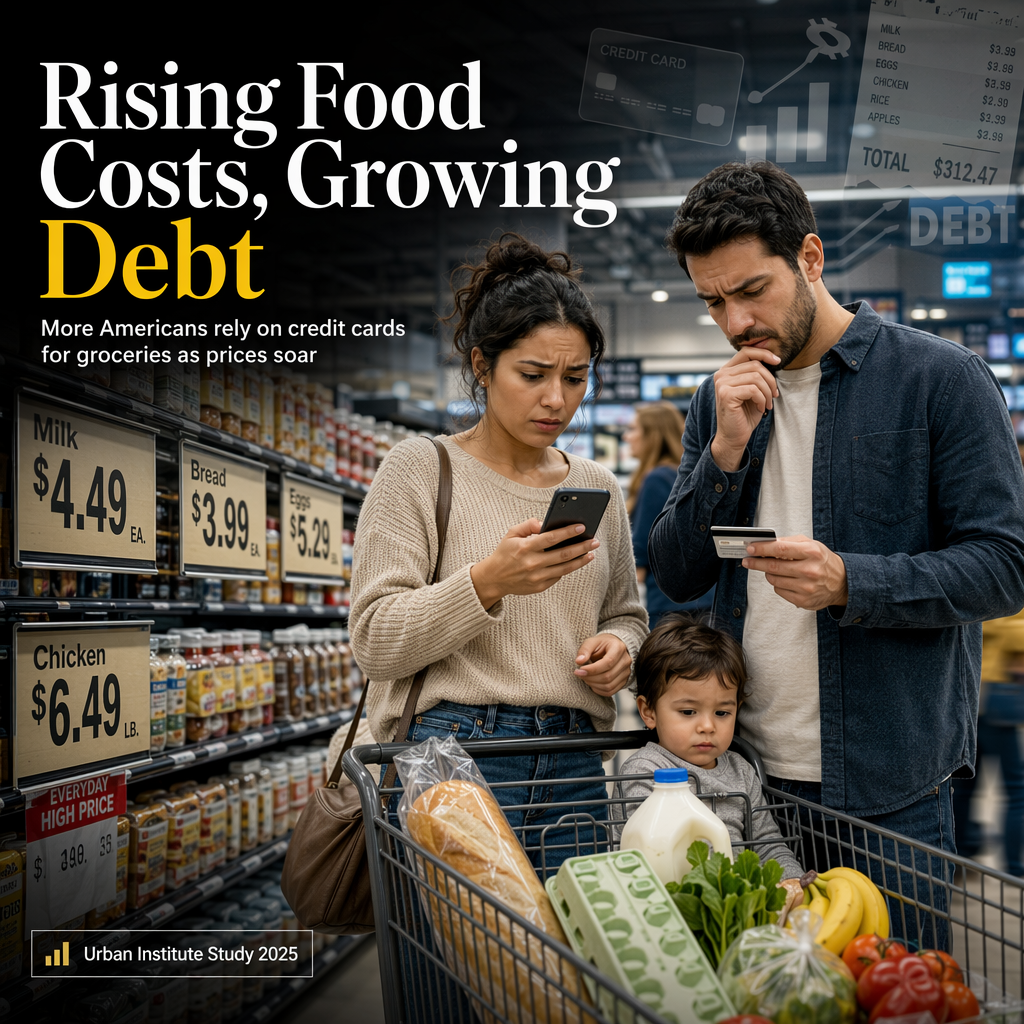
A new study by the Urban Institute reveals that a 32% cumulative increase in food costs over the past five years has forced more than one in four working-age Americans to rely on credit card debt to pay for groceries [1]. The report highlights that groceries remain one of the largest household expenses, and the persistent rise in food prices has made affordability a significant concern for many families [1].
The study found that between 2023 and 2025, the share of working-age adults who used credit cards for groceries and failed to make the minimum payment increased, indicating worsening financial distress [1]. Specifically, the percentage of individuals missing minimum payments on grocery-related credit card debt rose from 7.1% in 2023 to 8.7% in 2025 [1]. Middle-income earners, defined as those earning between 200% and 400% of the federal poverty level, saw missed minimum payments jump from 9.3% in 2023 to 12.3% in 2025 [1].
The report also notes that 63.2% of working-age Americans aged 18-64 charged grocery purchases to credit cards in the previous year, with over a quarter of them experiencing repayment difficulties [1]. Additionally, 8.9% of adults used 'buy now, pay later' installment plans for food, and more than a third (34.8%) of these users missed an installment payment [1].
Market implications include ongoing pressure on consumer finances, with The Conference Board Chief Economist Dana M. Peterson predicting that elevated food prices will persist due to supply chain issues and global shocks, making it unlikely for the Federal Reserve's 2% inflation target to be reached before 2028 [1]. April's personal consumption expenditures (PCE) index rose 0.4% month-over-month and 3.8% year-over-year, underscoring continued inflationary pressures [1].
The Urban Institute cautions that while access to credit and savings can help families meet basic needs, overreliance on these strategies may lead to greater financial instability if debts become unmanageable or savings are depleted without recovery [1].
CONCLUSION
The study underscores the growing financial strain on American families as food prices continue to rise, pushing more people into credit card debt and increasing missed payments. Persistent inflation and reliance on debt for basic needs signal ongoing challenges for consumers and potential risks for broader financial stability.