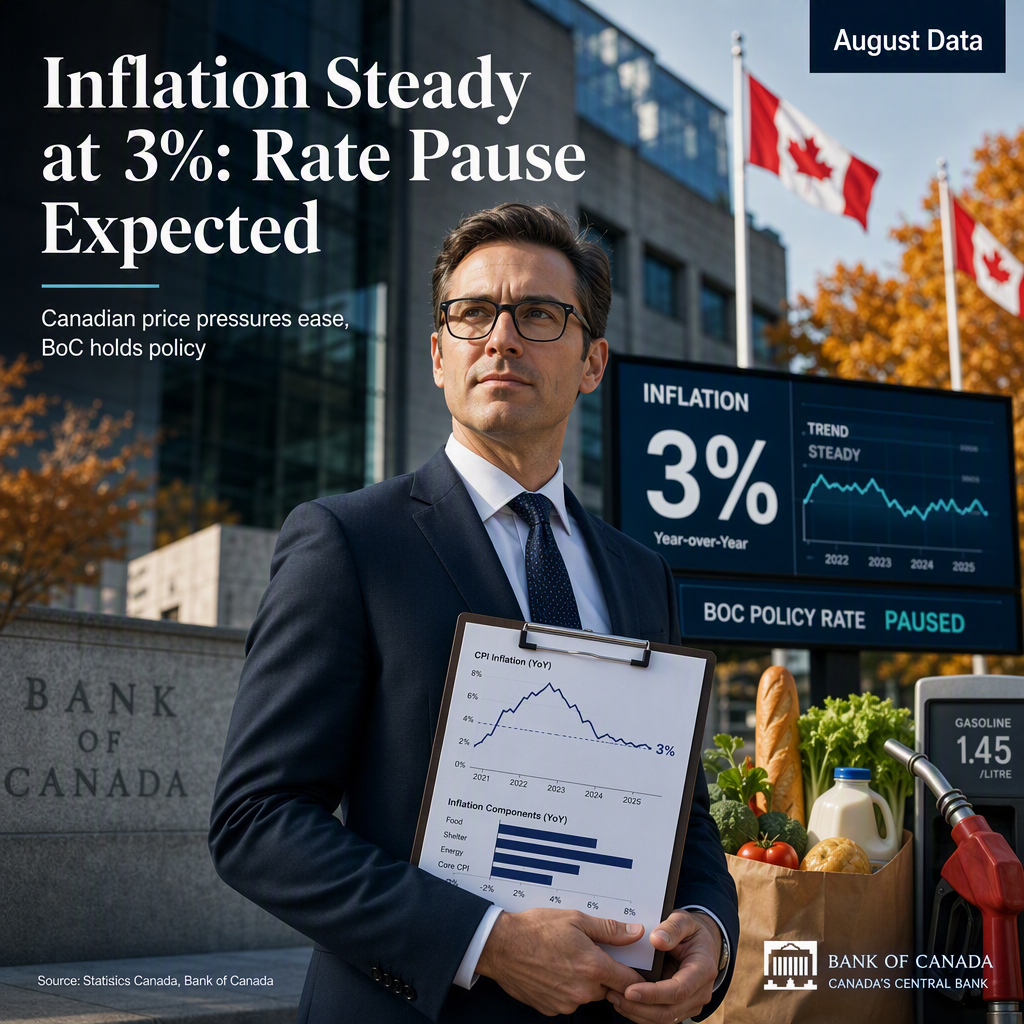
Canadian inflation remained steady at 3% year-over-year in August, unchanged from July, according to Royal Bank of Canada (RBC) economist Abbey Xu [1]. While food and energy prices continued to be elevated, they showed some signs of easing. Core inflation measures, including the Consumer Price Index (CPI) excluding food and energy, as well as the Bank of Canada’s CPI-trim and CPI-median, stayed close to the central bank’s 2% target [1].
Xu noted that underlying inflation pressures were comparatively contained, and there was limited evidence that higher energy costs were leading to significant second-round inflation effects [1]. However, she cautioned that the risk of greater inflation pass-through would increase if oil prices remain elevated for an extended period, making the persistence and breadth of underlying price pressures more significant than short-term headline inflation changes [1].
Based on the August inflation data, RBC’s base case is that the Bank of Canada will keep interest rates unchanged through the end of 2026, with gradual rate hikes expected in 2027 as the economy strengthens [1]. Persistent strength in oil prices could, however, tilt risks toward earlier monetary tightening [1].
CONCLUSION
Canadian inflation data for August supports expectations that the Bank of Canada will maintain its current interest rate stance through 2026, with gradual hikes anticipated in 2027. The outlook remains contingent on energy prices, which could prompt earlier action if they stay elevated.