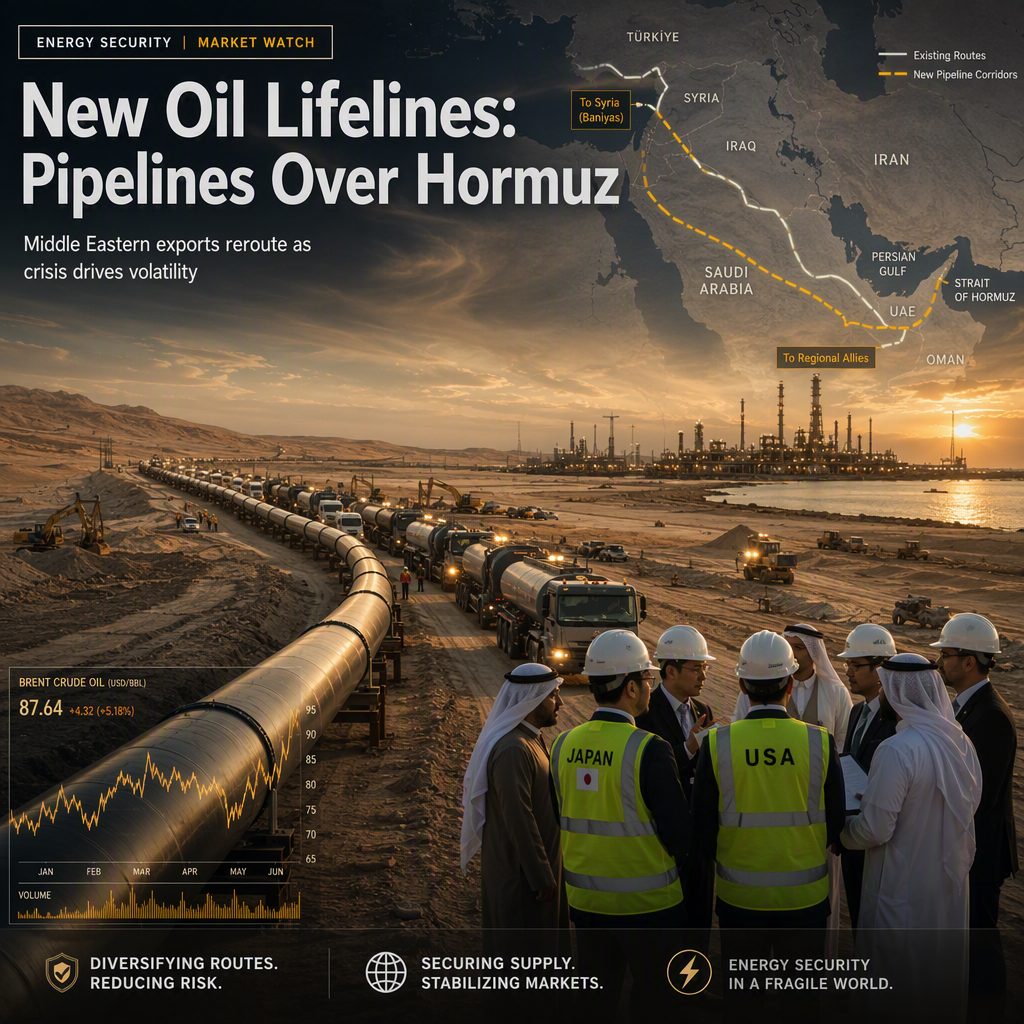
Middle Eastern oil-producing nations are urgently pursuing alternative pipeline routes to bypass the Strait of Hormuz, which remains closed due to ongoing tensions and military action related to the US-Iran war [1]. Japan is preparing to support Saudi Arabia and the United Arab Emirates in expanding their crude export routes, while Iraq is refurbishing a pipeline connection to Syria with US assistance [1]. This reflects the heightened need for secure export pathways as global oil inventories continue to decline, and insurance and reinsurance discussions are underway in Japan to facilitate Gulf oil flows [1].
Kuwait and Qatar face significant challenges in establishing bypass routes, lacking direct alternatives and requiring regional cooperation or costly infrastructure investments [1]. In contrast, Saudi Arabia and the UAE have already begun expanding their pipeline networks, positioning them more favorably amid the crisis [1]. Market sentiment is highly sensitive, with the prolonged closure of Hormuz contributing to supply concerns and upward pressure on crude prices. Technical analysis indicates continued volatility, with support at $82/barrel and resistance at $89/barrel [1].
Regional officials emphasize the importance of diversification for energy security. A Kuwaiti energy ministry spokesperson stated, "Our priority is to ensure uninterrupted delivery of oil to global markets. Pipeline alternatives are essential for energy security" [1]. Energy analysts' chart descriptions show declining global inventories and potential breakout points if the Hormuz situation persists, with price levels hovering above recent support zones but resistance at pre-war highs [1].
The US-Iran war has reshaped Asia's energy landscape, prompting new alliances and investments in pipeline infrastructure. While Saudi Arabia and the UAE are better positioned to withstand the crisis, Iraq, Kuwait, and Qatar may benefit from international assistance and technological cooperation to expedite alternative export routes [1]. Market strategists advise caution, recommending traders monitor headline risk and prepare for sharp moves in oil futures [1].
CONCLUSION
The closure of the Strait of Hormuz has intensified efforts among Middle Eastern oil producers to secure alternative export routes, with Japan and the US playing supportive roles. Supply concerns and declining inventories are driving volatility and upward pressure on crude prices, making energy security and diversification critical priorities for the region. Market participants are advised to remain cautious amid ongoing headline risks and technical uncertainties.