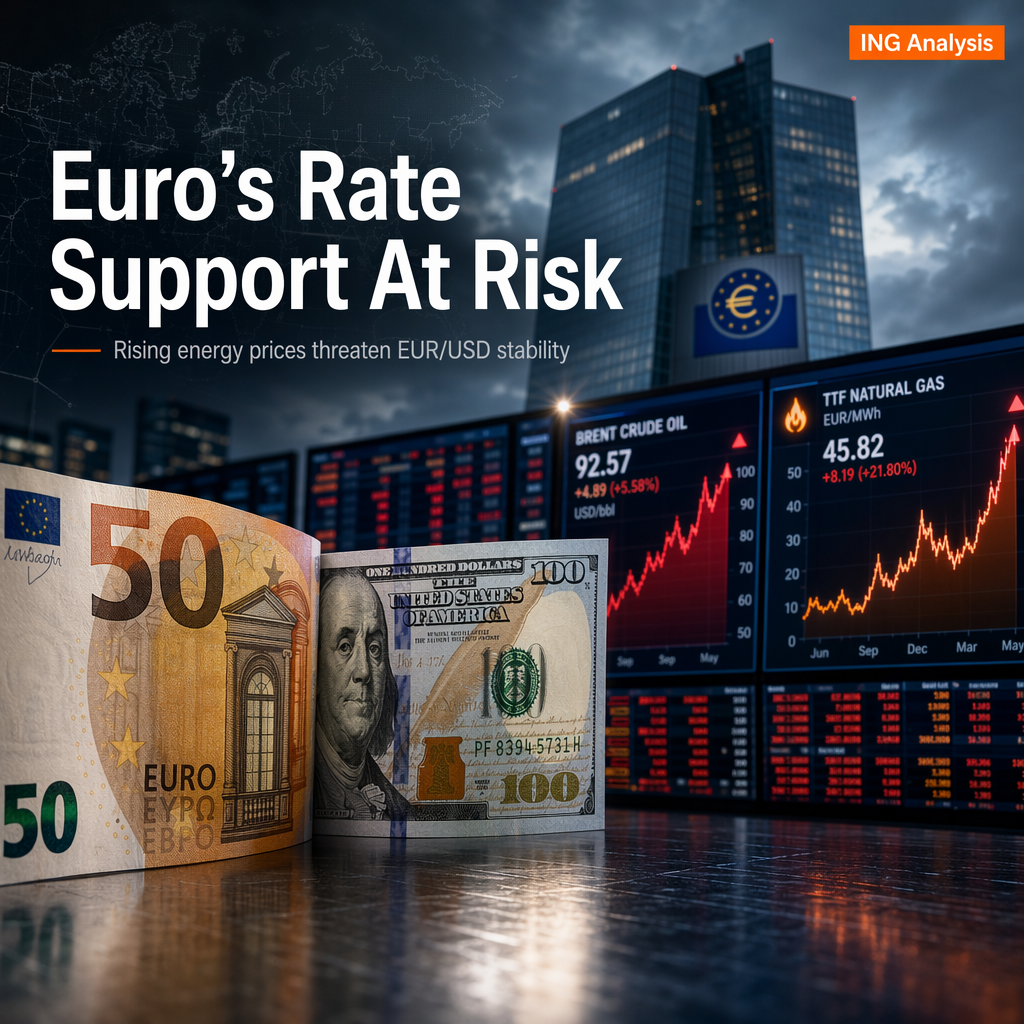
ING’s Francesco Pesole highlights that the EUR/USD short-term rate differential is currently supporting the Euro, especially as Gulf tensions escalate and EUR front-end rates recover [1]. The two-year swap rate gap has tightened by approximately 15 basis points since the start of July, attributed to a rebound in oil prices coinciding with reduced expectations for further ECB rate hikes, which allowed more room for EUR front-end rates to recover [1].
However, ING expresses skepticism about the sustainability of this rate gap as a support for EUR/USD if energy prices continue to rise [1]. The report notes that markets may struggle to price in more than two additional ECB hikes by year-end, currently estimated at 46 basis points, due to a less hawkish stance from ECB officials and the negative medium-term implications of an energy crisis, especially when combined with ongoing Fed tightening [1].
The spike in gas prices is flagged as particularly concerning, as it negatively impacts the eurozone’s terms of trade more than oil does [1]. ING outlines a scenario where, if Brent crude returns to $90-100 per barrel and TTF gas prices reach €55-60 per MWh, EUR/USD could risk moving toward 1.10 [1].
CONCLUSION
ING cautions that while the Euro is currently supported by rate differentials, this support may erode if energy prices continue to climb. The combination of limited ECB rate hike potential and worsening eurozone terms of trade could put downward pressure on EUR/USD, with a move toward 1.10 becoming a tangible risk under higher energy prices.