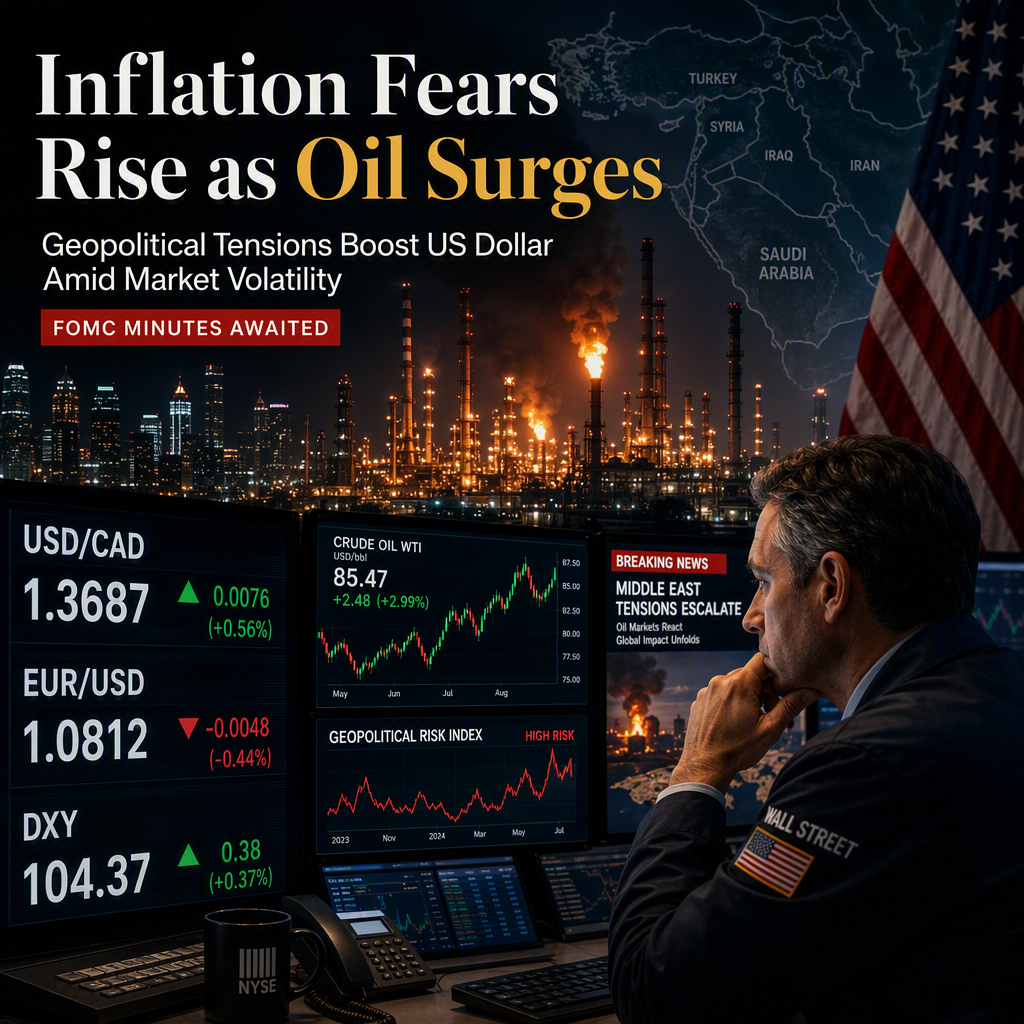
The global currency markets are experiencing heightened volatility as rising crude oil prices and renewed geopolitical tensions in the Middle East drive inflation concerns and support the US Dollar (USD) against major peers. President Donald Trump reiterated his intention to declare the Strait of Hormuz as US territory and threatened to bomb Oman if it interferes, while confirming that the US will not seek an extension of the Memorandum of Understanding (MoU) with Iran, which expired on Monday. These developments have kept the war-risk premium elevated and pushed oil prices to a two-week high, intensifying inflation worries and underpinning the USD [1][3].
In Canada, the USD/CAD pair is consolidating near the 1.3870 zone, with the Canadian Dollar (CAD) holding close to its early June high. This resilience is attributed to hotter Canadian consumer inflation figures and rising oil prices. Statistics Canada reported a 0.5% monthly increase in headline CPI for July, with the annual rate rising to 3%, above the 2.9% forecast and up from 2.8% in June. The Bank of Canada’s core CPI measure also rose to 2.3% year-on-year, up from 2.1%. Despite these inflationary pressures, the Bank of Canada is expected to keep its key policy rate unchanged for the remainder of the year [1]. Technical analysis indicates that the USD/CAD pair is defending the 200-day SMA at 1.3848, maintaining a modestly bullish bias unless a clear break below this support occurs [1].
For the Euro, the EUR/USD pair is steady around the 1.1575-1.1580 region, just below a two-month high. While soft US inflation and weak consumer spending data last week reduced expectations for imminent Fed rate hikes, the surge in oil prices and persistent geopolitical uncertainties have revived demand for the safe-haven USD, acting as a headwind for the Euro. The focus is now on the upcoming FOMC Minutes, which are expected to provide further guidance on the Fed's policy path. Meanwhile, market participants anticipate that the European Central Bank (ECB) will deliver one final 25-basis-point rate hike at its September meeting, which could support the Euro and limit downside risks [3]. Technical analysis highlights immediate resistance at the 50.0% retracement level of the April-June decline, with further upside targets at the 200-day SMA (1.1630) and the 61.8% Fibonacci retracement (1.1647) [3].
Across all markets, investors are closely monitoring incoming geopolitical headlines, oil price dynamics, and central bank communications for cues on future currency movements. The release of FOMC Minutes on Wednesday is seen as a pivotal event that could shape USD price dynamics and influence broader market sentiment [1][3].
CONCLUSION
Rising oil prices and escalating geopolitical tensions are fueling inflation fears, supporting the US Dollar and impacting major currency pairs. While the Canadian Dollar and Euro show resilience due to local inflation and central bank expectations, the market remains cautious ahead of key US Federal Reserve communications. The upcoming FOMC Minutes and ongoing geopolitical developments are expected to provide further direction for currency markets.