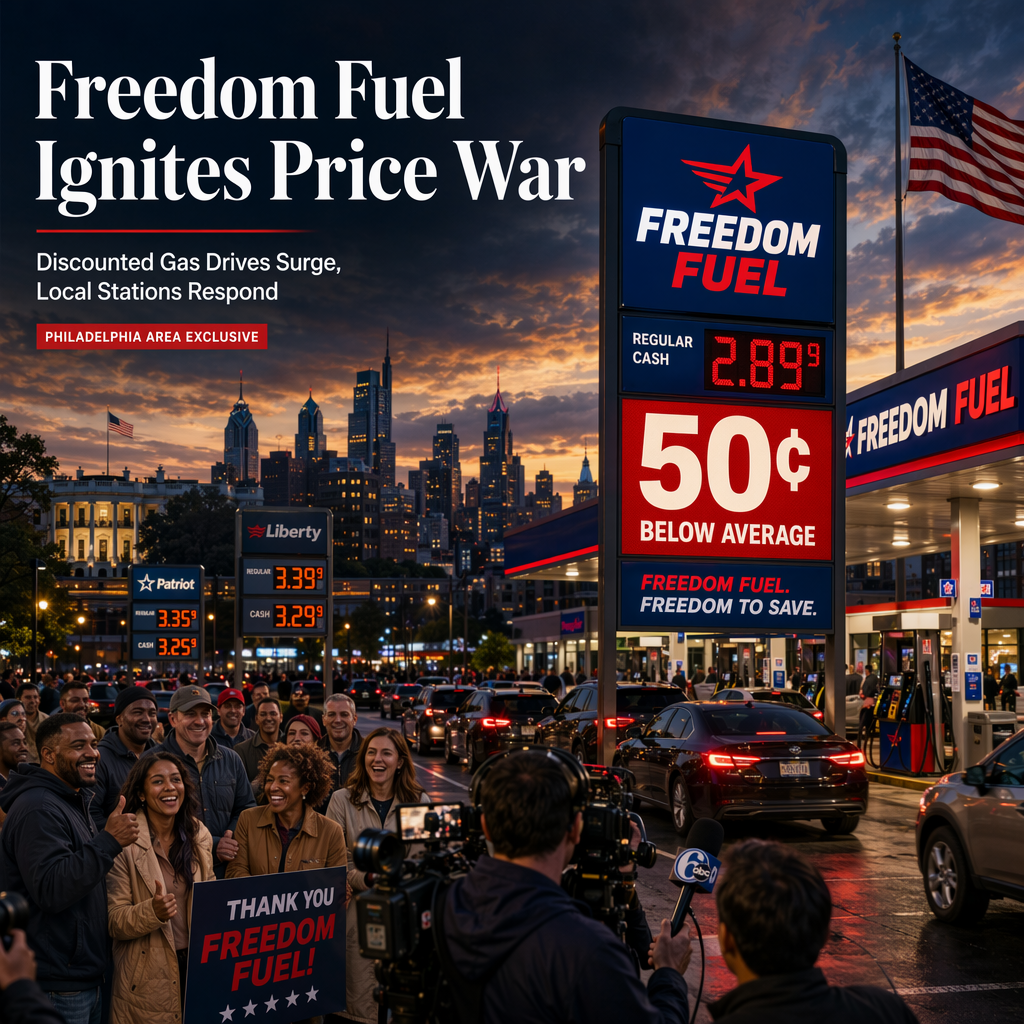
The White House announced the opening of the first 'Freedom Fuel' gas station in Philadelphia, which is offering gasoline at approximately 50 cents below Pennsylvania's statewide average price per gallon [1]. This move comes amid ongoing debates between the White House and gas stations regarding persistently high gas prices, which remain closer to $4 a gallon than $3 a gallon, despite fluctuations in oil prices influenced by U.S.-Iran tensions [1].
Jarrod Agen, executive director of the National Energy Dominance Council, stated that the administration believes gas stations have room to lower costs further, citing increased profit margins at the pump since COVID-19. Agen suggested that some stations have used the Iran war as justification to expand these margins, which have traditionally been low [1]. As an example, the Freedom Fuel Network, which operates 25 stations in the Philadelphia and New Jersey area, implemented deep discounts by reducing their profit margin, reportedly saving consumers about 50 cents per gallon [1].
According to a White House official, the launch of Freedom Fuel's discount on July 3 led to a 51.3% increase in fuel volumes at their stations in July. This competitive pricing prompted 320 gas stations within a 40-mile radius to cut their prices by 10 cents per gallon, and a total of 600 stations reduced prices in a ripple effect, benefiting drivers in the Philadelphia and New Jersey regions [1].
However, national groups representing smaller gas stations challenged the narrative of inflated profit margins. Jeff Lenard, Vice President of the National Association of Convenience Stores, argued that about 90% of the cost of a gallon of gas is determined before retailers receive the fuel, and after accounting for expenses such as credit card fees, retailers typically make about 5% profit before taxes. Lenard asserted that the pre-tax profit margin has not historically changed [1].
CONCLUSION
The introduction of discounted gasoline by Freedom Fuel has triggered significant price competition and increased fuel sales volumes in the Philadelphia area. While the White House points to increased profit margins as a factor in high gas prices, industry representatives maintain that retailer profits remain slim. The event highlights ongoing tensions over fuel pricing and the potential for competitive strategies to benefit consumers.