
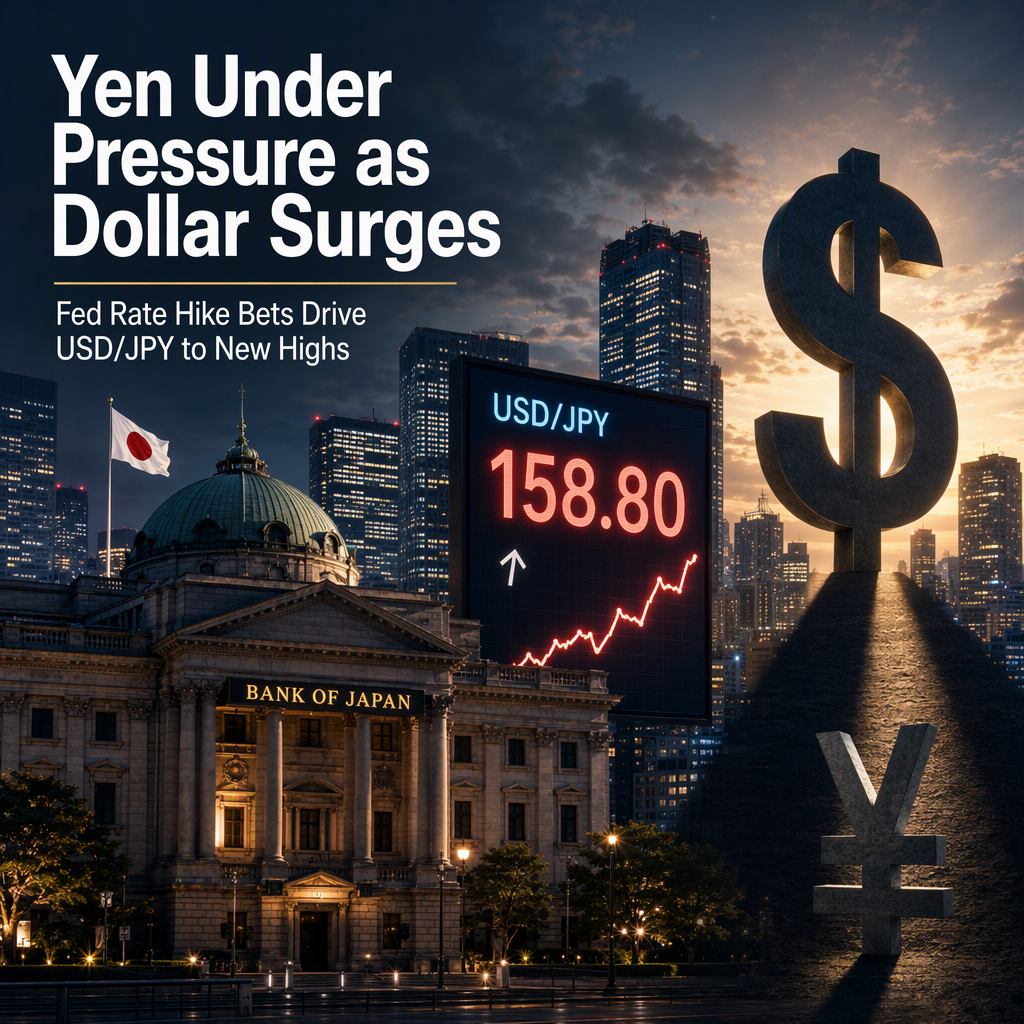
The Japanese Yen (JPY) continued to struggle against the US Dollar (USD), with the USD/JPY pair extending its advance for a fifth consecutive day on Thursday, trading near 158.80. This marks a significant rebound from earlier declines this month, when the pair traded near 160, as broad US Dollar strength and persistent pressure on the Yen keep the pair supported [1].
The move comes as traders reassess the monetary policy outlooks of the Federal Reserve (Fed) and the Bank of Japan (BoJ) following their September meetings. Markets are increasingly pricing in another Fed rate hike after a recent 25-basis-point increase, which brought the federal funds rate to 3.75%-4.00% [1]. Strong US economic data, including the S&P Global Composite PMI rising to a five-year high of 58.4 in September and Initial Jobless Claims falling to 197K (below expectations of 201K), have reinforced the hawkish Fed outlook. The US Dollar Index (DXY) is trading around 101.25, near its highest level since July 29, while the US 10-year Treasury yield has climbed to 5.16%, its highest since 2007 [1].
Despite a rise in Japanese bond yields, with the 10-year Japanese Government Bond yield reaching 3.08%—the highest since August 1996—the Yen remains under pressure due to the wide yield gap with the US. The BoJ raised its policy rate by 25 bps to 1.25%, the highest in 31 years, but two dissenting votes and limited guidance on future hikes led traders to interpret the move as slightly dovish. Elevated Oil prices are also weighing on the Yen by increasing Japan’s import costs [1].
On the geopolitical front, Reuters reported that the US and Iran are discussing a phased plan to end the war, which could involve Iran reopening the Strait of Hormuz in exchange for the US lifting its economic blockade. A meaningful agreement could push Oil prices lower, potentially easing inflation concerns and offering some relief to Japan’s energy-importing economy. However, for now, the hawkish Fed outlook continues to support USD/JPY, with the threat of intervention looming as the pair approaches 160 [1].
CONCLUSION
The Japanese Yen remains under significant pressure as US rate hike expectations and strong economic data drive the USD/JPY pair higher. Despite a modest rate hike from the BoJ and rising Japanese yields, the wide yield gap and elevated Oil prices continue to weigh on the Yen. Market sentiment remains bearish for the Yen, with potential intervention risks if USD/JPY approaches 160.