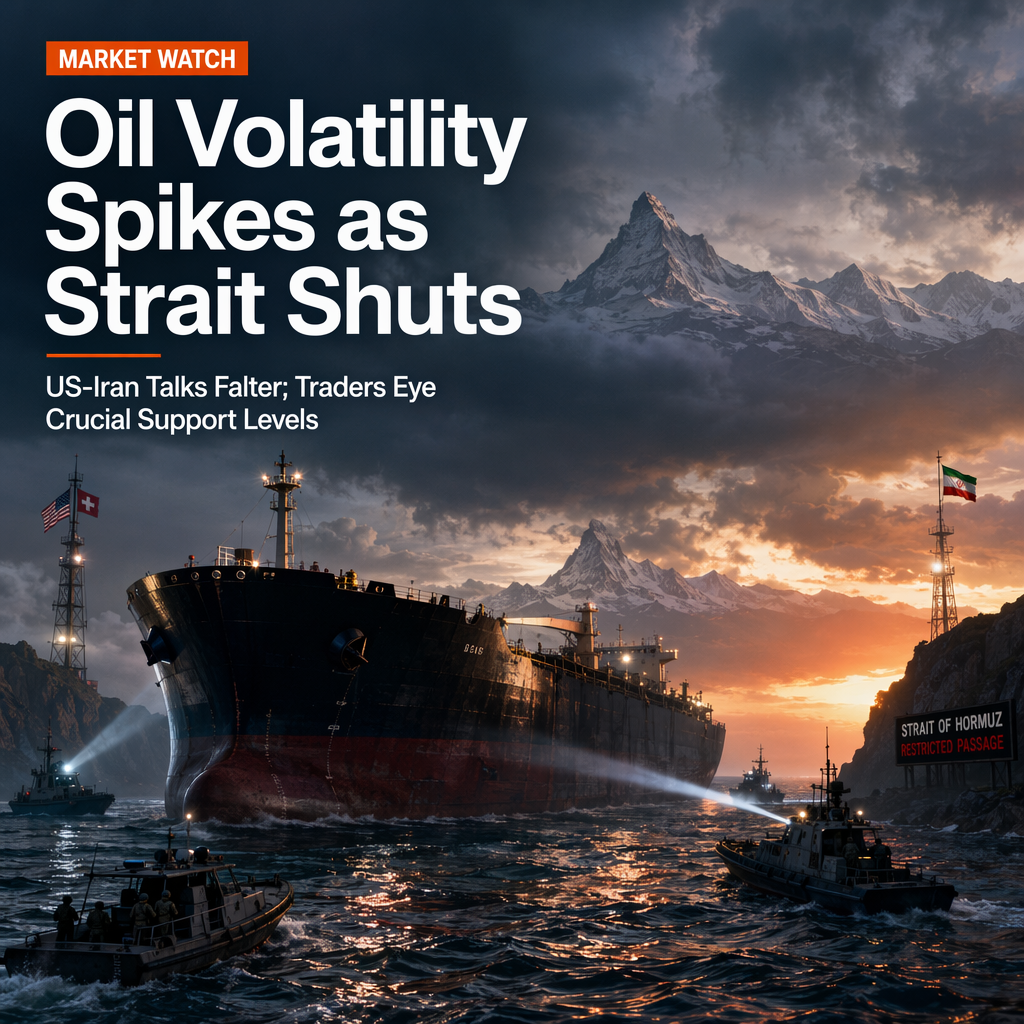
WTI crude oil experienced a sharp decline of approximately 10% last week, primarily driven by optimism surrounding diplomatic negotiations between the US and Iran. However, the situation has shifted as the US-Iran agreement that initially triggered the selloff is now considered fragile, with the Strait of Hormuz re-closed and ongoing talks in Switzerland yet to yield a definitive outcome [1].
The market is currently focused on whether the peace process will hold or deteriorate further. Renewed tensions and the closure of the Strait of Hormuz have unsettled traders, who are closely monitoring developments from Switzerland. The outcome of these negotiations is seen as a significant factor that could influence the direction of oil prices in the near term [1].
Technical analysis indicates that crude oil is testing critical support levels following the recent price drop. If diplomatic efforts fail and tensions escalate, a rebound toward previous resistance zones is possible. Conversely, continued progress in negotiations could push prices lower, potentially breaking through current support and leading to further downside [1].
Market sentiment remains cautious, with elevated volatility expected as geopolitical risks persist. Traders are advised to monitor intraday developments and adjust positions based on major headlines, favoring short-term strategies and waiting for confirmation signals before entering trades near key support or resistance levels [1].
CONCLUSION
The crude oil market is highly sensitive to ongoing US-Iran negotiations and the status of the Strait of Hormuz. Elevated volatility and cautious sentiment are likely to persist until there is greater clarity on the diplomatic front, with significant price moves possible in either direction depending on the outcome of talks.