
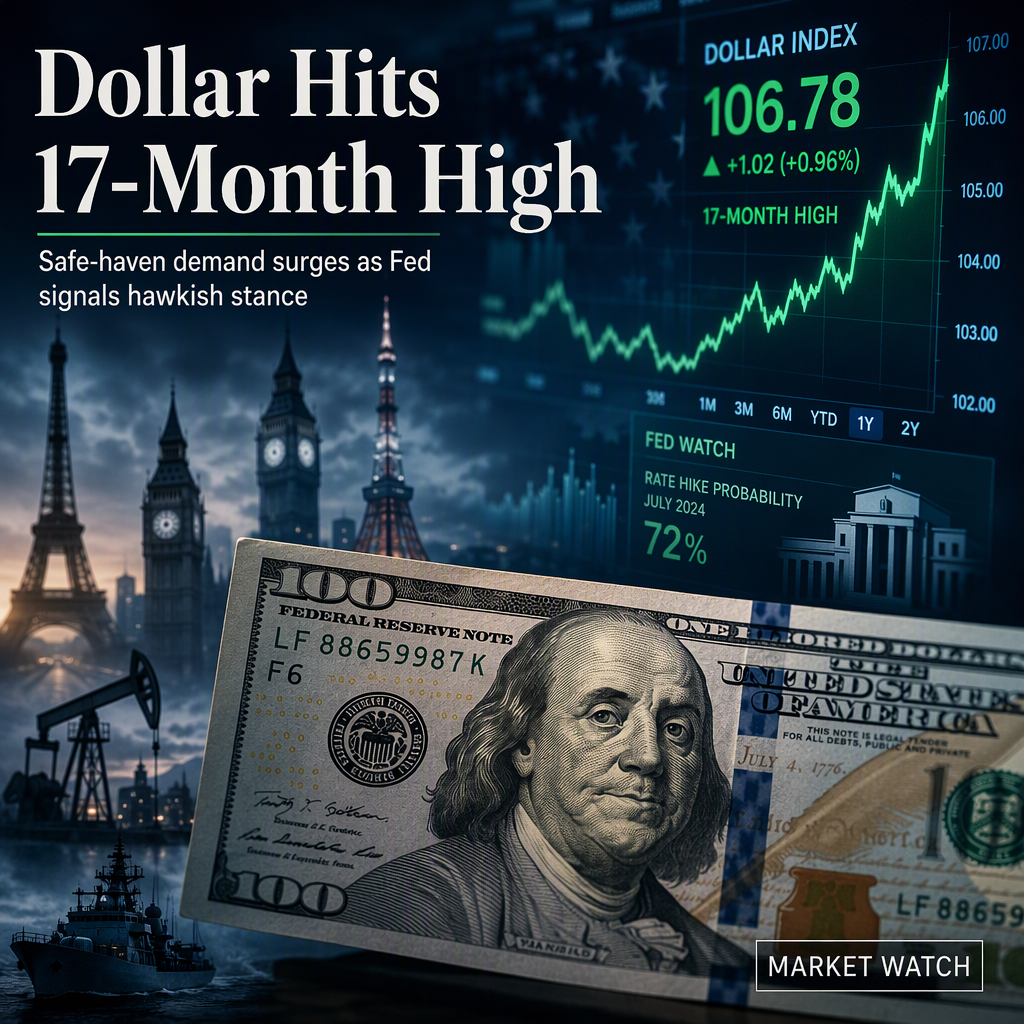
The US Dollar Index (DXY) reached a year-to-date high of 102.60, driven by increased safe-haven demand as hostilities resumed in the Middle East and ongoing strikes between Russia and Ukraine pushed energy prices higher. This upward momentum was further supported by hawkish remarks from Cleveland Federal Reserve President Beth Hammack, which fueled speculation about the possibility of higher interest rates in the United States [1].
On the day, the US Dollar was the strongest against the Swiss Franc, gaining 0.55%, and also posted notable gains against other major currencies: 0.39% versus the Euro, 0.20% against the British Pound, 0.22% against the Japanese Yen, 0.20% against the Canadian Dollar, 0.37% against the Australian Dollar, and 0.45% against the New Zealand Dollar [1].
EUR/USD fell below the 1.1200 level, hitting a 17-month low at 1.1152, as market participants awaited upcoming German Harmonized Index of Consumer Prices (HICP) data and speeches from European Central Bank members Elderson and Escriva. GBP/USD drifted lower toward 1.3200, pressured by the Fed's hawkish stance, though upcoming UK retail sales data and comments from Bank of England member Megan Greene were noted as potential influences for the Pound. USD/JPY consolidated near 158.50 amid a quiet economic calendar [1].
Traders are closely monitoring US jobs market indicators, including the ADP Employment Change 4-week average, housing data, and a speech by Fed Governor Waller for further clues on the Federal Reserve's policy direction [1].
CONCLUSION
The US Dollar's rally to a 17-month high reflects heightened safe-haven demand and expectations of a more hawkish Federal Reserve stance. Market participants are watching upcoming economic data and central bank speeches for further direction, with the Dollar's strength exerting pressure on major currency pairs. The overall market sentiment remains bullish for the US Dollar in the near term.