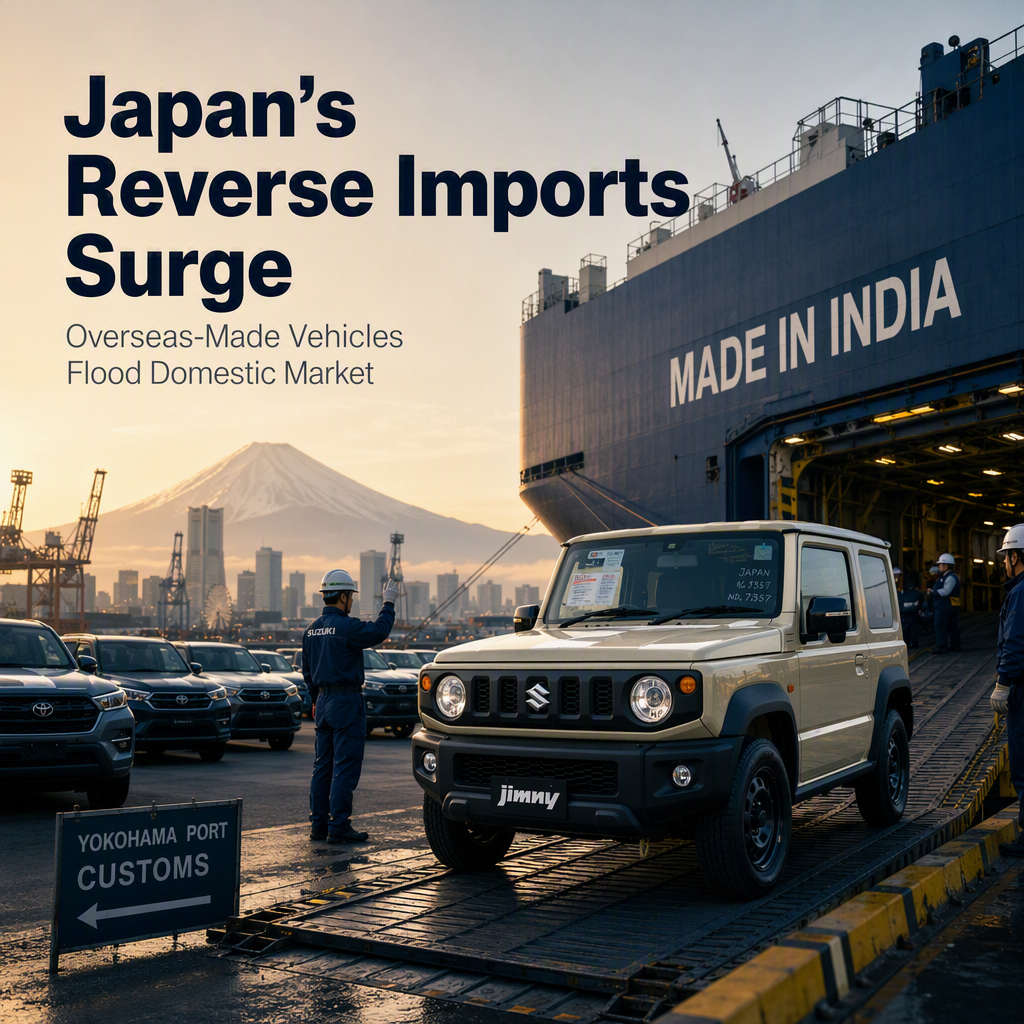
Japanese automakers have set a new record for the number of vehicles imported into Japan from overseas factories in the first half of the year, as companies increasingly rely on production in emerging markets to reduce costs [1]. Suzuki Motor led this trend, with its India-made Jimny Nomade playing a key role in making Suzuki the top importer to Japan between January and June [1]. Both Suzuki and Toyota are utilizing factories in India and Thailand to manufacture vehicles for the Japanese market, capitalizing on lower labor costs in these regions [1].
Financial data indicates that Suzuki has surpassed Honda to become Japan's second-largest automaker, a shift attributed largely to its robust production and export operations in India [1]. Toyota has also accelerated production of models in Thailand for re-import to Japan, and is investing heavily in its Thailand operations to enhance global supply chain flexibility [1].
This surge in 'reverse imports'—where Japanese brands manufacture cars overseas and then import them back to Japan—reflects a broader industry trend aimed at maintaining profitability amid rising domestic costs [1]. Industry analysts warn that this could increase competitive pressure on domestic manufacturing, potentially impacting Japan's auto parts industry and employment levels [1].
A Suzuki spokesperson stated, "Expanding our global manufacturing footprint allows us to optimize costs and meet the needs of Japanese consumers by offering competitively priced vehicles" [1]. Market sentiment suggests that the use of overseas production hubs will continue to grow, with more Japanese automakers expected to adopt this strategy to remain competitive, potentially setting new records for 'reverse imports' in the future [1].
CONCLUSION
Japanese automakers are increasingly relying on overseas production to maintain competitiveness and profitability, setting new records for 'reverse imports' into Japan. This trend is expected to continue, potentially reshaping the domestic automotive landscape and impacting local manufacturing and employment.