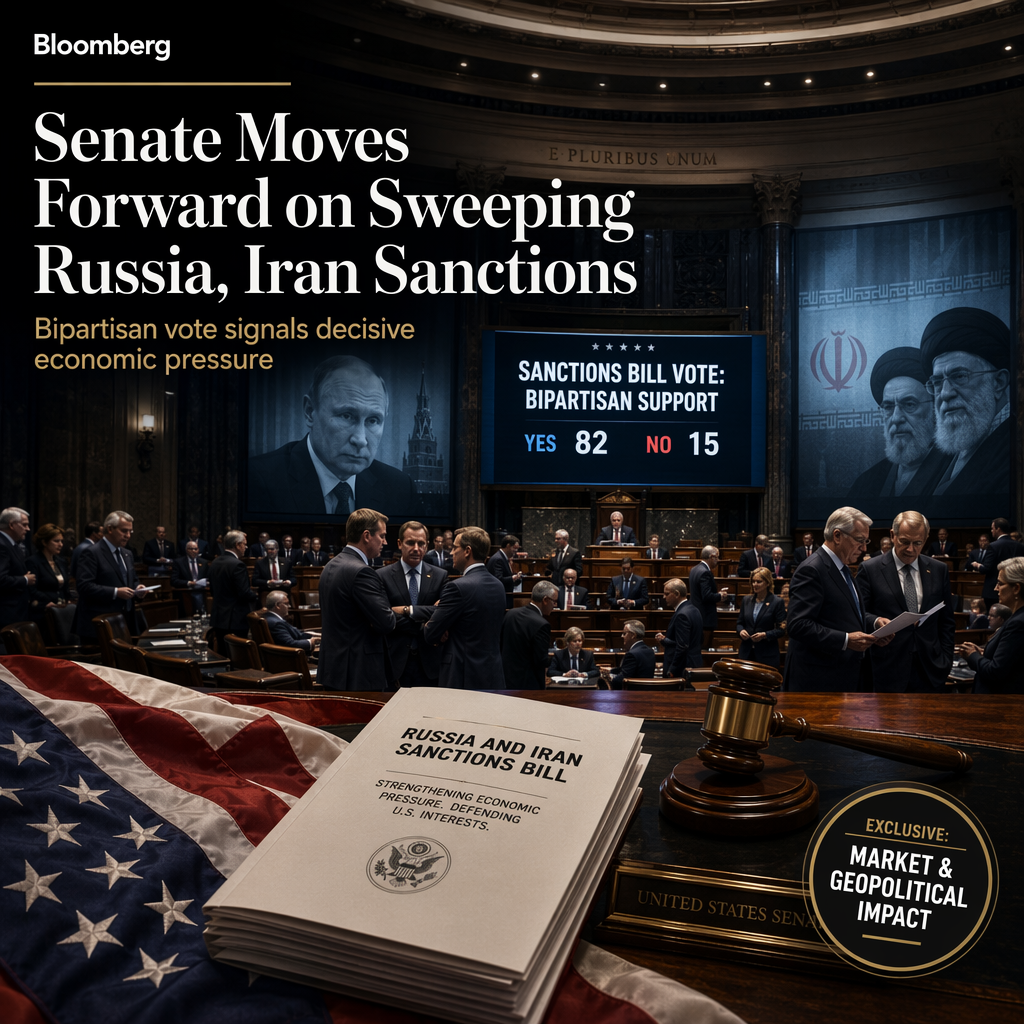
The U.S. Senate has taken a significant step toward imposing sweeping sanctions on Russia and Iran, advancing the Lindsey O. Graham Sanctioning Russia and Iran Act in a large bipartisan vote, though this was not the final passage of the bill [1]. The legislation, which has been in development for an extended period, is designed to severely impact Russian President Vladimir Putin, the Kremlin, and Iran, with the aim of undermining Russia's war efforts in Ukraine and pressuring Iran's weapons and energy sectors [1]. The Senate aims to complete work on the package by next week, but final passage will be delayed until the House returns from its August recess [1].
Key provisions of the bill include authorizing tariffs of up to 500% on Russian imports and up to 100% on countries purchasing Russian energy, such as China and India [1]. The bill also grants President Donald Trump flexibility regarding the timing of lifting certain sanctions [1]. This aspect has raised concerns among some Democrats, who recall Trump's previous use of tariffs, but proponents argue the bill's tariff authorities are narrowly targeted to increase pressure on Russia and end its war against Ukraine [1].
The legislation has been renamed to honor the late Sen. Lindsey Graham, with lawmakers viewing its passage as a potential capstone to his 32-year Senate career [1]. To secure Democratic support, advocates enlisted Ukrainian President Volodymyr Zelenskyy, a close ally of Graham, to help win key votes [1]. On the Senate floor, Sen. Jeanne Shaheen acknowledged concerns about granting tariff authority but emphasized the bill's focused intent to target the worst actors supporting Russia [1].
The bill is intended to send a strong message to Vladimir Putin, signaling that continued aggression will have severe economic consequences and urging a move toward peace negotiations [1].
CONCLUSION
The Senate's advancement of the sanctions package marks a decisive move to intensify economic pressure on Russia and Iran, with broad bipartisan backing. While the bill is not yet law, its passage is expected to have significant market and geopolitical implications, particularly for Russian and Iranian energy and trade sectors.