
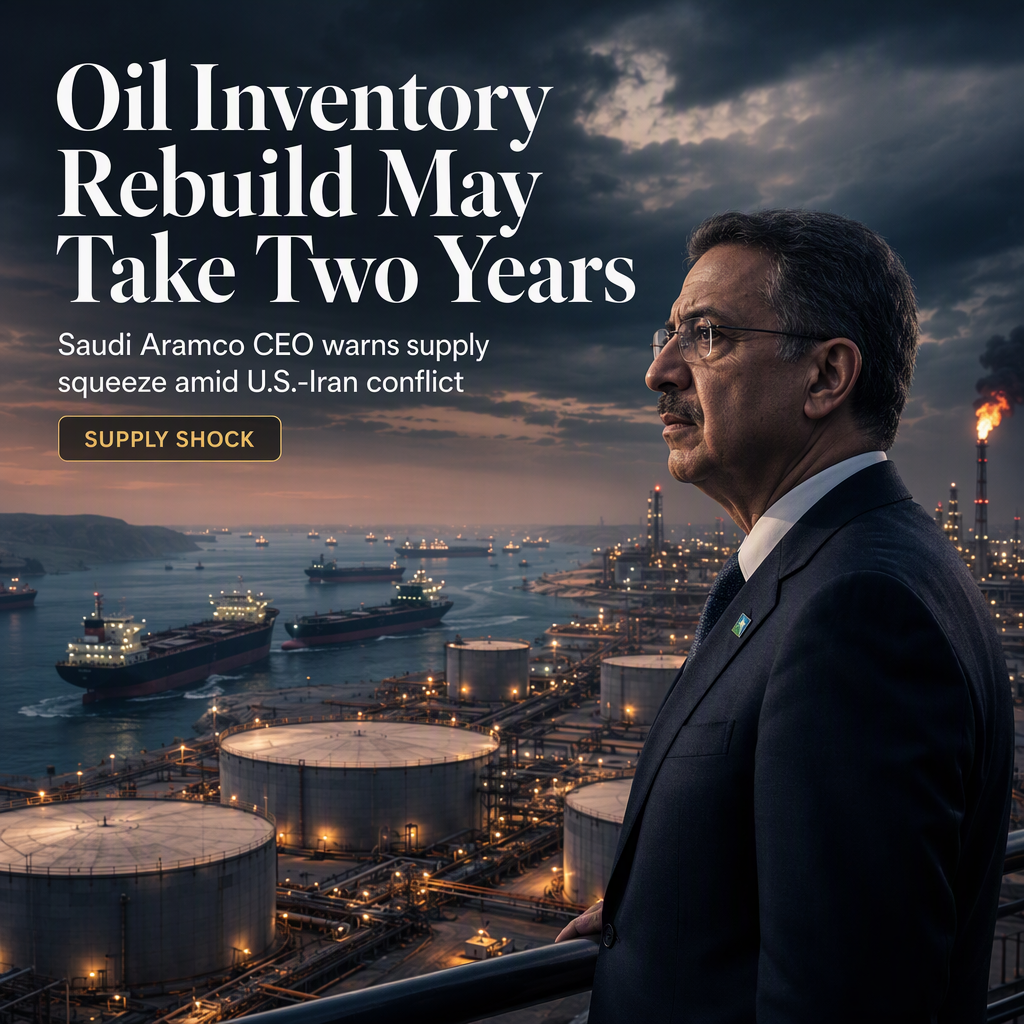
Saudi Aramco CEO Amin Nasser has cautioned that rebuilding global oil inventories could require up to two years, as the ongoing U.S.-Iran war continues to squeeze supply and disrupt shipping routes. Nasser stated that nearly 3 billion barrels of oil supply have been lost since the conflict began, with approximately 1 billion barrels drawn from existing stocks, primarily from commercial inventories. He emphasized that the remaining 6 billion barrels in storage are 'not practically available,' highlighting the strain on the system and the challenges facing the market [1].
The disruption of shipping through the Strait of Hormuz—a critical passage for about 20% of the world's oil and liquefied natural gas—has sent shock waves through the global economy. Although Middle East crude flows have recently recovered, with exports through the Strait of Hormuz and Saudi Arabia’s East-West pipeline trending higher, oil prices edged lower. On Monday, Brent crude futures for December traded 0.1% lower at $102.20 per barrel, while U.S. West Texas Intermediate futures for November were down 0.5% at $90.64 [1].
In response to the supply squeeze, G7 governments agreed to release 100 million barrels of diesel and crude from emergency reserves, following pressure from U.S. President Donald Trump. Most of the stock draw so far has come from commercial inventories, and the CEO warned that replenishing these while meeting ongoing demand could take up to two years, even if the Strait of Hormuz fully reopens and market confidence returns [1].
Market analysis suggests that while investors have benefited from the oil market boom triggered by the Iran war, maintaining long positions may become more challenging if the conflict persists. The market appears to be betting on a swift resolution to the war, but continued supply disruptions and difficulties in replenishing inventories could sustain price volatility and impact future price levels [1].
CONCLUSION
The ongoing U.S.-Iran war has led to significant oil supply losses and drawn down global inventories, with Saudi Aramco's CEO warning that rebuilding stocks could take up to two years. Despite a recent recovery in Middle East crude flows and emergency releases from reserves, the market remains strained and vulnerable to further disruptions. Investors should be cautious, as the situation could lead to continued volatility if the conflict endures.