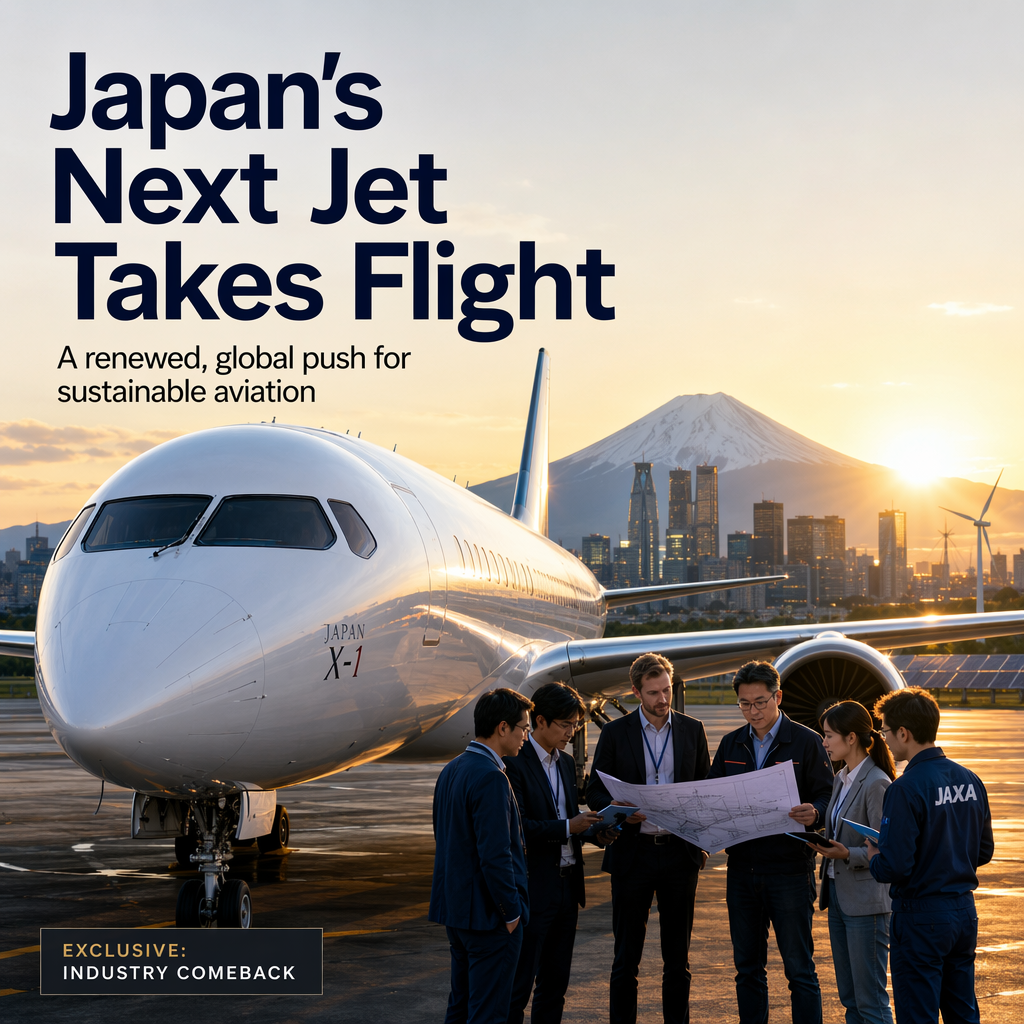
Japan is initiating a new government-backed project to develop a homegrown passenger aircraft, three years after the cancellation of the Mitsubishi SpaceJet program. Unlike the previous SpaceJet effort, which was primarily domestically focused and ultimately discontinued by Mitsubishi Heavy Industries in 2023 due to repeated delays and escalating costs, the new initiative will involve collaboration with overseas partners to share technological and financial risks [1].
Industry officials highlight that Japan's aerospace sector continues to possess advanced manufacturing capabilities and engineering talent, despite the setback from the SpaceJet termination. The renewed effort will prioritize next-generation, fuel-efficient aircraft, with a strong emphasis on sustainability and adapting to evolving market needs [1].
While no specific financial figures for the new project have been disclosed, government sources indicate that significant investment will be necessary to develop a globally competitive product. Japanese officials also stressed the importance of securing international certification and building alliances with global suppliers to ensure the commercial success of the new aircraft [1].
This strategic shift toward international collaboration aligns with broader trends in the aerospace industry, where the development costs for new commercial aircraft often reach billions of dollars and risk-sharing partnerships are increasingly common [1].
CONCLUSION
Japan is making a renewed push to re-enter the global passenger aircraft market by launching a new, internationally collaborative project focused on next-generation, sustainable aircraft. The move reflects lessons learned from the SpaceJet program and underscores the importance of global partnerships and certification for future success.