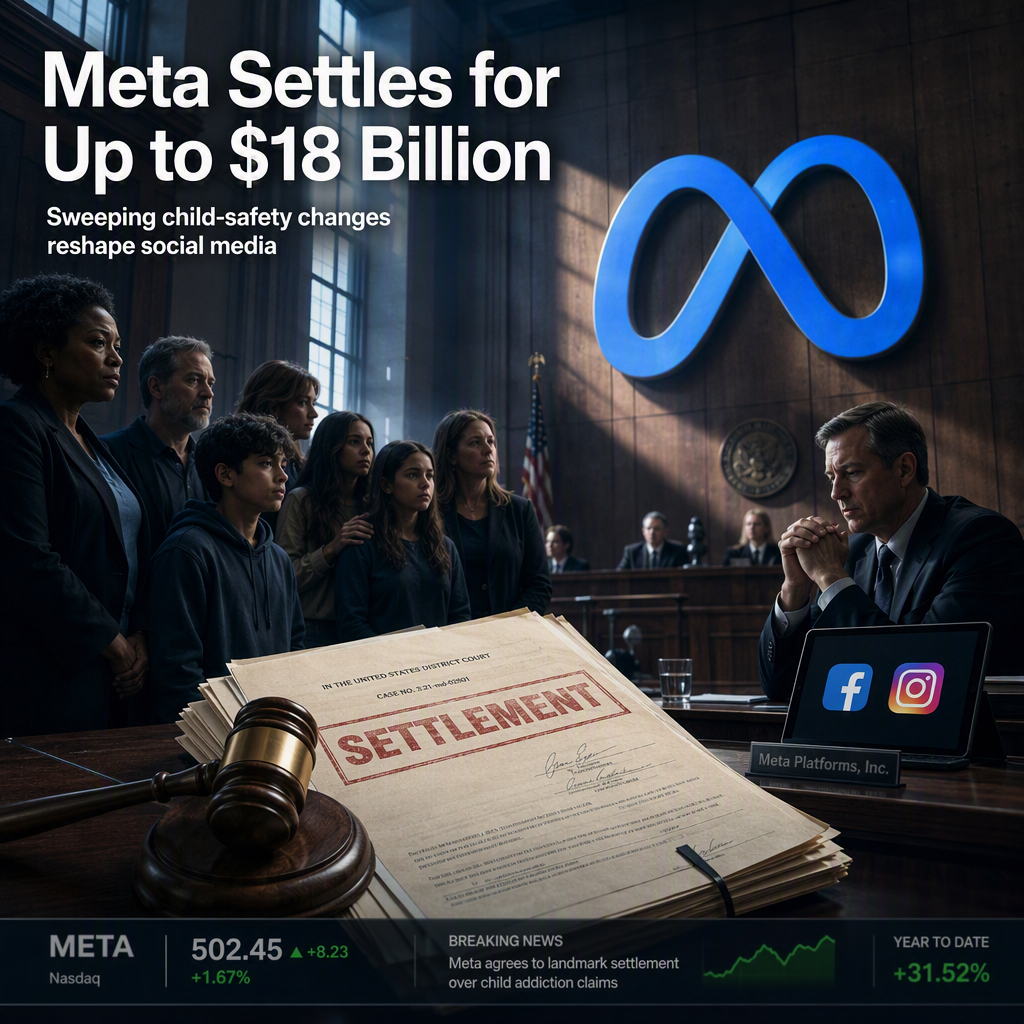
Meta Platforms, the owner of Facebook and Instagram, has agreed to settle a major federal lawsuit brought by a coalition of 29 states over allegations that its social media platforms were designed to addict children and misled the public about their safety [1][2][3]. The settlement, disclosed in court filings on Wednesday, includes a payment ranging from $16.7 billion to approximately $18 billion, with the exact figure varying between sources: Fox Business reports up to $17.1 billion [1], NBC News cites $18 billion [2], and CNBC World reports $16.7 billion but also references Meta's statement of an $18 billion payment [3]. According to the D.C. attorney general’s office, Meta will pay at least $12.1 billion over 10 years, with the possibility of an additional $5 billion if other major social media companies adopt similar child-safety measures [1]. California could receive between $1.5 billion and $2.1 billion if the court approves the settlement [3].
The settlement requires Meta to implement sweeping changes to its platforms. These include strict daily time limits for young users, blocking access during certain nighttime hours, muting notifications during school hours, and introducing enhanced parental controls [1][2][3]. Teen accounts will default to a two-hour daily limit across Facebook and Instagram, with parental permission required to disable this limit [2]. Meta will also hide likes on teens’ posts by default, block 'extreme makeup filters,' allow teens to choose a non-algorithmic feed as default, and enable the disabling of autoplay video [2]. Enhanced age assurance measures will be introduced to prevent children from accessing the platforms or age-restricted content [2][3].
Meta has denied all allegations and liability but stated that the agreement builds on its existing efforts to protect teens and empower parents [1][2][3]. CEO Mark Zuckerberg could have been called to testify before the settlement was reached [1]. California Attorney General Rob Bonta, who co-led the lawsuit, said the settlement will make social media less dangerous for children and will require Meta to make 'massive transformations' within months [2][3].
The settlement also calls on other social media companies, specifically TikTok and YouTube, to adopt similar child-safety standards, with Meta arguing that protections on individual platforms are insufficient since teens frequently move between apps [1][2]. The agreement is subject to judicial approval [2][3].
Market reaction was positive, with Meta shares gaining 5% in premarket trading following the news [3]. The settlement also includes claims related to the Cambridge Analytica case [3].
CONCLUSION
Meta's agreement to pay up to $18 billion and implement significant child-safety measures marks one of the largest settlements in the tech industry over social media's impact on youth. The sweeping changes and positive market reaction underscore the significance of the case, while the call for industry-wide adoption of similar standards may set a new precedent for social media regulation.