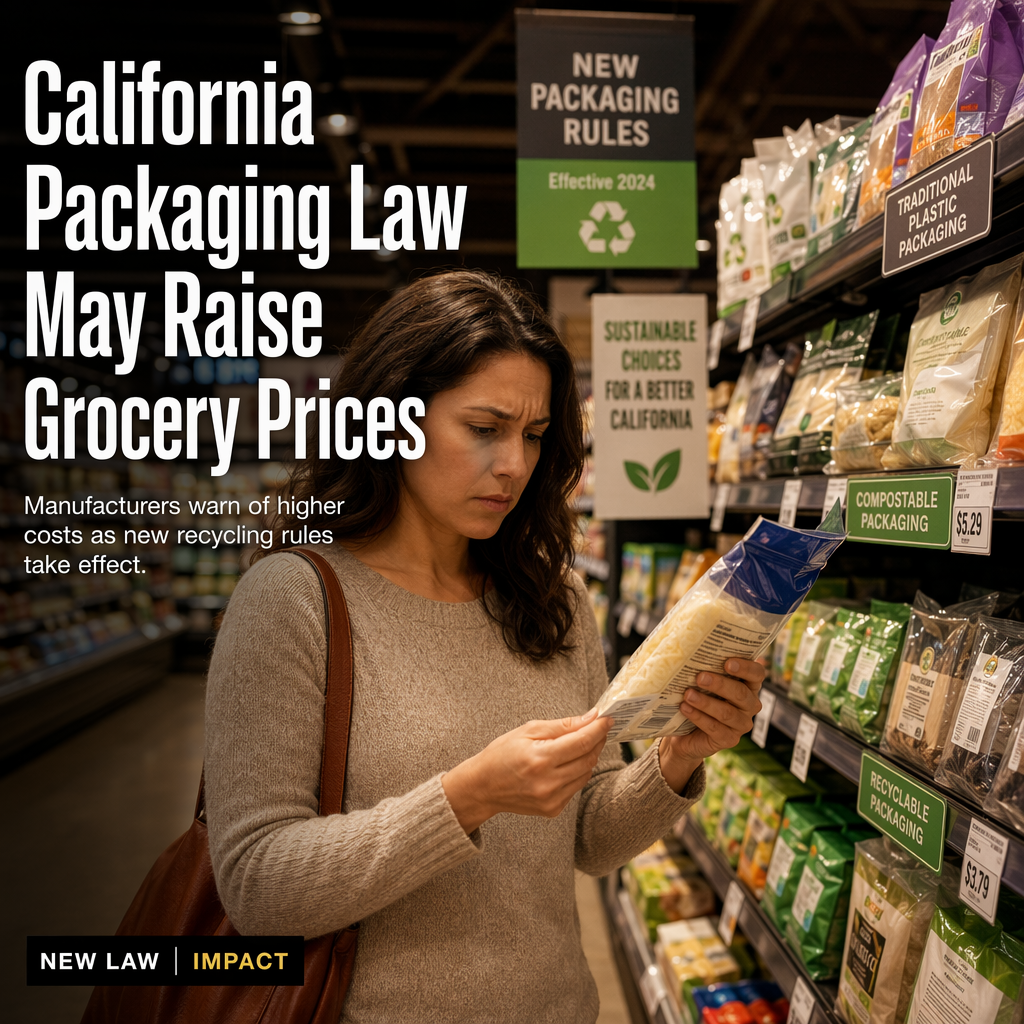
California is set to implement the Plastic Pollution Prevention and Packaging Producer Responsibility Act, a law passed in 2022 that shifts the cost of recycling and disposing of packaging from taxpayers to manufacturers, beginning next month. The law requires companies to contribute to the recycling and disposal of the packaging they sell, with fees varying based on the recyclability of the materials used. Companies using harder-to-recycle packaging will pay higher fees, incentivizing a shift toward recyclable or compostable materials. By 2032, all covered packaging sold in California must be recyclable or compostable [1].
CalRecycle, the state agency overseeing the law, estimates that if manufacturers pass all compliance costs to consumers, household grocery bills could rise by up to $190 per year, or about $66 per person. However, the actual increase may be lower if companies absorb some of the costs themselves. Approximately 5,700 large producers are expected to be subject to the new requirements, with average annual compliance costs exceeding $450,000 per company. Businesses that purchase packaged goods may also face higher costs if manufacturers increase prices to offset the new fees [1].
The law aims to reduce plastic pollution, expand recycling infrastructure, and shift the responsibility for managing packaging waste from taxpayers and local governments to producers. While state regulators emphasize the environmental benefits and the potential for companies to redesign packaging, some industry groups argue that the state's cost projections underestimate the impact on consumers and warn that grocery prices could rise more sharply as companies adjust to the new requirements [1].
CONCLUSION
California's new packaging law is expected to increase costs for manufacturers, which may be passed on to consumers in the form of higher grocery prices. While the state projects a moderate impact, industry groups caution that the actual effect on consumers could be greater as businesses adapt to the new regulations. The law marks a significant shift in responsibility for packaging waste and could influence packaging practices in the years ahead.