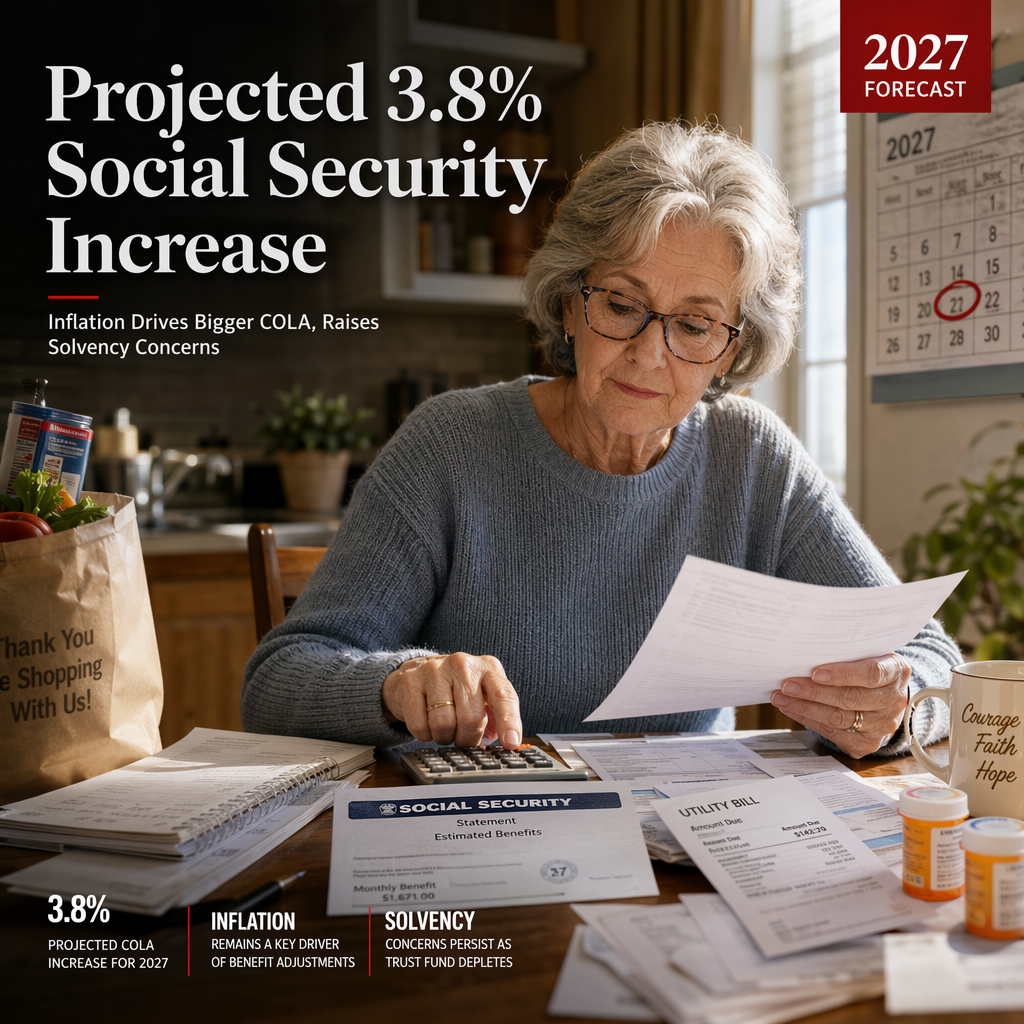
Social Security beneficiaries are expected to receive a larger cost-of-living adjustment (COLA) in 2027, according to a new analysis by The Senior Citizens League (TSCL) [1]. The report forecasts a 3.8% COLA for 2027, which is one percentage point higher than the projected 2.8% COLA for 2026, based on the latest consumer price index (CPI) inflation data released in June [1]. If the 3.8% COLA were implemented today, the average monthly benefit would increase by $73.62, rising from $1,937.53 to $2,011.15 [1].
The 3.8% estimate matches TSCL's previous month's prediction and is slightly lower than the 3.9% projection made in April [1]. The annual Social Security COLA is determined by the Bureau of Labor Statistics' CPI data for July, August, and September, with the final adjustment typically announced in mid-October [1]. The CPI-W, the specific inflation metric used for COLA calculations, was up 3.5% year-over-year in June, which is above the Federal Reserve's 2% target and continues to put pressure on household budgets, especially for seniors [1].
TSCL Executive Director Shannon Benton highlighted the challenges faced by seniors, noting that more than half cannot afford basic living standards and many are forced to skip doctor's appointments due to costs [1]. She emphasized that rising inflation is making it increasingly difficult for seniors to cover essentials such as food, housing, and transportation [1].
However, a larger COLA could worsen Social Security's financial outlook. The nonpartisan Committee for a Responsible Federal Budget (CRFB) estimated in May that a 3.8% COLA in 2027 would increase Social Security's fiscal shortfall by about $300 billion over the next decade and accelerate the insolvency of a key trust fund by three months, moving the depletion date to late 2032 [1]. If Congress does not act before the trust fund is depleted, the Social Security Administration would be required by law to cut benefits to match incoming payroll tax revenues, which CRFB estimates would result in a 25% reduction for beneficiaries—effectively erasing nearly a decade's worth of COLA increases [1].
CONCLUSION
The projected 3.8% COLA for Social Security recipients in 2027 reflects ongoing inflationary pressures but also raises concerns about the program's long-term solvency. Without legislative action, higher benefit increases could hasten trust fund depletion and lead to significant benefit cuts for millions of seniors.