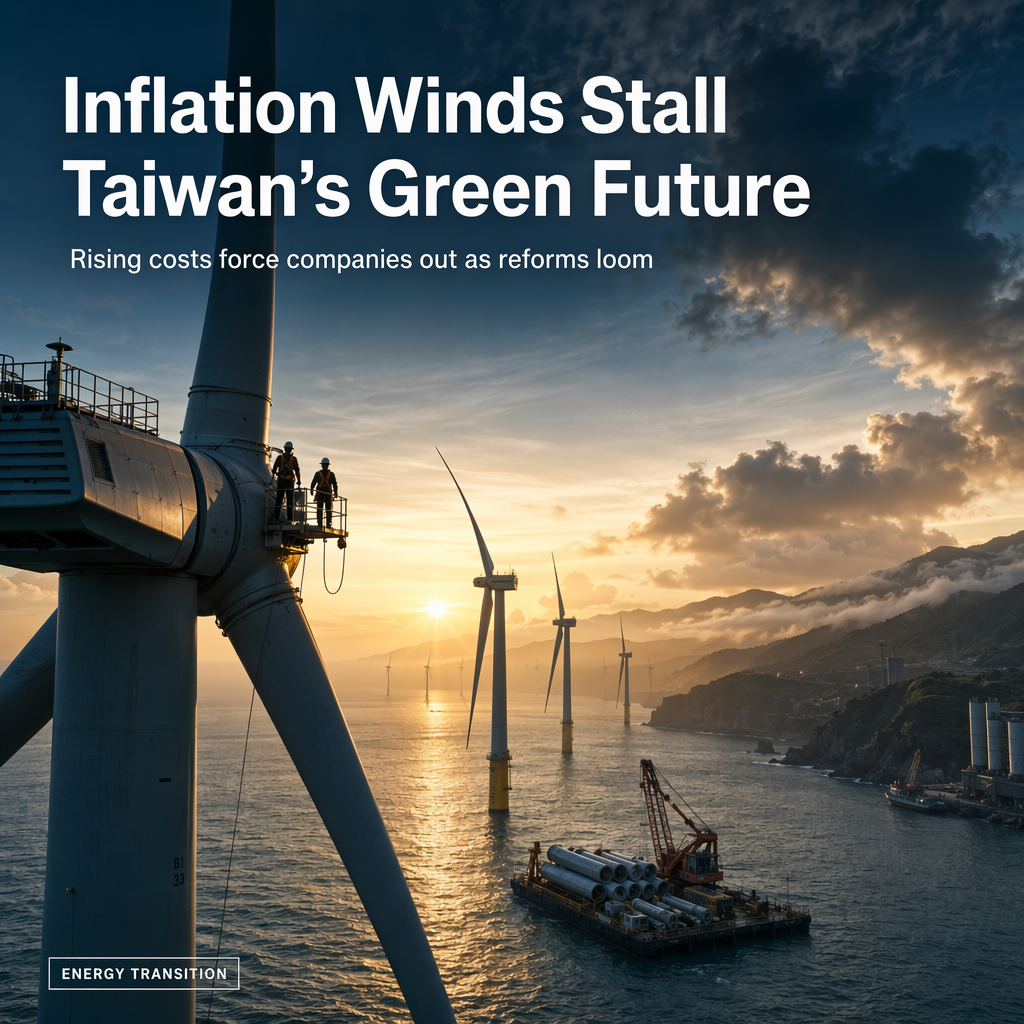
Taiwan's offshore wind sector is encountering significant challenges as inflation drives up construction costs, undermining the financial viability of ongoing and planned projects. As of June, Taiwan had achieved the installation of 500 offshore wind turbines, amounting to 4.8 gigawatts of generating capacity. However, the recent surge in costs has led to heavy losses among local industry players, with at least one company choosing to delist from the market as a direct result of these financial pressures [1].
In light of these developments, Taiwanese authorities are considering reforms to the current bidding process for offshore wind projects. The intent is to adapt the system to the new cost environment and ensure that investment in the sector continues despite the inflationary headwinds. This situation mirrors a broader trend in the renewable energy industry, where rising costs are prompting companies to reevaluate project economics and, in some cases, withdraw from the market entirely [1].
The government faces mounting pressure to implement measures that will restore investor confidence and sustain progress toward Taiwan's renewable energy targets. No specific forward-looking statements or analyst opinions were provided in the article, but the urgency of policy adjustments is emphasized as critical to maintaining momentum in the sector [1].
CONCLUSION
Taiwan's offshore wind industry is at a crossroads due to inflation-driven cost increases, which have already forced some companies out of the market. The government's response in adjusting policies will be crucial for the sector's future growth and for meeting renewable energy goals.