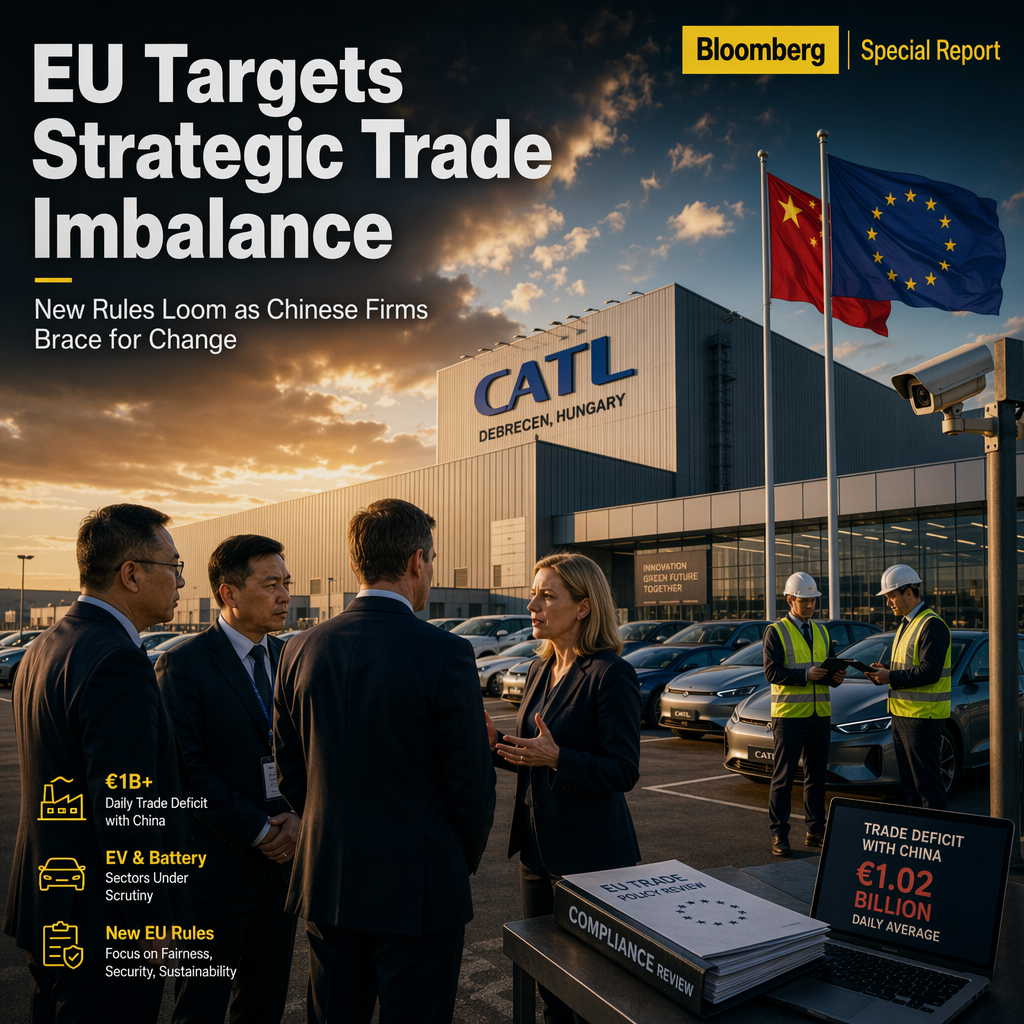
European Union leaders have agreed on the need to address the bloc's trade deficit with China, which has grown to over 1 billion euros ($1.13 billion) per day, prompting Chinese companies to brace for tougher regulations in the EU [1]. The European Commission has identified this imbalance as a strategic vulnerability and is preparing to introduce a new 'diversification tool' aimed at reducing dependence on China for key imports and rebalancing trade [1]. These measures are expected to target Chinese goods and investments in sensitive sectors, including automotive components, batteries, and clean energy technologies [1].
CATL's battery factory in Debrecen, Hungary, was highlighted as a major ongoing Chinese investment in Europe in 2025, underscoring the significance of Chinese capital in the region [1]. Despite Chinese investment in Europe reaching its highest point in seven years, it remains below historical peaks, indicating both potential for growth and increased risk if EU-China relations worsen [1].
Market analysts suggest that stricter EU regulations may impact the flow of Chinese capital and goods into Europe. A trade policy expert in Brussels noted, 'The EU's focus on de-risking its supply chain does not mean decoupling, but Chinese exporters should expect more scrutiny and compliance hurdles' [1]. In response, Chinese firms with significant EU operations, such as CATL, are reviewing their business strategies, including enhancing local partnerships, increasing transparency, and diversifying supply chains to meet new EU requirements [1].
EU officials have signaled that upcoming trade measures will concentrate on strategic sectors most vulnerable to supply disruptions. However, divisions remain within the bloc regarding how aggressively to confront Beijing, with some member states advocating for a balanced approach to avoid retaliation and protect European business interests in China [1].
CONCLUSION
The EU's planned regulatory changes in response to its growing trade deficit with China are expected to significantly impact Chinese firms operating in Europe, particularly in strategic sectors. While Chinese investment remains strong, increased scrutiny and compliance requirements may pose challenges. The market is watching closely as both sides weigh the risks and potential for further escalation.