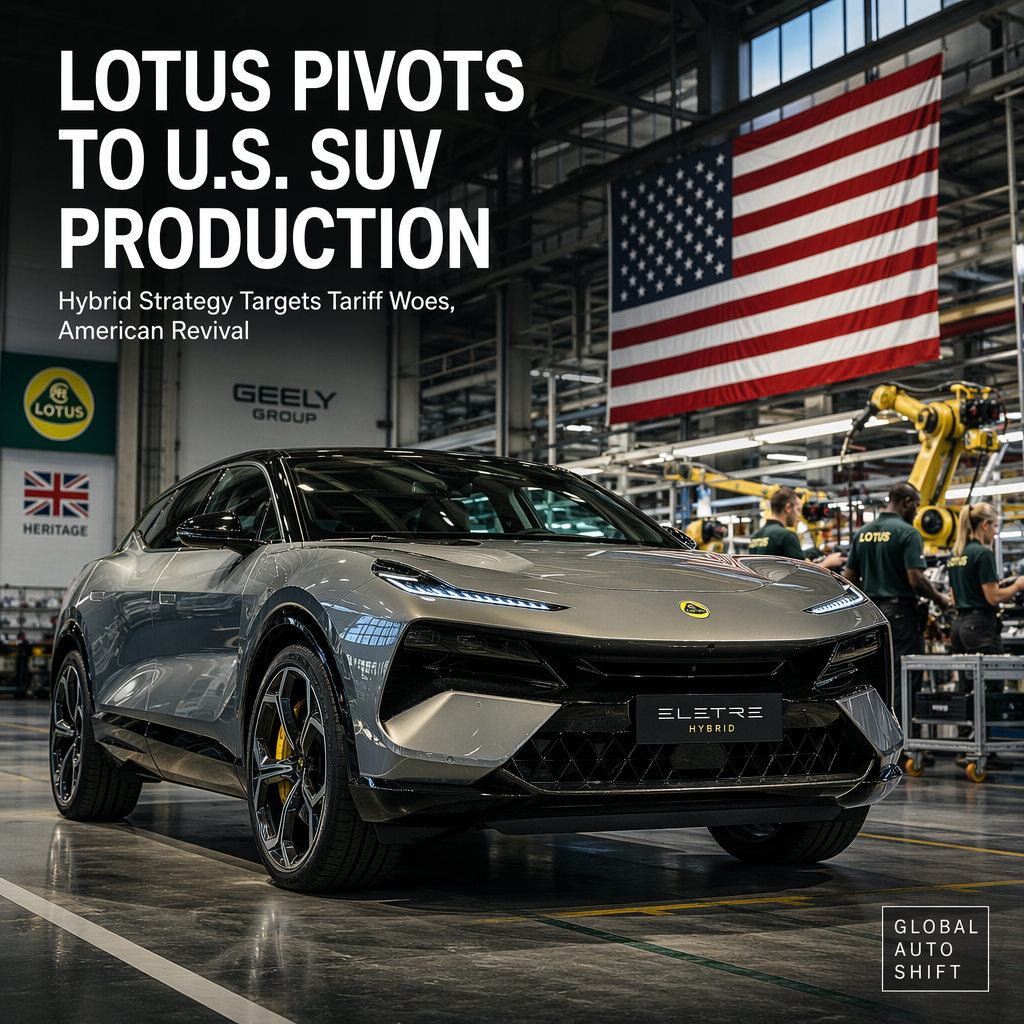
British sportscar maker Lotus, now under Chinese ownership and backed by Geely, is considering manufacturing its new plug-in hybrid SUV in the United States. This potential move comes in response to a sharp decline in global deliveries, which fell 46% to 6,520 vehicles in 2025, largely due to tariffs impacting sales of its Chinese-made electric vehicles, particularly in the U.S. market [1]. The increased duties have significantly dented Lotus' American sales, prompting the company to explore local production as a strategy to bypass trade barriers and revive its presence in the region [1].
Lotus' shift toward producing a plug-in hybrid SUV in the U.S. reflects broader industry trends, as automakers adapt to trade restrictions and changing consumer preferences. The focus on hybrid SUVs is aligned with the growing demand for such vehicles in the American market and the need to meet evolving regulatory requirements [1]. The company aims to re-establish itself in key global markets after the substantial drop in deliveries, signaling a strategic pivot to address both market and regulatory challenges [1].
While no specific timeline or production figures have been disclosed, Lotus' consideration of U.S. manufacturing underscores the impact of tariffs on international automakers and highlights the importance of localizing production to remain competitive [1].
CONCLUSION
Lotus is responding to a significant sales decline by considering U.S. production of its new hybrid SUV, aiming to circumvent tariffs and regain market share. This strategic move reflects broader industry adaptation to trade barriers and shifting consumer demand. The market takeaway is that Lotus is actively seeking solutions to restore its competitiveness in the American automotive sector.