
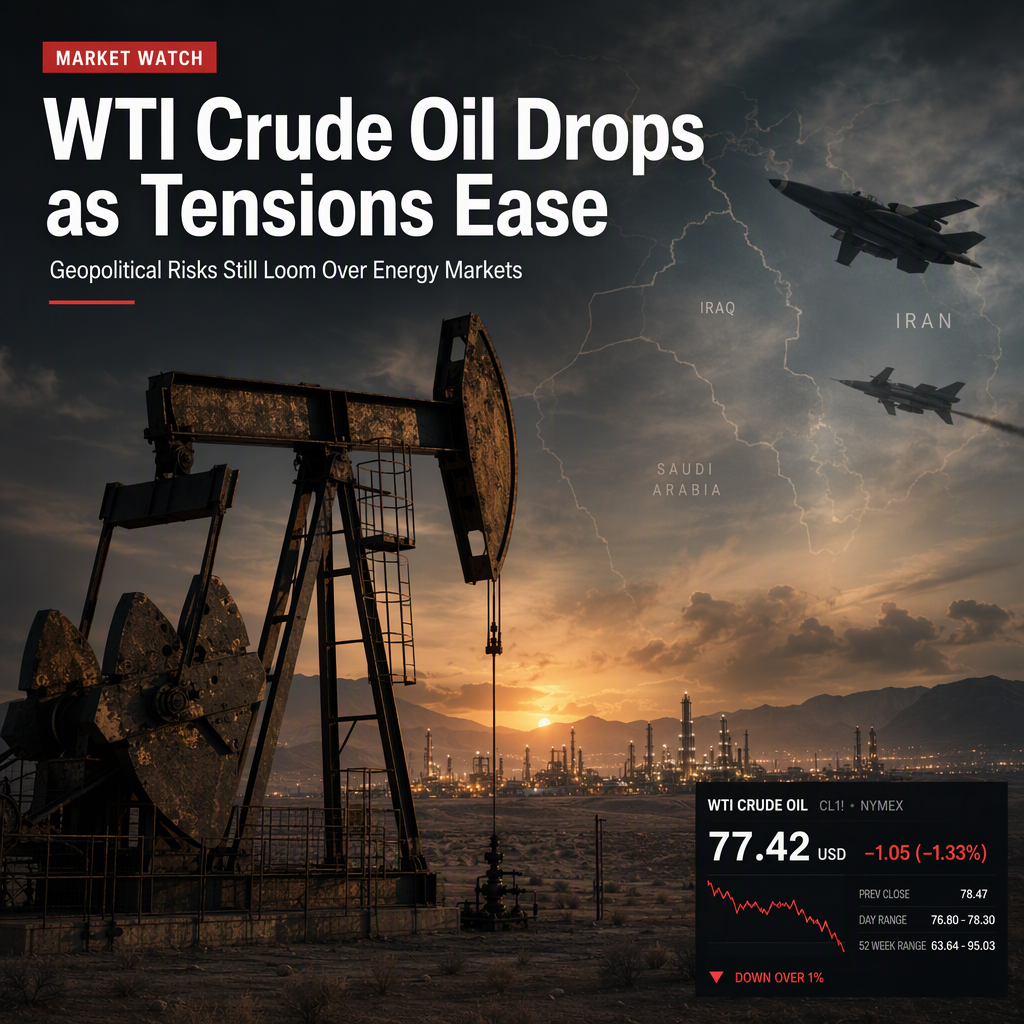
West Texas Intermediate (WTI), the benchmark for US crude oil, experienced continued selling pressure on Friday, extending its decline from a one-week high near $92.40. During the first half of the European session, WTI traded just above the mid-$89.00s, marking a drop of over 1.0% for the day [1]. The downward movement was attributed in part to comments from President Donald Trump, who stated that the US would refrain from resuming military strikes on Iran before the November 3 midterm elections. This development reduced immediate geopolitical tensions and exerted pressure on crude oil prices [1].
Despite the easing of some concerns, the geopolitical risk premium remains present due to the ongoing US-Iran standoff over Tehran's nuclear program and escalating conflicts in the Middle East. Additionally, potential disruptions around the Strait of Hormuz continue to provide support for oil prices, limiting further losses [1].
From a technical standpoint, WTI prices remain below the 100-period Simple Moving Average (SMA) on the 4-hour chart and the 38.2% Fibonacci retracement of the August-September upswing, indicating a capped near-term tone. The Moving Average Convergence Divergence (MACD) is marginally above zero with a contracting profile, while the Relative Strength Index (RSI) is near 49, suggesting fading bullish momentum [1]. Key support levels are identified at $87.72 (50.0% Fibonacci retracement), $84.35 (61.8% retracement), and $79.56. On the upside, a break above $91.08 could target resistance at the 100-period SMA around $91.18 and potentially the 23.6% retracement at $95.24 if buyers regain control [1].
CONCLUSION
WTI crude oil prices declined over 1% amid reduced immediate US-Iran tensions, though ongoing geopolitical risks continue to support the market. Technical indicators suggest a neutral to slightly bearish near-term outlook, with key support and resistance levels in focus. Market participants remain attentive to further developments in the Middle East and potential supply disruptions.