
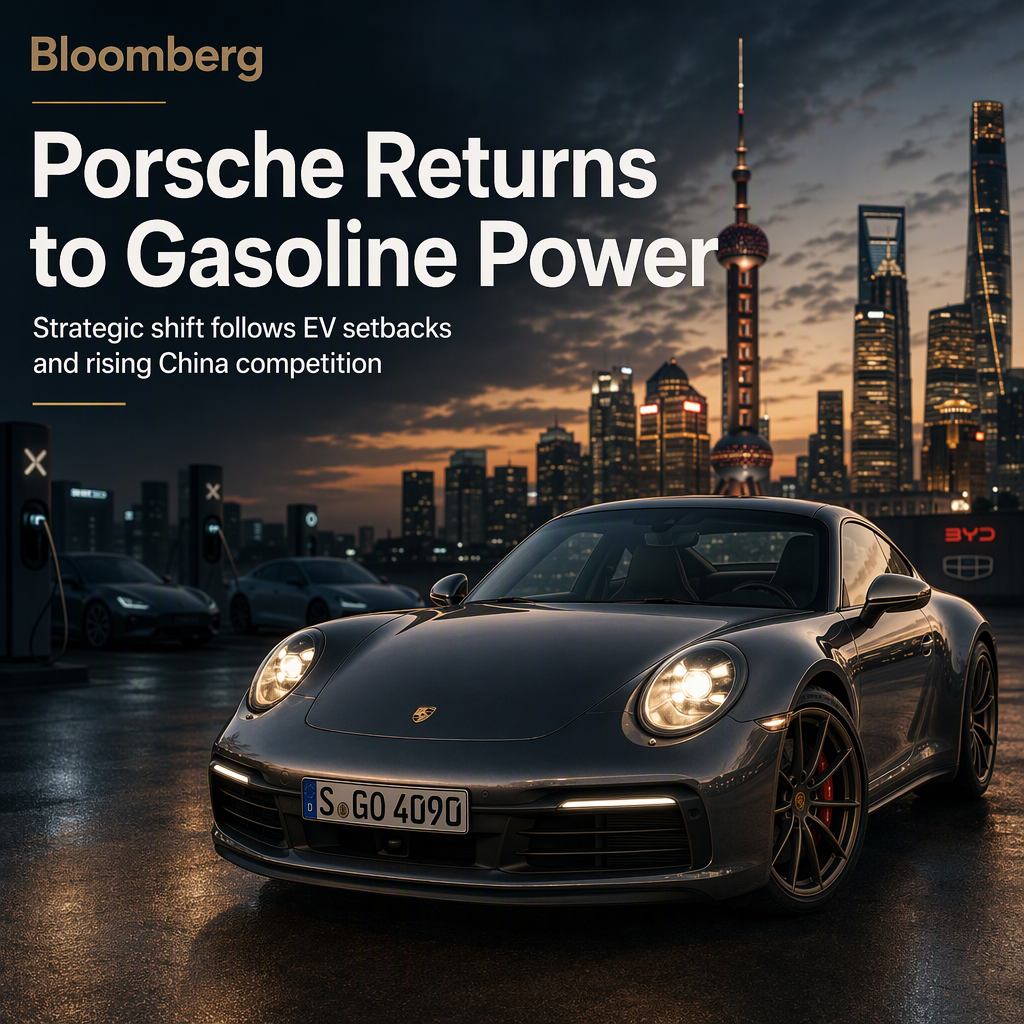
Porsche has announced a strategic shift away from its recent focus on electric vehicles (EVs), returning its emphasis to gasoline-powered luxury cars after its EV initiative failed to meet expectations, particularly in the Chinese market [1]. The German automaker's new strategy centers on midsize vehicles and sports cars, aiming to leverage its traditional strengths in luxury and performance [1].
The decision comes as Porsche faces intensified competition from Chinese sports car manufacturers, who are gaining market share through aggressive pricing and innovative models [1]. Additionally, demand growth for EVs in China has slowed, further challenging Porsche's previous expansion plans in the region [1].
Financial analysts cited in the article suggest that this recalibration could help stabilize Porsche's earnings in the short term. However, they also caution that the company will need to address tightening emissions regulations in Europe and other regions, which may impact the long-term viability of a gasoline-focused strategy [1].
No specific financial figures or forward-looking guidance regarding the impact of this strategic shift on Porsche's revenue or profit outlook were provided in the article [1].
CONCLUSION
Porsche's pivot back to gasoline-powered vehicles reflects challenges in the EV market and increased competition in China. While analysts see potential for short-term earnings stabilization, the company must still contend with evolving emissions regulations and shifting consumer preferences.