
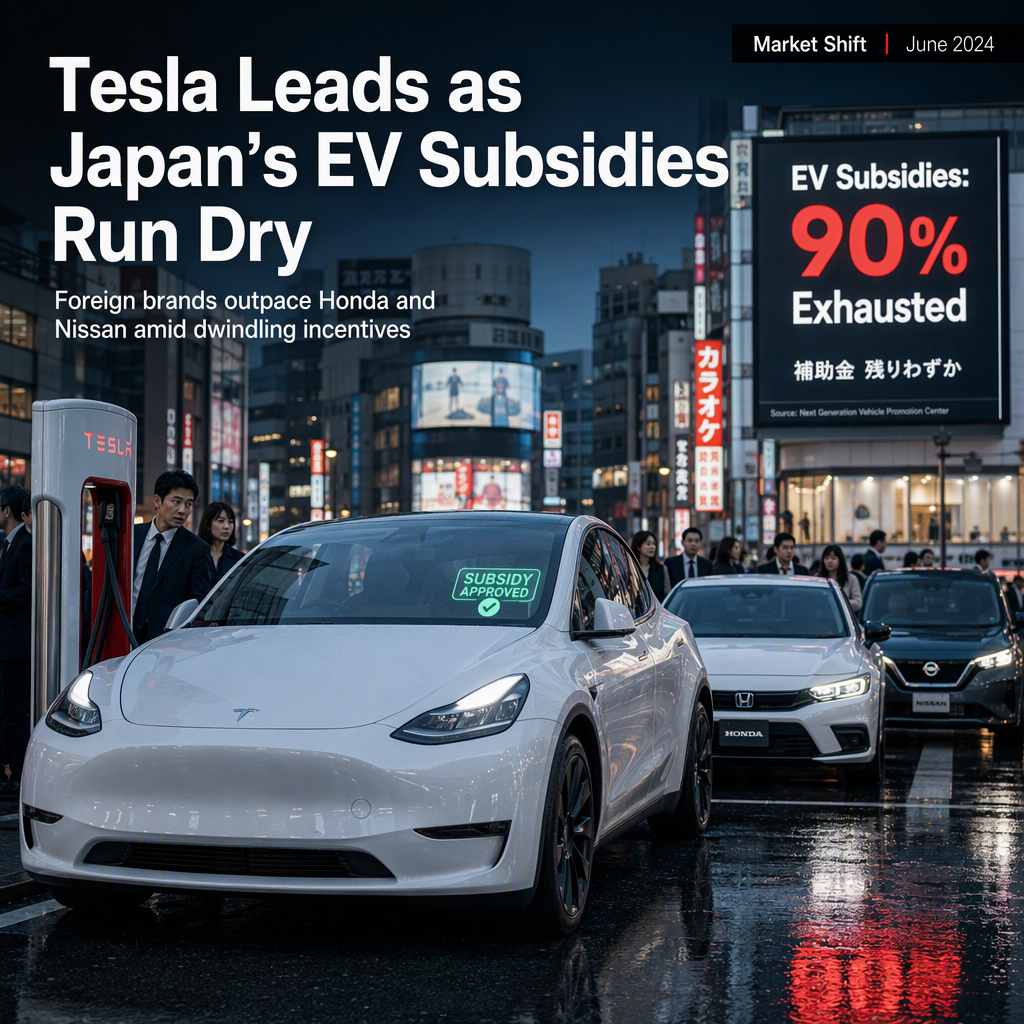
Japan's electric vehicle (EV) purchase subsidy program is rapidly approaching its fiscal 2026 budget limit, with approximately 90% of the allocated funds already used by September—just six months into the year ending March [1]. The program, intended to boost EV adoption through financial incentives, has seen unexpectedly high demand, particularly from buyers of foreign brands such as Tesla [1]. According to program data, the Tesla Model Y received the second-highest total subsidy among all vehicles, trailing only Toyota's bZ4X, underscoring Tesla's strong market presence in Japan [1]. In contrast, domestic automakers Honda and Nissan did not achieve comparable subsidy totals, highlighting their competitive challenges under the current framework [1].
Market analysts interpret the heavy utilization of subsidies by Tesla buyers as evidence of shifting consumer preferences toward international EV brands [1]. This trend raises concerns about the sustainability of government support for EV adoption, as the rapid depletion of funds may leave many prospective buyers without incentives for the remainder of the fiscal year [1]. Industry experts caution that this situation could negatively affect future EV sales, particularly for domestic manufacturers like Honda and Nissan, who may need to adjust their strategies or seek additional government support to maintain competitiveness [1].
The financial data from the subsidy program reveals that foreign EV brands, led by Tesla's Model Y, are capturing a significant share of the Japanese market [1]. Meanwhile, domestic automakers face mounting pressure to respond to the evolving competitive landscape and the potential reduction in government incentives [1].
No specific price levels, technical indicators, or support/resistance data were mentioned in the article. However, the overall sentiment reflects a robust market for Tesla in Japan and growing concerns for the performance of domestic automakers under the current subsidy structure [1].
CONCLUSION
Japan's EV subsidy program is being rapidly depleted, with Tesla emerging as a major beneficiary and domestic automakers like Honda and Nissan lagging behind. The situation signals a strong market for foreign EV brands in Japan and raises questions about the sustainability of government support and the future competitiveness of local manufacturers.