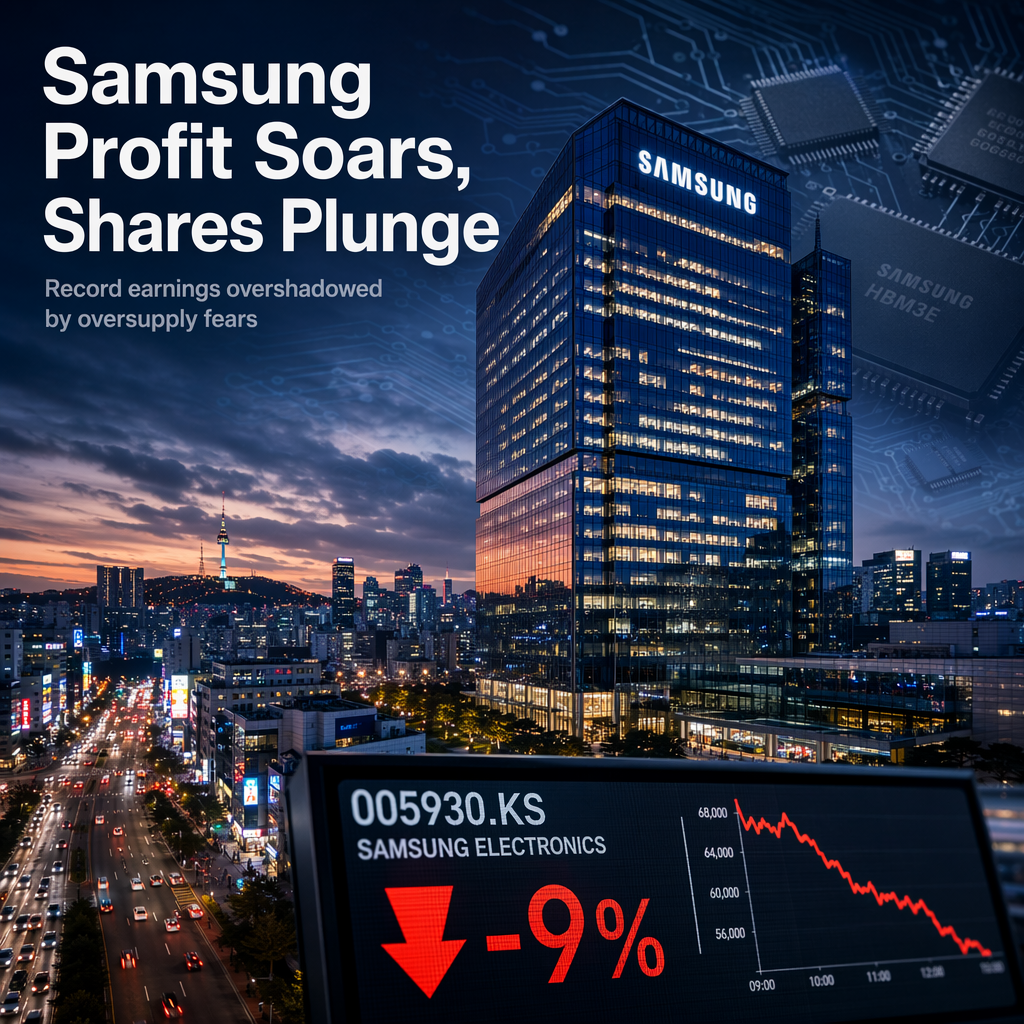
Samsung Electronics reported a dramatic surge in operating profit for the second quarter, reaching 89.4 trillion won ($58.4 billion), which is more than 19 times higher than the same period last year. This exceptional performance was attributed to a persistent shortage of memory chips, driven by rising demand for artificial intelligence (AI) computing applications [1]. Despite the impressive financial results, Samsung's share price dropped 9% on Tuesday, reflecting investor anxiety about the company's aggressive expansion plans and the potential for oversupply in the memory chip market [1].
Market analysts highlighted that the current rally in Samsung's earnings is primarily fueled by the ongoing shortage of memory chips, which are crucial for AI computing. However, they cautioned that Samsung's plans to build additional fabrication plants to meet the growing demand could result in a supply glut, leading to downward pressure on prices and profitability in future quarters [1]. A Seoul-based analyst commented, "While Samsung's results are extraordinary for now, the market is worried about a possible oversupply if the company continues to ramp up production. Investors are taking profits and positioning for a potential correction" [1].
Technical analysis indicates that the sharp drop in Samsung's share price is testing support levels, with resistance seen near recent highs. The cautious market sentiment is evident, as trading advice centers on monitoring supply-demand dynamics and watching for signs of a reversal in memory chip pricing trends [1].
Although the memory chip shortage persists and demand from AI applications is expected to remain robust, the prospect of oversupply is dampening investor enthusiasm and contributing to increased volatility in Samsung's stock price [1].
CONCLUSION
Samsung's extraordinary profit growth in Q2 underscores the strength of AI-driven demand for memory chips, but investor concerns about potential oversupply have triggered a sharp share price decline. The market remains cautious, with analysts advising close attention to supply-demand trends and the risk of future price corrections. Short-term outlook is positive, but volatility is expected as expansion plans unfold.